科学者、核爆発によって形成された奇妙な新結晶を発見
科学者らがネアンデルタール人の歯科治療や核爆発による新結晶の発見など、人類史と物質科学における画期的な研究結果を報告している。
キーポイント
ネアンデルタール人の高度な歯科技術
シベリアのチャギルスカヤ洞窟から発見された59,000年前の歯に、ドリルを用いた治療痕跡が確認され、ネアンデルタール人が複雑な認知能力と計画性を有していたことが示された。
核爆発による新結晶の合成
核実験現場で極端な非平衡条件下において、カルシウムと炭素からなる新たな結晶構造が自然に形成されることが確認された。
認知能力の再評価
今回の発見は、ネアンデルタール人をホモ・サピエンスより劣った存在とする従来のステレオタイプを覆し、両者の間に「認知的収束」があった可能性を示唆している。
核爆発による新たな結晶構造の発見
1945年のトリニティ実験の灰から、ゲスト分子を閉じ込めるカゴ状構造を持つ初の確認されたクラスレート結晶(Ca–Cu–Si)が発見されました。
高エネルギー現象が未知の物質を生む
核爆発や落雷、超高速衝突などの極端な非平衡環境が、予測不可能な結晶物質を生成する自然実験場として機能することが示されました。
東南アジアで最大級の竜脚類が発見
タイの約1億年前の地層から、推定体重6万ポンド・全長90フィートの巨大な竜脚類「ナガティタン」が同定され、地域の恐竜多様性が拡大しました。
Nagatitan の発見と特徴
タイで発見された新種の竜脚類「Nagatitan chaiyaphumensis」は、体重25〜28トン、全長約90フィートの中規模ティタノサウルスであり、アジアのティタノサウルス類の多様性と生息地拡大を示唆している。
重要な引用
Earliest evidence for invasive mitigation of dental caries by Neanderthals.
The technical proficiency required for this procedure…reflects a capacity for causal reasoning, anticipatory planning, and volitional endurance.
Now I have become Death, maker of crystals
The discovery of this phase represents the first crystallographically confirmed identification of a clathrate structure among the solid-state products of a nuclear explosion.
This work underscores how rare, high-energy events—such as nuclear detonations, lightning strikes, and hypervelocity impacts—serve as natural laboratories for producing unexpected crystalline matter.
"We estimate a body mass of 25–28 tonnes for Nagatitan, and suggest it was part of a broader middle Cretaceous body size increase in Asian titanosauriforms..."
影響分析・編集コメントを表示
影響分析
このニュースは人類学と材料科学の両分野において、過去の人類の知能評価を根本から書き換える可能性があり、核物理学的プロセスによる物質合成の新たなメカニズム解明にも寄与します。しかし、AI業界やテクノロジー産業への直接的な応用や影響は現時点では限定的であり、基礎科学の進展として捉えるべき内容です。
編集コメント
AI業界への直接的なインパクトは薄いものの、人類の認知能力や物質合成プロセスに関する基礎知見が深まることは、将来的にバイオミメティクスや複雑系シミュレーションなどの分野で間接的に役立つ可能性があります。
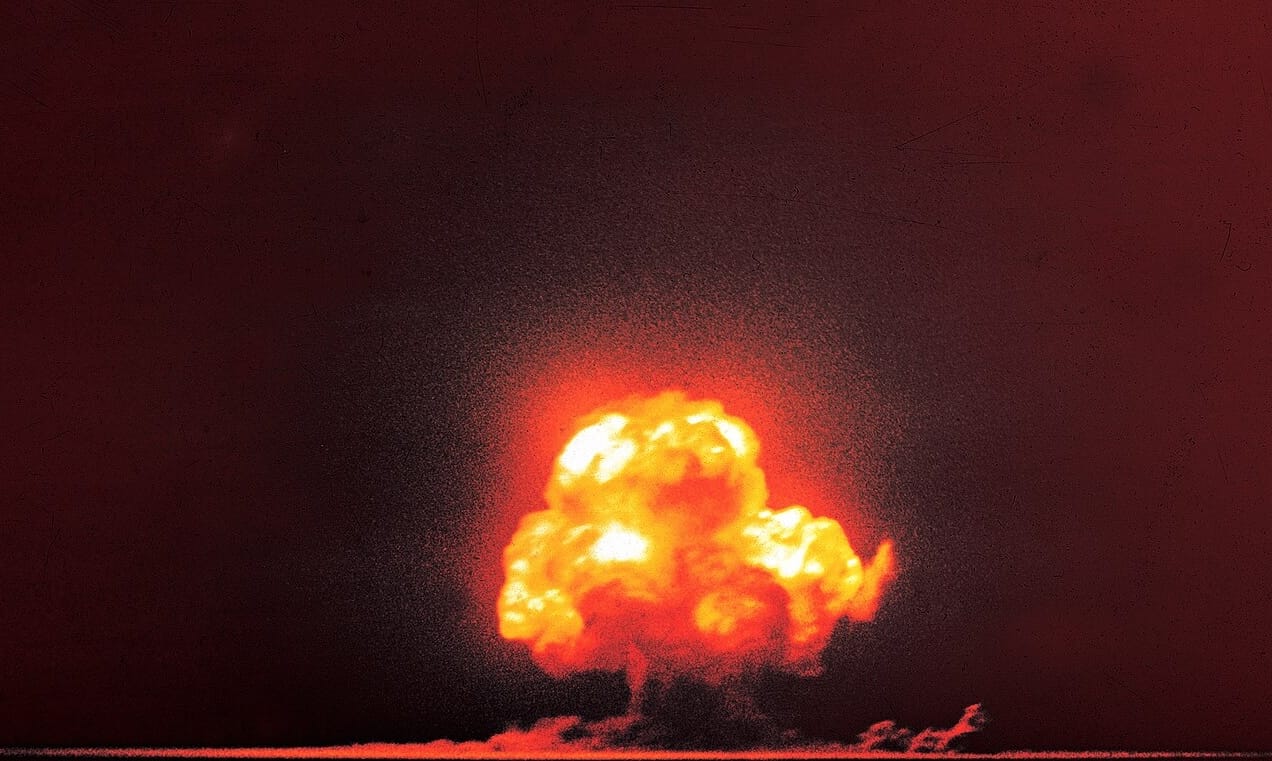 image Abstract へようこそ!今週の注目研究は、古くから存在するもの、結晶格子に閉じ込められたもの、タイで発掘されたもの、そして終末後の水中に埋もれたものです。
まず、科学者たちがネアンデルタール人も歯科医院に通わなければならなかったことを発見しました。次は、核爆発によって生まれた結晶、60,000ポンドの草食動物、そして地球上の多くの種が絶滅した後の生命についてです。
いつものように、私の他の作品については、著書『ファースト・コンタクト:宇宙人への執着の物語』(First Contact: The Story of Our Obsession with Aliens) をご覧いただくか、私の個人ニュースレター「BeX ファイル」(the BeX Files) に購読してください。
ネアンデルタール人の歯科医院へ
Zubova, Alisa V. 他。「ネアンデルタール人による虫歯に対する侵襲的処置の最古の証拠」。PLOS One.
シベリア南西部のチャギルスカヤ洞窟から出土した臼歯に関する研究によると、ネアンデルタール人は少なくとも59,000年前に歯科処施を行っており、歯科治療の歴史を数万年前まで遡らせています。
初期人類は、100 万年以上もの間、つまようじのような原始的な歯科用具を使用していました。しかし科学者たちは、ネアンデルタール人がシベリアの遺跡で虫歯の治療にドリル(drill)を使用した証拠を特定しました。これは氷河時代の根管治療(root canal)の一種です。以前、歯科検診の痕跡が見られる最古の歯は、14,000 年前にイタリアに住んでいた先史時代男性「ヴィッラブルーナ」(Villabruna) のものでした。
ネアンデルタール人の歯の遺骸は、ネアンデルタール人を認知能力においてホモ・サピエンスより劣っていると見なすステレオタイプを覆し、両種の間で「認知的収束」が起きた可能性を示唆する、増えつつある研究の一端を加えるものであると、この研究では指摘されている。
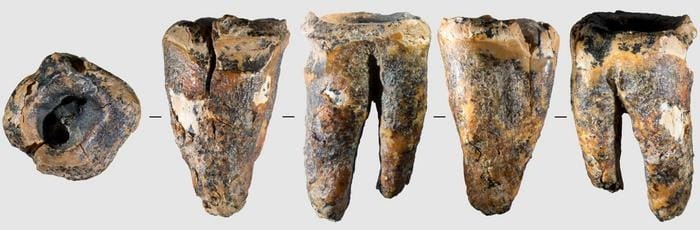 imageチャギルスカヤ洞窟の臼歯。画像:Zubova 他、2026 年、PLOS One、CC-BY 4.0
ペテル大帝人類学・民族学博物館(クンストカメラ)のアリサ・ズボワ率いる研究チームは、「このチャギルスカヤ洞窟の歯には、ドリリング/回転技法に加え、異なる工具を要する2種類の明確な操作痕跡が見られ、複雑な指の動きが必要とされていた」と述べている。
この研究では、同地点にいたネアンデルタール人について「痛みの原因を直感的に理解し、その除去の可能性を把握し、最も効果的な歯科処置を意図的に選択する認知能力を持っていた」とチームは付け加えている。「この処置に必要な技術的熟練度は…因果推論、予測的計画、意志的な耐性の能力を示しており、ネアンデルタール人の行動制限に関する以前の仮定と矛盾する」。
このネアンデルタール人患者が診察の最後に無料の歯楊枝をもらったかどうかは不明だが、少なくともひどい歯痛から一時的な緩和は得られたようだ。
その他のニュース…
今、私は死となり、結晶の創造者となった
Bindi, Luca 他。「トリニティ核実験中の極端な非平衡合成による Ca–Cu–Si クラースレート」。米国科学アカデミー紀要。
科学者たちは、1945 年 7 月 16 日の早朝にニューメキシコ州で発生した初の原子爆弾の核実験であるトリニティ実験の灰の中から、奇妙な新しい種類の結晶を発見しました。
トリニティ実験で使用された「ガジェット」は強力な火球を放ち、試験塔を蒸発させ、砂漠の砂をトリティナイトと呼ばれるガラス状の残留物へと変えました。数十年にわたり、研究者たちは落下灰の中で新規かつ奇妙な化合物を発見してきましたが、新しい研究報告では、赤いトリティナイトの中に「ゲスト」分子を籠のような骨格構造内に閉じ込めることができる結晶格子であるクラースレート構造が初めて確認された事例が報告されています。
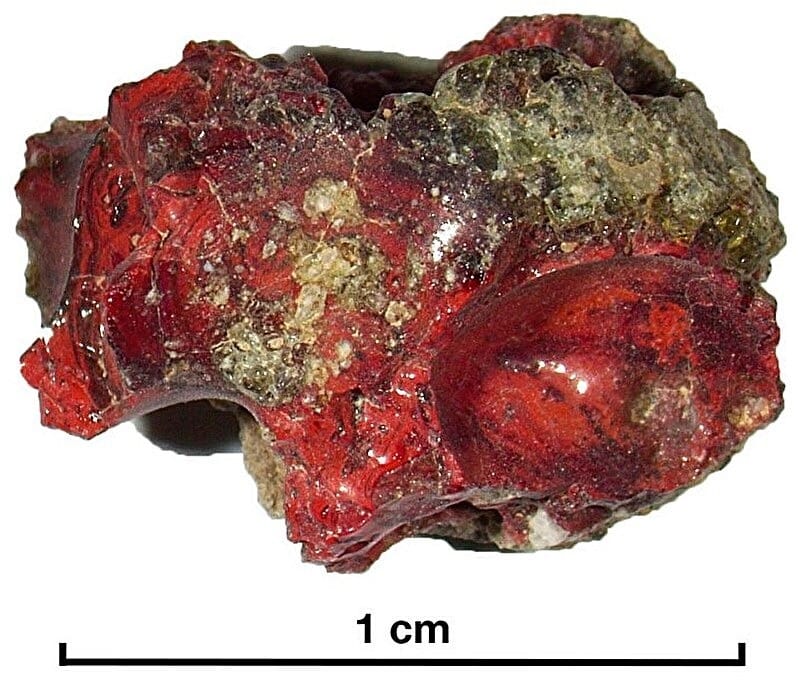 imageクラースレートを含んでいた赤いトリティナイトの試料。画像:Bindi, Luca 他。「この相の発見は、核爆発の固体生成物の中でクラースレート構造が結晶学的に確認された最初の事例を意味する」と、フィレンツェ大学のルカ・ビンディ率いる研究チームは述べています。
「この研究は、核爆発や落雷、超高速衝突といった希少かつ高エネルギーの出来事が、予期せぬ結晶物質を生み出すための自然実験場として機能することを浮き彫りにしています」とチームは付け加えました。
歴史上最も重要な瞬間の一つであると同時に、トリニティ実験は砂を異質な材料へと変え、80 年以上を経た現在も新たな発見をもたらし続けています。
巨大なタイノサウルスの発見
Sethapanichsakul, Thitiwoot and Khansubha, Sasa-On et al. 「タイの下部白亜紀コッククルアット層から発見された最初の竜脚類恐竜が、東南アジアにおけるソムフォスポンドイル型タノサウルス類の多様性を豊かにする」『Scientific Reports』。
東南アジアで発見された史上最大の恐竜をご紹介します:ナガタイタン・チャイヤプメンスィス。これは 1 億年以上前に現在のタイに生息していた、巨大な竜脚類です。
推定重量は約 60,000 ポンド(約 27 トン)、頭部から尾の先端までほぼ 90 フィート(約 27 メートル)にも達するこの巨大な草食動物は、陸上を歩いた生物の中で最大規模だったタノサウルス科に属します。
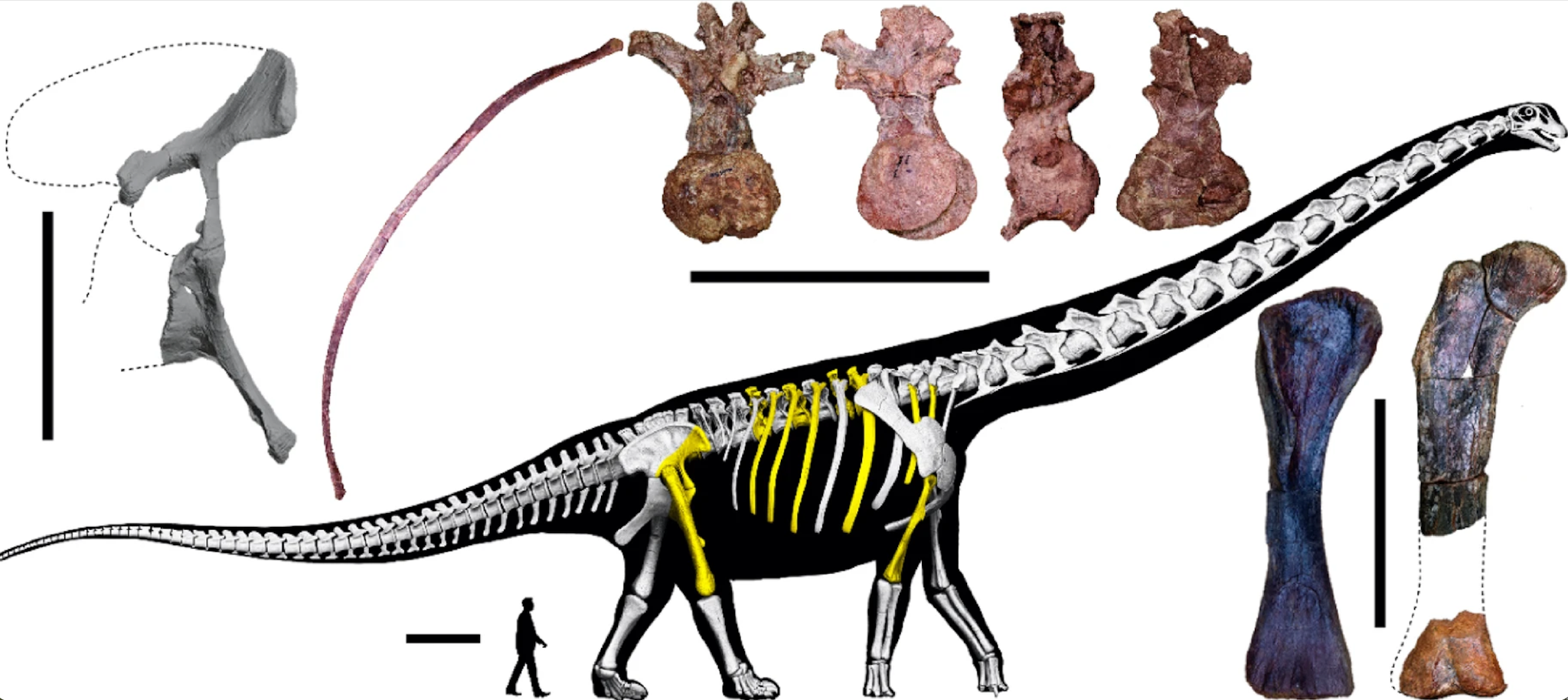 imageナガタイタン・チャイヤープムエンシス(Nagatitan chaiyaphumensis)の骨格の模式図。保存された骨は黄色で強調表示されています。スケールバーは 1 メートルです。画像提供:Sethapanichsakul, Thitiwoot および Khansubha, Sasa-On 他。
「ナガタイタンの体重を 25〜28 トンと推定し、これはアジアのティタノサウルス類における白亜紀中期の体サイズ増大の一部であり、気温の上昇と生息可能な生息域の拡大によって促進されたものだと考えられます」と、ロンドン大学ユニバーシティ・カレッジ(University College London)のティティウォット・セタパンチャクル(Thitiwoot Sethapanichsakul)氏とタイのシンディン博物館(Sirindhorn Museum)のササオン・カンサブア(Sasa-On Khansubha)氏が共同で率いる研究チームは述べています。
「ナガタイタンの発見は、東南アジアの竜脚類の既知の多様性を拡大し、この地域におけるティタノサウルス類の生物地理学に対する理解を深めるものです」と、チームは付け加えました。
全長 90 フィート(約 27 メートル)、体重 25 トンの動物が casually に歩き回る姿を想像するのは驚くべきことですが、ナガタイタンはティタノサウルスの中では中程度のサイズに過ぎません。この科に属する最大の巨獣は、全長 120 フィート(約 37 メートル)を超え、植物食による体重で 130,000 ポンド(約 59 トン)にも達していた可能性があります。
その一方で、動物界における史上最高重量級の王者は、私たちが現在生きている青くじら(blue whale)です。その体重は驚異的な 400,000 ポンド(約 182 トン)に達します。人生でこれほどちっぽけだと感じたことはありますか?
いかなる状況にあっても、生活は続く
ウィルソン、ジェイコブ D. 他著。"白亜紀/古第三紀大量絶滅事象から約2000年後に生息していた大型のガ(オス)の頭蓋骨と胸帯について"。脊椎動物古生物学誌。
6600万年前、小惑星が恐竜の時代を突然かつ残酷な形で終焉させ、地球上の全種の約3分の2を絶滅させた際、最後のタイタノサウルス類もまたその犠牲となりました。しかし、この宇宙の岩石は陸上の巨獣たちを根絶しましたが、一部の動物は生き延びることができました。その中には、衝突から2000年以内に生息していた大型魚も含まれています。
デンバー自然・科学博物館のジェイコブ・ウィルソン率いる研究チームは、このガ(オス)の解剖学的特徴を記述し、その分類学上の位置づけについて議論を行いました。これは、2022年に初めて標本が報告された初期の研究に基づいたものです。全長約1.5メートル(約5フィート)に達するこの魚は、ノースダコタ州のフォート・ユニオン層群に保存されている、終末後の世界で生息していました。
化石の図とスケールモデル。画像:Brownstein, Chase Doran 他、2022年
「標本は、その大きさ(1 メートル以上)と、白亜紀/古第三紀(K/Pg)境界粘土層からわずか 18 センチメートル上に位置する正確な地質学的配置の両方で注目すべきものである」とチームは述べています。「私たちの結論は、ガース(ウグイ科の魚類)が淡水生態系において主要な構成要素であったという推論を支持し、さらに K/Pg 絶滅から約 2000 年以内に淡水生態系が大規模な捕食者を支えることが可能だったことを裏付けるものです。」
このガースは、惑星的な悪夢のわずか数世紀後に生まれた、奇妙にも空虚な生態系の中で孵化しましたが、それでも釣り人の夢のような獲物へと成長しました。これは地球の生命の回復力への証言であり、直接宇宙からの激しい打撃を受けたとしても、完全に根絶されることはなかったことを示しています。
お読みいただきありがとうございます!来週またお会いしましょう。
原文を表示
imageWelcome back to the Abstract! Here are the studies this week that were long in the tooth, trapped in the lattice, unearthed in Thailand, and entombed in post-apocalyptic waters.
First, scientists discover that even Neanderthals had to go to the dentist. Then: a nuke-born crystal, a 60,000-pound herbivore, and life after the death of most species on the planet.
As always, for more of my work, check out my book First Contact: The Story of Our Obsession with Aliens or subscribe to my personal newsletter the BeX Files.
A trip to the Neanderthal dentist
Zubova, Alisa V. et al. “Earliest evidence for invasive mitigation of dental caries by Neanderthals.” PLOS One.
Neanderthals performed dental interventions at least 59,000 years ago, pushing the timeline of dentistry back by tens of thousands of years, according to a study about a molar from Chagyrskaya Cave in southwestern Siberia.
Early humans used rudimentary dental tools, like toothpicks, for well over a million years. But scientists have now identified evidence that Neanderthals used drills to treat cavities at the Siberian site, performing an Ice Age version of a root canal. Previously, the oldest tooth that showed signs of a dental checkupt belonged to “Villabruna,” a prehistoric human male who lived in Italy 14,000 years ago.
The remnants of the Neanderthal tooth adds to a growing body of research that has overturned the stereotype of Neanderthals as cognitively inferior to Homo sapiens and hints at “cognitive convergence” between the two species, according to the study.
imageThe Chagyrskaya Cave molar. Image: Zubova et al., 2026, PLOS One, CC-BY 4.0The Chagyrskaya Cave tooth shows “evidence of two distinct types of manipulations requiring different tools, in addition to the drilling/rotating technique, necessitating complex finger movements,” said researchers led by Alisa Zubova from the Peter the Great Museum of Anthropology and Ethnography (Kunstkamera).
The study suggests that Neanderthals at this site “possessed the cognitive capacity to intuit the source of pain, comprehend the feasibility of its elimination, and deliberately select the most efficacious dental intervention,” the team added. “The technical proficiency required for this procedure…reflects a capacity for causal reasoning, anticipatory planning, and volitional endurance, contradicting earlier assumptions regarding Neanderthal behavioral limitations.”
It's not clear if this Neanderthal patient got a complimentary toothpick at the end of the visit, but at the very least, they received some temporary relief from a bad toothache.
In other news…
Now I have become Death, maker of crystals
Bindi, Luca et al. “Extreme nonequilibrium synthesis of a Ca–Cu–Si clathrate during the Trinity nuclear test.” Proceedings of the National Academy of Sciences.
Scientists have discovered a weird new type of crystal in the ashes of the Trinity test, the first detonation of a nuclear bomb, which took place in the early morning of July 16, 1945, in New Mexico.
Trinity’s “gadget” unleashed a powerful fireball that vaporized its test tower and transformed the desert sand into a glassy residue called trinitite. For decades, researchers have found novel and bizarre compounds in the fallout. A new study now reports the first known instance of a clathrate structure—a crystal lattice that can trap “guest” molecules inside its cagelike scaffolding—in red trinitite.
imageThe sample of red trinitite that contained the clathrate. Image: Bindi, Luca et al.“The discovery of this phase represents the first crystallographically confirmed identification of a clathrate structure among the solid-state products of a nuclear explosion,” said researchers led by Luca Bindi of the University of Florence.
“This work underscores how rare, high-energy events—such as nuclear detonations, lightning strikes, and hypervelocity impacts—serve as natural laboratories for producing unexpected crystalline matter,” the team added.
In addition to being one of the most pivotal split-seconds in history, the Trinity test spun sand into exotic materials that are still generating discoveries more than 80 years later.
A huge new Thai-nosaur
Sethapanichsakul, Thitiwoot and Khansubha, Sasa-On et al. “The first sauropod dinosaur from the Lower Cretaceous Khok Kruat Formation of Thailand enriches the diversity of somphospondylan titanosauriforms in southeast Asia.” Scientific Reports.
Meet the largest dinosaur ever found in Southeast Asia: Nagatitan chaiyaphumensis, a hulking sauropod that lived more than 100 million years ago in what is now Thailand.
Weighing in at an estimated 60,000 pounds and measuring nearly 90 feet from head to tail-tip, this massive herbivore belonged to the titanosaur family, the largest animals ever to walk on land.
imageSchematic representation of the skeleton of Nagatitan chaiyaphumensis with preserved bones highlighted in yellow. The bar is one meter. Image: Sethapanichsakul, Thitiwoot and Khansubha, Sasa-On et al. “We estimate a body mass of 25–28 tonnes for Nagatitan, and suggest it was part of a broader middle Cretaceous body size increase in Asian titanosauriforms, facilitated by rising temperatures and expanded suitable habitat,” said researchers co-led by Thitiwoot Sethapanichsakul of University College London and Sasa-On Khansubha of Sirindhorn Museum in Thailand.
“The discovery of Nagatitan expands the known diversity of Southeast Asian sauropods and improves our understanding of titanosauriform biogeography within the region,” the team added.
While it’s mind-boggling to imagine a 90-foot-long, 25-tonne animal casually ambling around, Nagatitan is only mid-sized for a titanosaur. The biggest behemoths in this family may have exceeded 120 feet in length and boasted 130,000 pounds of fully plant-powered body mass.
With that said, the all-time heavyweight champion of the animal kingdom is our own contemporary, the blue whale, which tips the scales at an astonishing 400,000 pounds. Have you ever felt so puny in your life?
Life goes on, re-gar-dless
Wilson, Jacob D. et al. “The skull and pectoral girdle of a large gar that lived ∼2000 years after the Cretaceous/Paleogene mass extinction event.” Journal of Vertebrate Paleontology.
The last titanosaurs were wiped out by the asteroid that brought the age of dinosaurs to a sudden and brutal end 66 million years ago, killing off about two-thirds of all species on Earth. But though the space rock eradicated the land giants, some animals managed to pull through, including a large fish that lived within 2,000 years of the impact.
Scientists led by Jacob Wilson of the Denver Museum of Nature & Science described the anatomy of a gar and weighed in on its possible taxonomy, building on the initial 2022 study that first reported the specimen. Measuring about five feet in length, this gar inhabited a post-apocalyptic world that is preserved within the Fort Union Formation of North Dakota.
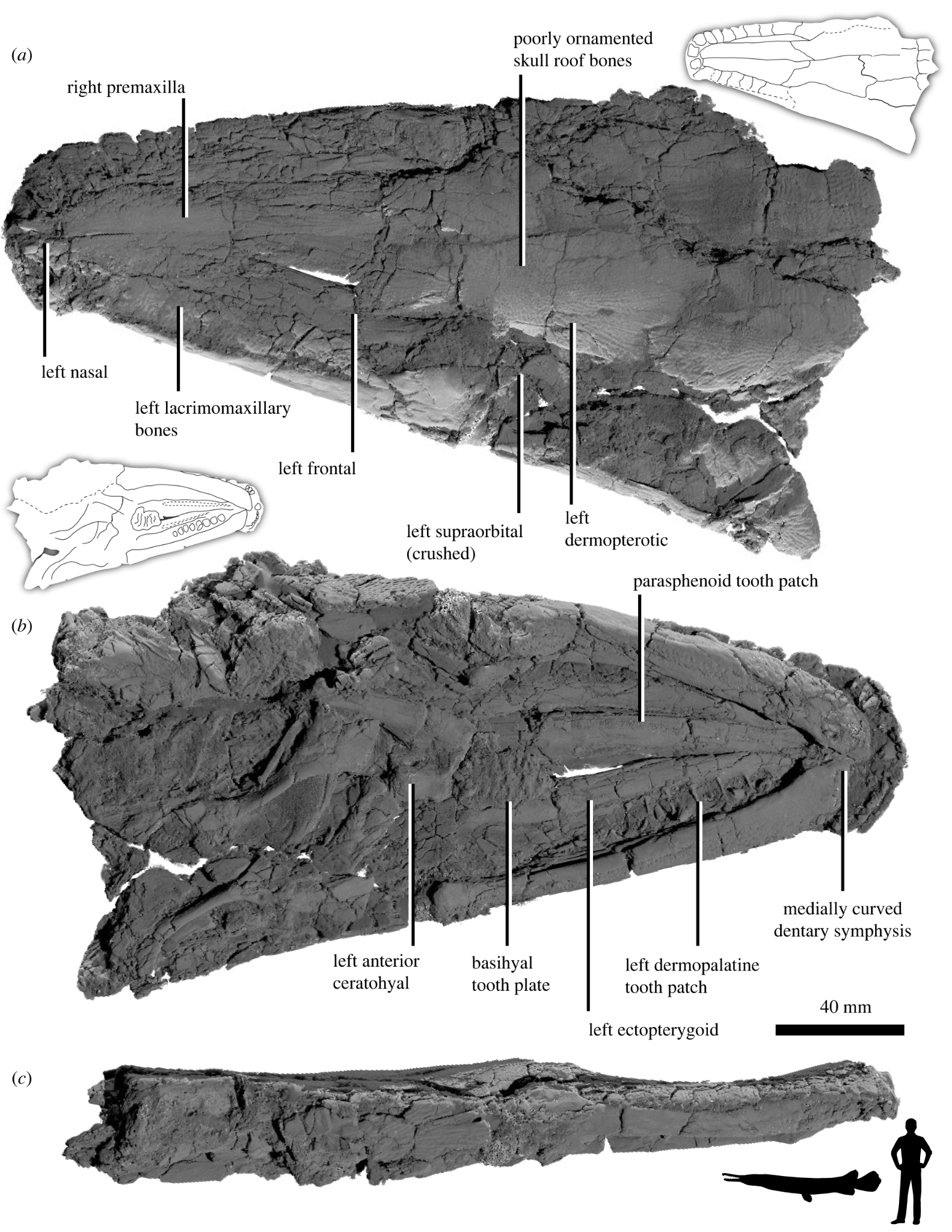 imageDiagram of fossils, with scale model. Image: Brownstein, Chase Doran et al., 2022The specimen “is notable both for its size (more than 1 meter) and its precise stratigraphic placement 18 centimeters above the Cretaceous/Paleogene (K/Pg) boundary clay,” the team said. “Our conclusions support the inference that gars were prominent members of freshwater ecosystems and, in turn, freshwater ecosystems were capable of supporting large-bodied predators within ∼2000 years after the K/Pg extinction.”
This gar hatched into an eerily empty ecosphere, mere centuries after a planetary nightmare, yet it still grew into a fisherman’s dream catch. It’s a testament to the resilience of life on Earth, which could not be fully stomped out even by a direct cosmic punch to the face.
Thanks for reading! See you next week.
関連記事
今日のまとめ
AI日報で今日の重要ニュースをまとめ読み