Amazon、AI学習用として希少書を大量購入・破棄
本文の状態
日本語全文を表示中
詳細モードで約11分の本文を読めます。
同じ出来事の情報源
この情報源を基点に整理
404 Media
404 Media の調査により、Amazon がAIモデルの学習データ収集のために大量の書籍を購入し、バインディングを切断して破棄する行為がラスベガスの倉庫で確認された。
AI深層分析を開く2026年8月17日 22:57
AI深層分析
キーポイント
書籍購入と破棄の実態
Amazon はAIトレーニング用のデータ収集のため商業チャネルを通じて大量の書籍を購入し、ネバダ州ラスベガスの倉庫(VGT3)でバインディングを切断して破棄している。
学習データの特性と価値
印刷された書籍はインターネット上に存在しないテキストや2022年以前のAI生成混入がないデータを含み、モデルの崩壊(model collapse)を防ぐために極めて貴重な学習リソースである。
市場への影響と匿名性
書籍販売業者は価格感度の低い買い手による急激な大量購入を観測しているが、取引プラットフォームの匿名性によりAI企業を特定することは困難だった。
追跡された書籍の配送経路
カリフォルニアから航空機でウィスコンシン州ミルウォーキーへ、その後特殊物流会社トリフィニティの倉庫に約2週間保管され、トラックでネバダ州ラスベガスのAmazon倉庫LAS8へ到着した。
最終目的地の施設機能
LAS8は主にオンデマンド印刷業務を行う施設だが、書籍が到着した北端には「VGT3」というコードを持つ別のAmazonオペレーションが存在する。
重要な引用
Amazon purchases books through commercial channels to help develop and improve the products and services our customers use
Printed books are valuable as training data because a lot of the text they contain is not readily available on the internet, which AI companies have already scraped.
The printed book is destroyed in the process.
LAS8 appears to mostly operate as one of Amazon's 'print on demand' operations, which will print and ship books to Amazon shoppers as they are buying them.
編集コメントを表示
編集コメント
AIモデルの学習に書籍を破壊する行為が確認されたことは、データ収集の倫理的側面と持続可能性に関する新たな議論を呼ぶ。業界全体として、デジタルアーカイブや代替データソースへの転換が急務となる局面である。
Source Article
元記事を日本語で読む
本文に関係しない購読案内、埋め込み通知、サイト内プロモーションは除いています。
 imageAmazon は膨大な量の書籍を購入し、AI の学習データとしてスキャンしているが、その過程で本を破棄している。
404 Media の調査チームは、AI 企業が学習データとして取得すると疑われる希少書に追跡装置を設置し、国中をたどって最終目的地まで追跡することで、これまで報道されていなかった Amazon の書籍購入事業の実態を明らかにした。
その最終地点はネバダ州ラスベガスにある Amazon の倉庫だった。この施設で働く従業員によると、彼らの仕事は大量の印刷された本を受け取り、スキャン速度を上げるために製本部分を切断することだけだ。この過程で印刷された本は破棄される。この倉庫で働く Amazon チーム「VGT3」のロゴは、歯をむき出しにし、手に本を持った恐竜である。
「Amazon は、顧客が利用する製品やサービスの開発と改善を支援するために、商業チャネルを通じて書籍を購入しています」と、Amazon の広報担当者は声明の中で語った。
世界の AI 企業は、AI モデルの学習に使用する素材を常に探し求めており、そのために莫大なリソースを投入している。書籍の場合、その過程で破棄することさえあるが、これは一般大衆の一部から批判の声が上がっている行為であり、Amazon が実際にこれを行っていることを我々は確認した。
7 月、私はある記事を発表しました。そこでは、書店業者が過去 1 年間に突発的な売上の増加を報告しているという内容でした。彼らはこの急増の背景に、AI 企業が新たな学習データを探すために入手可能なあらゆる書籍を購入している可能性があると疑っていました。
印刷された書籍は、学習データとして非常に価値があります。なぜなら、その中に含まれるテキストの多くはインターネット上に存在せず、すでに AI 企業によってスクレイピング(収集)されているからです。さらに、データが整理されており、2022 年以前に出版された書籍であれば、AI 生成テキストが含まれていないことが保証されています。これは「モデル崩壊」と呼ばれる再帰的なプロセスを通じて、それを学習対象とした AI モデルの性能を低下させる要因となるためです。
📖
書籍のスキャン業務に従事している施設で働いている方はいらっしゃいますか?ぜひお話を伺いたいです。勤務中の端末ではなく、非業務用のデバイスから、Signal で @emanuel.404 までメッセージを送信してください。あるいは、emanuel@404media.co 宛てにメールをお送りください。
書店業者がこれらの大量購入を AI 企業が主導していると考えている理由は、購入される書籍の数が桁違いであること、選定された書籍がランダムに見えること、そして図書館や大学とは異なり、価格に対して全く敏感ではないという点にあります。しかし、書籍販売業者は誰が購入者なのかを特定できません。なぜなら、彼らが取引を行う市場では購入者の身元が匿名に保たれているからです。注文が入ると、書店業者は売れた本を市場運営会社が管理する倉庫へ発送します。そこで本が仕分けされ、その後、購入者に配送されます。
7 月、ある古書販売業者が私に話してくれたところによると、Biblio(主要な市場プレイスの一つ)で約 1,000 冊という大量の注文が入ったそうです。この注文に含まれる一冊に、404 Media が提供した Apple AirTag を入れておくことで、その本が行き先をたどり、ひいては誰が背後にいるのか(AI 企業か否かを問わず)を確認できる仕組みを作りました。
販売業者の身元を明かさなかったのは、この情報を公開することで事業に悪影響が出ることを懸慮したためです。Biblio はコメント依頼に対して回答しませんでした。
1
カリフォルニア州
私たちが追跡した本は、カリフォルニア州の空港から出荷されました。
2
ミルウォーキー
次に確認できたのは、ミルウォーキー・ミッチェル国際空港の外です。
53172 South Milwaukee, WI 1901 E College Ave
3
配送センター
その後、ケンショー地域空港の南約 48km(30 マイル)にある、専門的な輸送・配送会社 Trifinity の倉庫に到着しました。
53144 Kenosha, WI 5312 104th Ave
4
コロンビアスプリングス
そこからトラックで西へ向かいます。コロンビアスプリングスの郊外にある高速道路で確認できました。
5
トラックストップ
夜間は、トラック運転手の休憩施設に停車しました。
81505 Grand Junction, CO 2195 Hwy 6 and 50.
6
Amazon ウェアハウス:LAS8
翌日、この荷物は LAS8 と名付けられた Amazon の倉庫に到着しました。
89115 Las Vegas, NV 5801 Nicco Way。
その古書商は、Biblio 経由で荷物を送りました。まずカリフォルニアの空港に到着し、そこから飛行機でウィスコンシン州のミルウォーキー国際空港へ運ばれました。
同日遅く、本はケンショー地域空港の南約30マイルにある、Trifinity という専門の輸送・配送会社所有の倉庫へと移動しました。その倉庫には約2週間留め置かれた後、トラックによる西への移動が始まりました。高速道路を走る姿を目撃し、コロラド州グランドジャンクション付近のトラック運転手の休憩施設で一晩を過ごしたのも確認できました。
翌日、本はラスベガスの Amazon 倉庫「LAS8」に最終到着しました。
LAS8 は同地域にある複数の大型 Amazon 倉庫の一つで、それぞれが異なる専門分野を持っています。例えば、向かいにある LAS7 は fulfillment center(商品発送センター)として機能していますが、LAS8 は主に Amazon の「オンデマンド印刷」事業を担っており、購入されるタイミングで本を印刷して顧客へ配送する仕組みです。
当初はなぜこの本が LAS8 に送られたのか理解できませんでしたが、同施設で働く Amazon 従業員たちがオンライン上で労働環境について議論している内容から、LAS8 の北側エリアには「VGT3」という別のコードを持つ異なる Amazon 事業体が存在することがわかりました。私が本を目撃した到着地点は、まさにその VGT3 事業体の区域でした。
Amazon の倉庫には、それぞれの施設を識別するための固有のシンボルが設けられています。ベガスにある VGT3 施設の入り口や内部に描かれているのは、口を開けて本をくわえたティラノサウルス・レックスです。
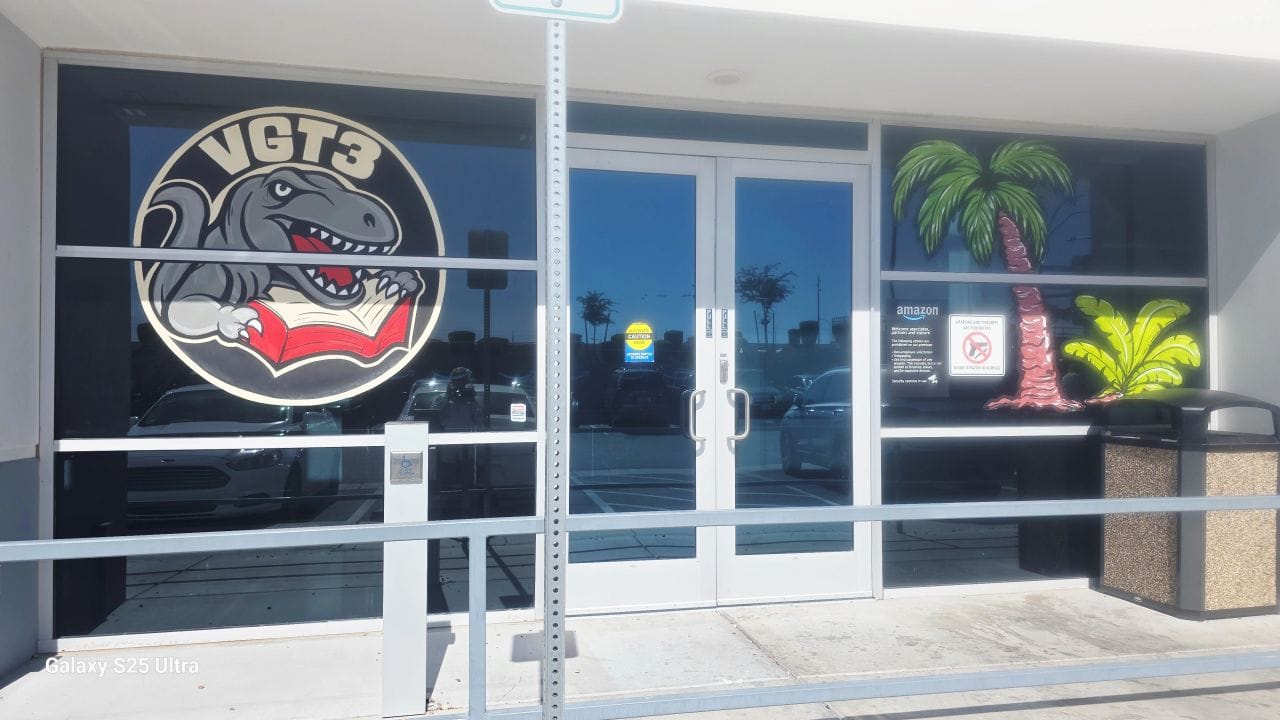 imageAmazon の VGT3 施設への入り口。
「私はベガスの VGT3 で働いています。ここでは本をスキャンするだけです」と、ある Amazon の従業員が同僚向けフォーラムに投稿しました。「本を切断する担当や、荷受で本のバーコードを読み取る担当など、役割は分かれています。以前はノルマがありませんでしたが、現在は設定されています。それでもストレスはありません。」
「VGT3 での仕事は良いですよ。やっていることは本をスキャンすることだけです」と別の従業員も書き込み、「とてもクールです」と付け加えました。
私はオンライン上で VGT3 の従業員たちが、この業務が「良質な仕事だが退屈だ」と語っているのを目にしました。毎日同じで簡単、反復的な作業をこなすためです。また、こうした理由から VGT3 の職は人気があるという議論も目にしました。倉庫が夜勤を提供することもあるからです。今年初めには、「在庫の本を使い果たし、新しい本の入荷が十分でないため、Amazon がこの施設を閉鎖するのではないか」と懸念を示す従業員もいましたが、現在も同施設は稼働しています。
書籍に付与されるバーコードや ISBN(出版されたすべての書籍に一意のシリアル番号として割り当てられる)をスキャンしてから内容をスキャンしているという事実から、書店業者が提唱するもう一つの説にも信憑性が増します。それは、AI 企業が ISBN のリストに沿って順次作業することで、世界中の印刷済み書籍を体系的にスキャンしようとしているという説です。ある書店業者は、ISBN が付与されていない希少書が含まれていない非常に大きな注文を受け取っていることから、これが事実だと推測していると話しました。
2024 年、オンライン上で Amazon で書籍を販売している業者たちは、「Amazon FC」という顧客名義で、商品を VGT3 という場所へ直接配送する注文が急増したと報告しています。その規模の異常さから、業者らはこれが何らかの詐欺ではないかと疑いました。しかし、Amazon の担当者が介入し、確認の結果、これらの注文は正当なものであると発表しました。
他の大手テック企業と同様に、Amazon も独自の大型言語モデル(LLM)を開発しています。同社は「Nova」というブランド名のモデル群を「フロンティア」モデルと位置づけており、Google、OpenAI、Anthropic などの最先端 LLM と互角であると評価しています。これらのモデルは、人間が執筆したテキストという膨大な量のトレーニングデータを必要とします。また、社内ではソフトウェア開発のために「Kiro」と呼ばれる AI コーディングエージェントも活用されています。
AI企業がトレーニングデータのために数百万冊の書籍をスキャンしようとしていることを初めて知ったのは、作家たちがAnthropicに対して起こした訴訟がきっかけでした。この訴訟から明らかになった「プロジェクト・パナマ」では、商業的な書籍販売市場から本を購入し、背表紙を切断してスキャンするという計画が示されていました。
本来は本を破損せずにスキャンすることも可能ですが、背表紙を切断することでコストと時間を大幅に削減できます。さらに、この訴訟を担当した裁判官は、Anthropicがトレーニングデータのために本をスキャンすることは公平な利用であり著作権侵害ではないと判断しました。その理由の一つとして、原本である印刷されたコピーを破壊している点が挙げられています。
要するに、顧客には物理的な媒体をデジタル化して保存する権利があります。そして、原本を破壊することで複製や再販売を防ぎ、出版社のビジネスにも悪影響を与えないのです。
私たちが追跡した shipment に含まれる書籍のタイトルは明かしていませんが、これらは希少価値のあるものです。つまり、流通している冊数が非常に少ないということです。その理由として、当初から印刷部数が少なかった場合や、多くの人が話さない外国語で書かれている場合があります。
これらの本を販売した書店員によると、世界でこれらを第一版の『オリバー・ツイスト』のように大切に思う人はそう多くありません。しかし、それが価値がないことを意味するわけではありません。
「価値にはさまざまな種類があります」と古書店の店主は語ります。「もちろん金銭的な価値もありますが、歴史的な価値や知的な価値、思い出としての価値など、数えきれないほどの価値が存在します。それらすべてを AI 企業は無視しています。彼らが求めているのは、単語が単に羅列されたコンテンツだけなのです。」
Amazon は上記の声明を提供しましたが、スキャンした書籍をなぜ切断したのか、世界中に同様の施設がいくつあるのか、そして AI 企業が本を破壊していることに憤慨する人々からの批判への対応について質問には回答しませんでした。
原文を表示
imageAmazon is buying massive quantities of books, scanning them for AI training data, and destroying them in the process.
A 404 Media investigation was able to reveal Amazon’s book buying operation, which hasn’t been previously reported, by placing a tracking device in a rare book we suspected would be acquired by an AI company for training data, and following it around the country to its final destination.
That final destination was an Amazon warehouse in Las Vegas, Nevada. Amazon employees who work at this location say all they do is receive massive shipments of printed books which they then cut the bindings off in order to scan the books more quickly. The printed book is destroyed in the process. The logo of the Amazon team that works at this warehouse, called VGT3, is a dinosaur, brandishing its teeth and with a book in its hands.
“Amazon purchases books through commercial channels to help develop and improve the products and services our customers use,” an Amazon spokesperson told me in a statement.
The world’s AI companies are constantly looking for, and spending extreme resources to locate, more material to train their AI models. With books, that sometimes means destroying them in the process, something that large parts of the public have spoken up against, and which we can now confirm Amazon is doing.
In July, I published a story about booksellers who reported a historical spike in sales starting in the past year. They suspected this spike in sales was due to AI companies acquiring any books they can in search of new training data. Printed books are valuable as training data because a lot of the text they contain is not readily available on the internet, which AI companies have already scraped. The data is also conveniently organized and, if the book was printed before 2022, is guaranteed to be free of AI-generated text, which can make any AI model that is trained on it worse via a recursive process called “model collapse.”
Do you know work at a facility where you scan books? I would love to hear from you. Using a non-work device, you can message me securely on Signal at @emanuel.404. Otherwise, send me an email at emanuel@404media.co.
These booksellers suspected AI companies were behind these large bulk purchases because of the high number of books they were buying, the seemingly random choice of books, and the fact that these buyers, unlike libraries and universities, did not seem price sensitive at all. But booksellers couldn’t say for certain who was behind the large purchases because the marketplaces where they sell their books keep the buyers anonymous. When an order comes in, a bookseller ships the sold books to a warehouse operated by the marketplaces, where books are sorted and then sent to the buyer.
In July, one bookseller told me they received a very large order of around 1,000 books on Biblio, one of these marketplaces. The seller agreed to put an Apple AirTag provided by 404 Media in one of the books included in this order so we could see where the book was going. And by extension, which company, AI or otherwise, was behind this massive order.
404 Media granted the bookseller anonymity because they worried sharing this information would harm their business. Biblio did not respond to a request for comment.
1
California
The shipment of books we tracked flew out of an airport in California.
2
Milwaukee
Next time we see it is right outside Milwaukee Mitchell International Airport.
1901 E College Ave, South Milwaukee, WI 53172
3
Distribution center
We then saw it in a warehouse belonging to a specialized shipping and distribution company Trifinity, right outside Kenosha Regional Airport, 30 miles south.
5312 104th Ave, Kenosha, WI 53144
4
Colorado Springs
It then starts heading West via truck. We see it on a highway outside Colorado Springs.
5
Truck Stop
It stops for the night at a trucking travel center.
2195 Hwy 6 and 50, Grand Junction, CO 81505.
6
Amazon warehouse: LAS8
The next day it arrives at an Amazon warehouse called LAS8.
5801 Nicco Way, Las Vegas, NV 89115.
The bookseller sent the shipment to Biblio, and it arrived at a California airport. It then traveled by plane to Milwaukee International Airport in Wisconsin. Later that day, the book traveled to a warehouse belonging to a specialized shipping and distribution company called Trifinity, right outside of Kenosha Regional Airport, about 30 miles south. The book remained there for about two weeks, at which point it began traveling west by what appeared to be a truck. I could see the book travel via the highway and spend a night over at a trucking travel center around Grand Junction, Colorado. The next day, the book arrived at its final destination, an Amazon warehouse called LAS8 in Las Vegas.
LAS8 is one of several large Amazon warehouses in the area, each with a different specialty. LAS7, right across the street, for example, is a fulfilment center, while LAS8 appears to mostly operate as one of Amazon’s “print on demand” operations, which will print and ship books to Amazon shoppers as they are buying them. Initially, I was confused about why the book would arrive there, but Amazon employees who work at this location and who discuss working conditions there with other Amazon employees online explain that the the north end of the LAS8 warehouse, where I saw the book arrived, housed a different Amazon operation with a different code: VGT3.
Many Amazon warehouses have unique symbols to represent that specific site. VGT3’s symbol, painted on the entrance to the site and inside, is of a Tyrannosaurus rex, the massive carnivorous dinosaur, with its mouth open, holding an open book.
imageThe entrance to Amazon's VGT3 facility.“I work at VGT3 here in Vegas, and all we do is scan books,” one Amazon employee wrote on a forum for Amazon workers. “Some are assigned to cut books, and others go to receive where they get books and scan the bar codes. We didn't have rates, but now we do, but it's not stressful.”
“Working at VGT3 is nice all we do is scan books,” another Amazon employee wrote. “It's so cool.”
I saw VGT3 employees online talk about how working in this operation is a good but boring job because workers do the same, easy, repetitive tasks all day. I also saw some discussion indicating that VGT3 jobs are desirable for this reason, and because the warehouse sometimes offered night shifts. Earlier this year, some employees expressed concerns that Amazon would shut down the site because they had worked through the books they had and weren’t getting enough shipments of new books, though the site is still operational today.
That employees are scanning the barcodes or ISBNs on books — a unique serial number given to every published book — before scanning their content gives further credence to another theory put forth by booksellers: AI companies are trying to methodically scan every printed book in the world by working through the list of ISBNs. One bookseller told me they suspected this was the case because the very large orders they were getting never included very rare books that do not have ISBNs.
Elsewhere online in 2024, booksellers who sell their books on Amazon said they received a spike in orders to be shipped directly to the VGT3 location for a customer named “Amazon FC.” This was so unusual given its size they suspected the orders were some kind of scam. An Amazon representative chimed in to say they checked and that the orders were legitimate.
Like other major tech companies, Amazon is developing its own large language models (LLMs). Amazon considers its family of models branded Nova to be “frontier” models, meaning it considers them to be competitive with other cutting edge LLMs from Google, OpenAI, and Anthropic. These models require massive amounts of training data in the form of human-written text. Internally, Amazon also used an AI coding agent called Kiro to develop its own software.
We first learned that AI companies wanted to scan millions of books for training data because of a lawsuit from book authors against Anthropic, which revealed Anthropic’s “Project Panama.” The goal of the project was to acquire books from commercial bookselling marketplaces, cut the spines off the books, and scan them. It’s possible to scan books without destroying them, but cutting the spine makes it cheaper and faster. Additionally, the judge in the lawsuit ruled it was fair use and not a copyright violation for Anthropic to scan a book for training data in part because it destroyed the original, printed copy. Essentially, it’s the customer’s right to take physical media and store it digitally, and destroying the original copy means that copy isn’t duplicated and resold, and isn’t cutting into the publisher’s business.
We’re not revealing the titles of the books included in the shipment we tracked, but they are rare, meaning there are not many copies of them in circulation. Sometimes that’s because not many copies of them were ever printed, and sometimes because they are in a foreign language not many people speak. As the bookseller who sold them told me, there are not many people in the world who would care about them in the same way people might care about the first edition of Oliver Twist, but that doesn’t mean they’re not valuable.
“There are different types of value,” the bookseller said. “There's monetary value, obviously, but there are a lot of other types of value. There's historical value, intellectual value, sentimental value. All sorts of things, and all of those the AI companies don't care about. They just want the content as a bunch of words strung together.”
Amazon provided its statement above but did not respond to questions about why it cut the books it scanned, how many facilities like this it has across the world, and their response to the backlash from people upset that AI companies are destroying books.
関連記事
今日のまとめ
AIデイリーブリーフで今日の重要ニュースをまとめ読み