TinyFish Bigset がテキストプロンプトからライブデータセットを生成
本文の状態
日本語全文を表示中
詳細モードで約3分の本文を読めます。
同じ出来事の情報源
この情報源を基点に整理
TLDR AI
TinyFish Bigset というツールが、ユーザーのテキスト入力(プロンプト)に基づいて即座に生きたデータセットを作成する機能を公開した。
Source Article
元記事を日本語で読む
本文に関係しない購読案内、埋め込み通知、サイト内プロモーションは除いています。
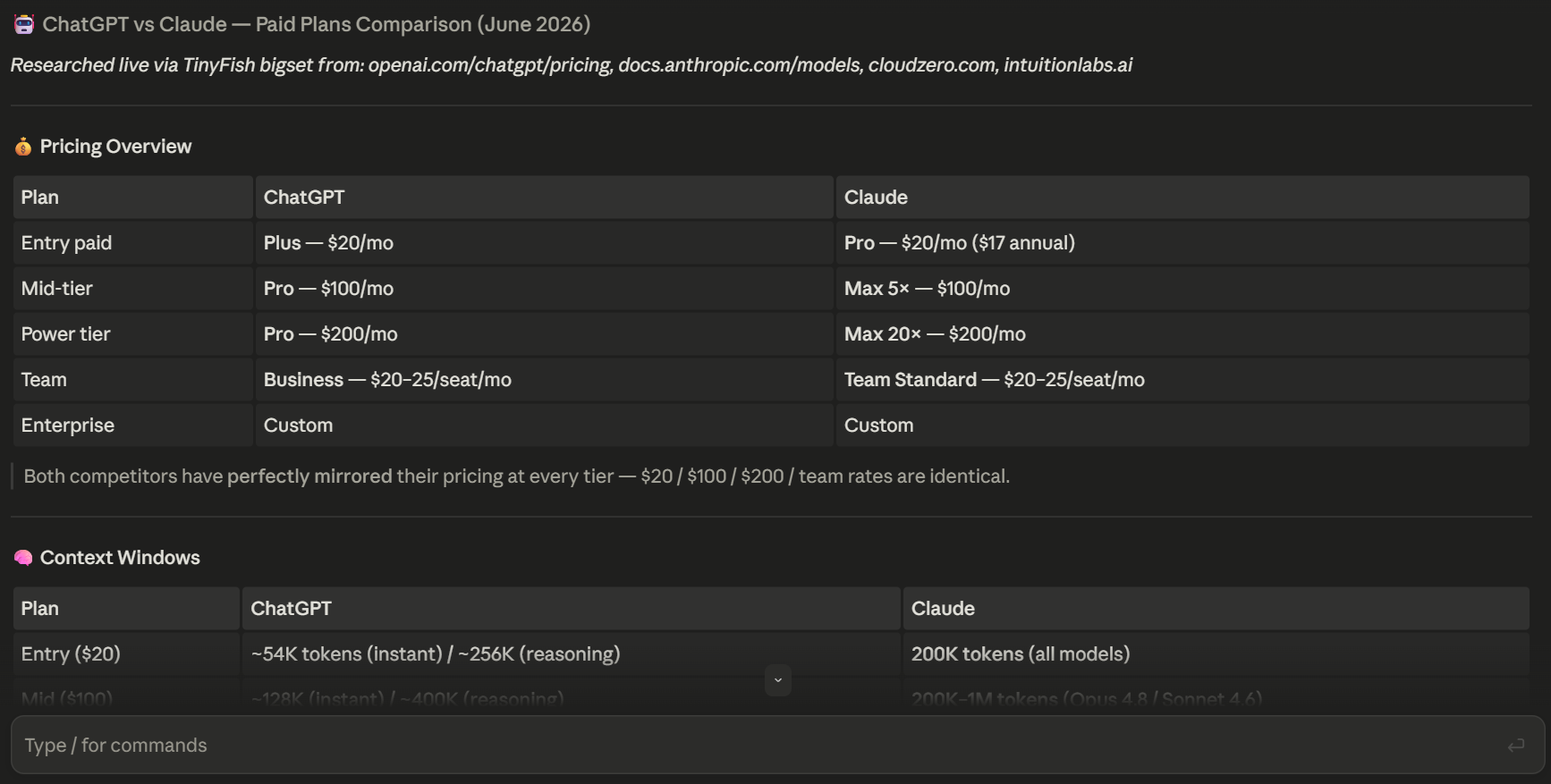
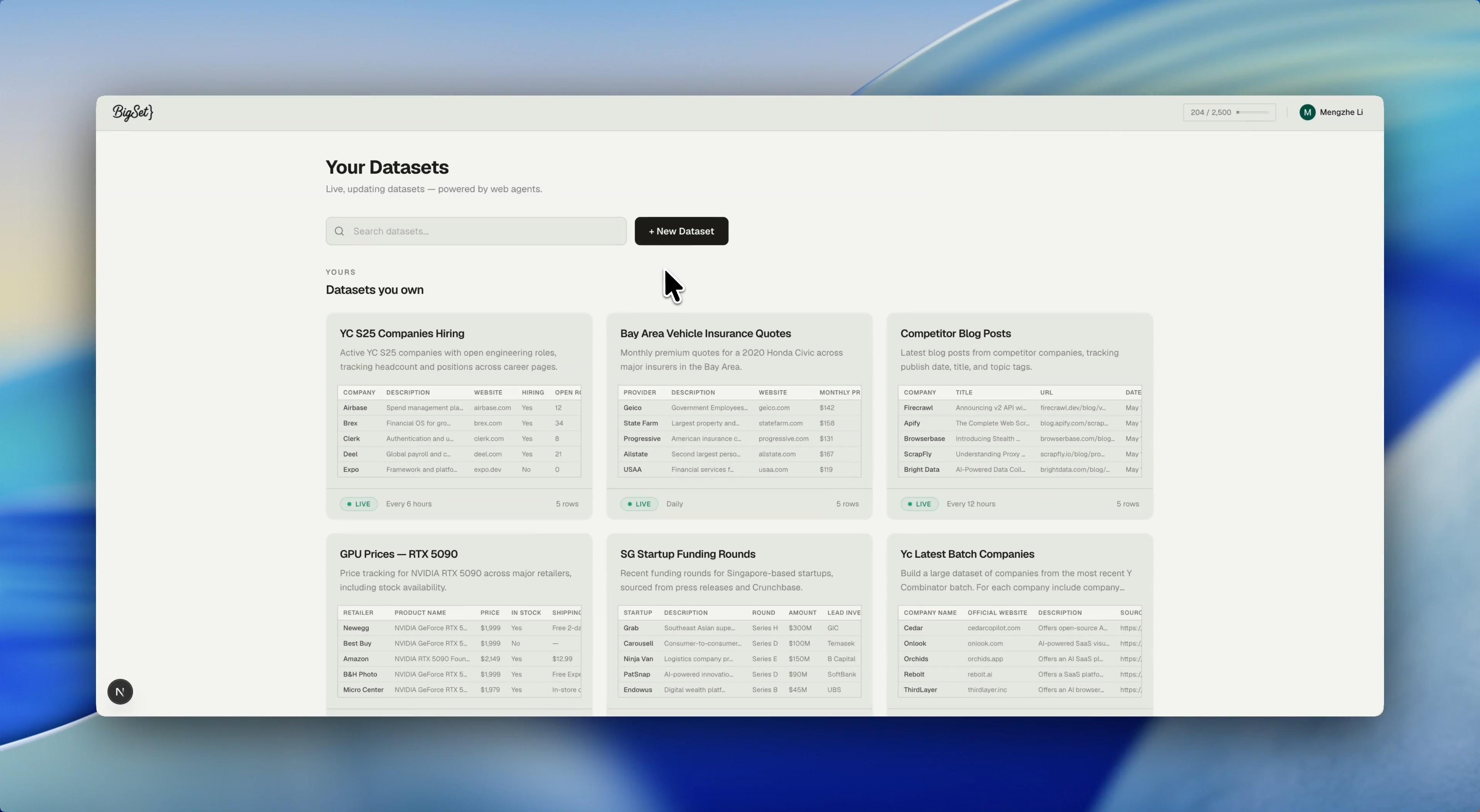
TinyFish は、自然言語の文章から生きたウェブから構造化されたデータセットを抽出するオープンソースのマルチエージェントシステム「Bigset」[https://github.com/tinyfish-io/bigset?ref=testingcatalog.com] をリリースしました。必要なものを記述すると、Bigset がスキーマを推論し、自律型エージェントが実際の Web ページ上で調査を行い、その発見を情報源と照合して検証し、重複を除去した後に、CSV または XLSX としてエクスポート可能なクリーンなテーブルを返します。更新頻度を 30 分単位から週次まで設定可能で、エージェントがスケジュール通りに再実行されるため、誰かがスクリプトに触れなくてもデータセットは常に最新の状態を保ちます。
0:00
/0:48
University Application Tracker
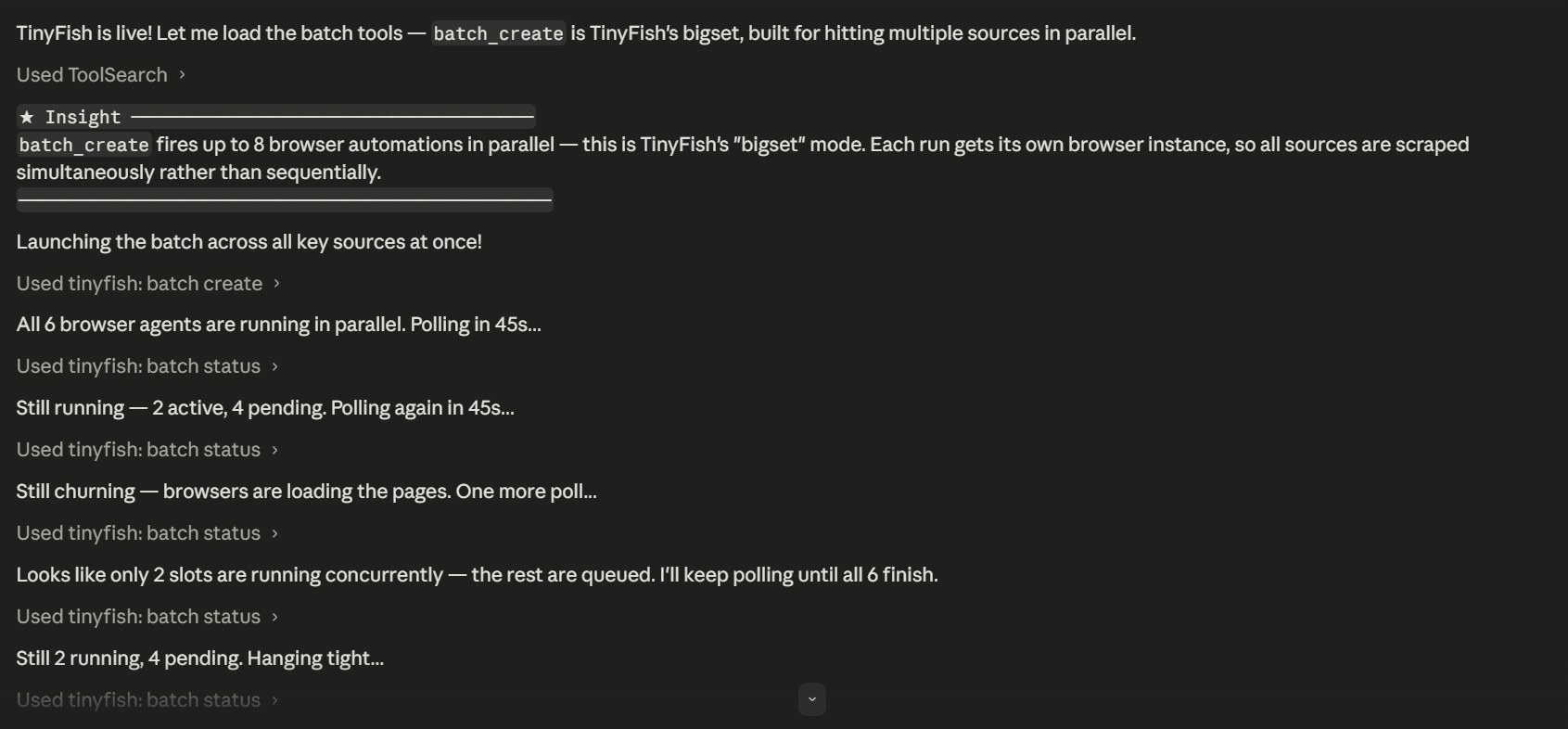
この作業は 2 つのエージェント役割に分割されています。オーケストレーターエージェントは幅優先探索を行い、どの行をデータセットに含めるべきか、またウェブ上のどこでそれらを見つけるべきかを特定し、それぞれの行を埋めるためにサブエージェントを派遣します。オーケストレーター自体には書き込み権限はありません。各サブエージェントは 6 つのツール呼び出しという厳格な予算の下で単一のエンティティを調査し、TinyFish Search と Fetch を通じて実データを取得し、ソース URL とデータ発見のプロセス記録を伴う 1 つの検証済み行を挿入します。
TinyFish Bigset サブエージェントには、値を捏造しないこと、確認できない場合はフィールドを空白のままにすること、重複する主キーは自動的に拒否することが指示されています。オーケストレーターはデータセットが目標行数に達するまで実行され、データの所在を学習するにつれて構築速度が向上します。
 imageTinyfish Bigset ResultsBigset は AGPL-3.0 ライセンスの下で提供され、Docker を通じてセルフホストで動作します。デフォルトでは、スキーマ推論に Claude Sonnet 4.6 を、エージェントの役割には Qwen3.7-max を使用し、すべて OpenRouter を経由してルーティングされますが、各役割ごとに設定可能です。チームは率直に、このプロジェクトは実験的なものであると述べています。データセットの構築には 2〜5 分かかり、公開されたウェブデータが存在するトピックにおいて最も効果的に機能します。無料プランでは月間 2,500 行分の操作が可能で、AI 企業の採用情報、GPU の価格、モデルの料金、主要なオープンソースリポジトリを網羅した 9 つの厳選されたパブリックデータセットが同梱されています。アカウントなしでも閲覧可能です。
TinyFish はプラットフォームの開発元であるカリフォルニア州パロアルトに拠点を置く企業で、ICONIQ が主導するシリーズ A ラウンドで 4,700 万ドルの資金調達を果たしました。Google、DoorDash、Amazon をエンタープライズ顧客として抱え、これまでに 4,000 万件以上のエージェント操作を処理しています。Bigset は、同社のエンタープライズ向けエージェント製品の基盤となるウェブインフラである TinyFish Search と Fetch に直接構築されており、プロプライエタリな自然言語データセットツールのためのオープンソース版として登場しました。利用料はユーザー数ベースではなく、ドメイン制限も設けられておらず、自分で実行する場合はパイプラインの完全な所有権を確保できます。
原文を表示
TinyFish has launched Bigset, an open-source multi-agent system that turns a plain-language sentence into a structured dataset pulled from the live web. You describe what you want, and Bigset infers the schema, sends autonomous agents to research it on real web pages, verifies their findings against sources, deduplicates, and hands back a clean table you can export as CSV or XLSX. Set a refresh cadence from 30 minutes to weekly, and have the agents rerun on schedule so the dataset stays current without anyone needing to touch a script.
0:00
/0:48
*University Application Tracker*
The work is split across two agent roles. An orchestrator agent does breadth-first discovery, identifying which rows belong in the dataset and where on the web to find them, then dispatches sub-agents to fill each one. The orchestrator holds no write access of its own. Each sub-agent researches a single entity under a tight budget of 6 tool calls, pulls real data via TinyFish Search and Fetch, and inserts one verified row with its source URLs and a record of how the data was found.
Sub-agents are instructed never to fabricate values, to leave fields blank when they cannot be confirmed, and to reject duplicate primary keys automatically. The orchestrator runs until the dataset reaches its row target, building faster as it learns where the data lives.
Bigset is licensed under AGPL-3.0 and runs self-hosted through Docker, with schema inference on Claude Sonnet 4.6 and the agent roles on Qwen3.7-max by default, all routed through OpenRouter and configurable per role. The team is candid that the project is experimental: a dataset takes 2 to 5 minutes to build, it works best on topics with public web data, and the free tier covers 2,500 row operations per month. It ships with 9 curated public datasets covering AI companies hiring, GPU prices, model pricing, and top open-source repositories, browsable without an account.
TinyFish is the Palo Alto-based company behind the platform, backed by $47 million in Series A funding led by ICONIQ, and counts Google, DoorDash, and Amazon among its enterprise clients, having processed more than 40 million agent operations. Bigset is built directly on TinyFish Search and Fetch, the same web infrastructure underneath the company's enterprise agent products, and arrives as the open-source answer to proprietary natural-language dataset tools, with no per-seat pricing, no domain restrictions, and full pipeline ownership for anyone who runs it themselves.
今日のまとめ
AIデイリーブリーフで今日の重要ニュースをまとめ読み