Claudeマネージドエージェントの標準内蔵メモリ機能
本文の状態
日本語全文を表示中
詳細モードで約5分の本文を読めます。
同じ出来事の情報源
この情報源を基点に整理
Claude Blog
アントロピックは、Claudeマネージドエージェントに標準内蔵メモリ機能を搭載したと発表した。これにより、エージェントは過去のコンテキストを自動保持し、ユーザーの継続的な利用環境を提供する。
Continue in AI NEW LAB
このニュースを、実務の判断につなげる
AI NEW LABで、試したことや先に確認したい条件を共有できます。まずはログインなしで読めます。
AI NEW LABで論点を見るSource Article
元記事を日本語で読む
本文に関係しない購読案内、埋め込み通知、サイト内プロモーションは除いています。
- カテゴリー
- 製品:Claude Platform
- 公開日:2026年4月23日
- 読了時間:5分
- シェア:リンクをコピー https://claude.com/blog/claude-managed-agents-memory
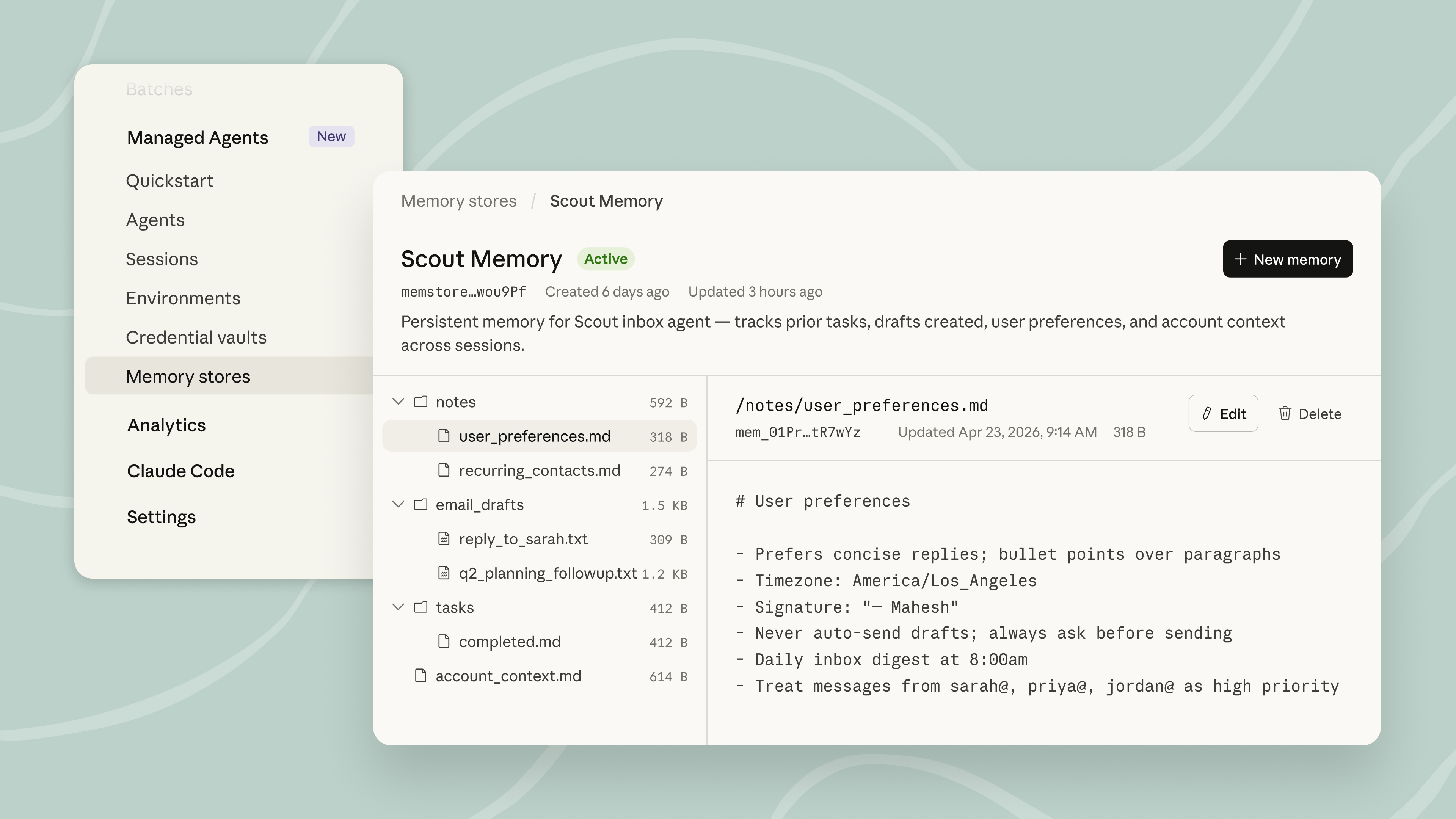
Claude Managed Agents におけるメモリ機能が本日、パブリックベータ(public beta)として利用可能になりました。エージェントはすべてのセッションから学習できるようになり、パフォーマンスと柔軟性のバランスを取ったインテリジェンス最適化メモリレイヤー(intelligence-optimized memory layer)を活用します。メモリはファイルとして保存されるため、開発者はエクスポートしたりAPI経由で管理したりでき、エージェントが保持する情報を完全に制御できます。
セッションを跨いで学習するエージェント
Managed Agentsは、パフォーマンス向けに調整されたハネス(harness)と本番環境インフラストラクチャを組み合わせます。メモリはこの機能を拡張し、セッションを跨いで改善し、互いに学んだ内容を共有する長時間稼働型エージェント向けに内部ベンチマークで最適化されています。
私たちは、エージェントがすでに使用しているツールを基盤としたメモリにおいて最も効果的であることを発見しました。Managed Agentsのメモリはファイルシステム(filesystem)に直接マウントされるため、Claudeはエージェントタスク(agentic tasks)で効果を発揮する同じbashおよびコード実行機能(code execution capabilities)を信頼できます。ファイルシステムベースのメモリにより、最新のモデルはより包括的で整理されたメモリを保存し、特定のタスクに対して何を記憶すべきかをより見極められるようになります。
本番環境グレードのエージェント向けポータブルメモリ
メモリはエンタープライズ展開(enterprise deployments)用に構築されており、スコープ付き権限(scoped permissions)、監査ログ(audit logs)、完全なプログラム制御(programmatic control)を備えています。ストアは異なるアクセススコープを持つ複数のエージェント間で共有できます。例えば、組織全体のストア(org-wide store)は読み取り専用である一方、ユーザーごとのストア(per-user stores)では読み書きが可能です。複数のエージェントが同じストアに対して同時に作業しても、互いのデータを上書きすることはありません。
メモリはエクスポート可能で、API経由で独立して管理できるファイルであり、開発者に完全な制御権を提供します。すべての変更は詳細な監査ログで追跡されるため、メモリがどのエージェントとセッションに由来するものかを確認できます。以前のバージョンへのロールバックや、履歴からのコンテンツ削除(redact)も可能です。更新はClaude Consoleにおいてセッションイベント(session events)として表示されるため、開発者はエージェントが何を学習し、その出所がどこかを追跡できます。
チームが構築しているもの
チームはメモリを活用してフィードバックループ(feedback loops)を閉じ、検証を加速し、カスタム検索インフラストラクチャ(custom retrieval infrastructure)を置き換えています:
- Netflixのエージェントはセッションをまたいでコンテキスト(文脈)を引き継ぎます。複数のやり取りを経て初めて明らかになった洞察や、会話途中で人間から受けた修正などを手動でプロンプト(prompt)やスキルを更新する代わりに記憶に保持します。
- Rakutenのタスクベースの長時間稼働エージェント(タスクベース・ロングランニングエージェント)は、メモリ機能を活用してすべてのセッションから学習し過去のミスを繰り返さないようにすることで、最初の試行でのエラーを97%削減しています。これらはすべて、ワークスペーススコープ(作業領域限定)で監視可能な境界内で実行されます。
- WisedocsはManaged Agents上に文書検証パイプラインを構築し、セッション間メモリ(クロスセッションメモリ)を活用して繰り返し発生する文書上の問題を特定・記憶させることで、検証速度を30%向上させました。
- AndoはManaged Agents上に社内メッセージングプラットフォームを構築中であり、メモリインフラストラクチャを自前で構築するのではなく、各組織の相互作用パターンをキャプチャしています。
0/5
eBook
 imageimage
はじめに
Managed Agentsのメモリ機能は現在、Claude Platformでパブリックベータ版(パブリックベータ)として利用可能です。Claude Consoleにアクセスするか、新しいCLI(コマンドラインインターフェース)を使用してメモリ付きエージェントを初めてデプロイしてください。ドキュメントを参照して詳細をご確認ください。
該当するアイテムが見つかりません。
Claudeで組織の運用方法を変革する
開発者ニュースレターを購読する
製品のアップデート、チュートリアル、コミュニティの注目記事など。毎月あなたのメールボックスにお届けします。
月次の開発者ニュースレターを受け取る場合は、メールアドレスをご入力ください。いつでも購読を解除できます。
ありがとうございます!登録が完了しました。
申し訳ありません。送信時に問題が発生しました。後ほど再度お試しください。
原文を表示
- Category
- ProductClaude Platform
- DateApril 23, 2026
- Reading time5min
- ShareCopy linkhttps://claude.com/blog/claude-managed-agents-memory
Memory on Claude Managed Agents is available today in public beta. Your agents can now learn from every session, using an intelligence-optimized memory layer that balances performance with flexibility. Because memories are stored as files, developers can export them, manage them via the API, and keep full control over what agents retain.
Agents that learn across sessions
Managed Agents pairs production infrastructure with a harness tuned for performance. Memory extends that: it’s optimized against internal benchmarks for long-running agents that improve across sessions and share what they've learned with each other.
We've found that agents are most effective with memory when it builds on the tools they already use. Memory on Managed Agents mounts directly onto a filesystem, so Claude can rely on the same bash and code execution capabilities that make it effective at agentic tasks. With filesystem-based memory, our latest models save more comprehensive, well-organized memories and are more discerning about what to remember for a given task.
Portable memories for production-grade agents
Memory is built for enterprise deployments, with scoped permissions, audit logs, and full programmatic control. Stores can be shared across multiple agents with different access scopes. For example, an org-wide store might be read-only, while per-user stores allow reads and writes. Multiple agents can work concurrently against the same store without overwriting each other.
Memories are files that can be exported and independently managed via the API, giving developers full control. All changes are tracked with a detailed audit log, so you can tell which agent and session a memory came from. You can roll back to an earlier version or redact content from history. Updates also surface in the Claude Console as session events, so developers can trace what an agent learned and where it came from.
What teams are building
Teams have been using memory to close feedback loops, speed up verification, and replace custom retrieval infrastructure:
- Netflix agents carry context across sessions, including insights that took multiple turns to uncover and corrections from a human mid-conversation, instead of manually updating prompts and skills.
- Rakuten's task-based long-running agents use memory to learn from every session and avoid repeating past mistakes, cutting first-pass errors by 97%, all within workspace-scoped, observable boundaries.
- Wisedocs built their document verification pipeline on Managed Agents, using cross-session memory to spot and remember recurring document issues, speeding up verification by 30%.
- Ando is building their workplace messaging platform on Managed Agents, capturing how each organization interacts instead of building memory infrastructure themselves.
0/5
eBook
Getting started
Memory on Managed Agents is now available in public beta on the Claude Platform. Visit the Claude Console or use our new CLI to deploy your first agent with memory. Explore the documentation to learn more.
No items found.
Transform how your organization operates with Claude
Get the developer newsletter
Product updates, how-tos, community spotlights, and more. Delivered monthly to your inbox.
Please provide your email address if you'd like to receive our monthly developer newsletter. You can unsubscribe at any time.
Thank you! You’re subscribed.
Sorry, there was a problem with your submission, please try again later.
今日のまとめ
AIデイリーブリーフで今日の重要ニュースをまとめ読み