ByteDance Seed、実環境学習評価ベンチ「EdgeBench」と新スケーリング法を公開
本文の状態
日本語全文を表示中
詳細モードで約9分の本文を読めます。
同じ出来事の情報源
この情報源を基点に整理
ByteDance Seed Blog
ByteDance Seed は、エージェントが実環境で持続的に学習する能力を測定するための超長期ホライズンベンチマーク「EdgeBench」を発表し、学習速度の新たなスケーリング法則を発見した。
AI深層分析を開く2026年8月4日 20:02
AI深層分析
キーポイント
超長期ホライズンベンチマークの公開
134 の多様なタスクを含む「EdgeBench」が公開され、エージェントが少なくとも 12 時間継続して実環境と相互作用する能力を測定する。
環境学習における新たなスケーリング法則
分析の結果、エージェントの全体的なパフォーマンスは対数シグモイド曲線に従い(R²=0.998)、最前線のモデル間では学習速度が約 3 ヶ月で倍増する傾向が見られた。
オープンソース化によるコミュニティへの貢献
51 のタスクと完全な評価フレームワークがオープンソース化され、他の研究者や開発者が実環境での学習メカニズムをさらに調査できるようになった。
環境学習に特化したベンチマーク設計
EdgeBench は既存の知識測定ではなく、エージェントが時間とフィードバックを通じてどのように学習し改善するかを評価する。各タスクは現実世界の文脈に基づき設計され、12 時間以上の連続動作や最大 320 時間に及ぶ人間专家の努力を記録している。
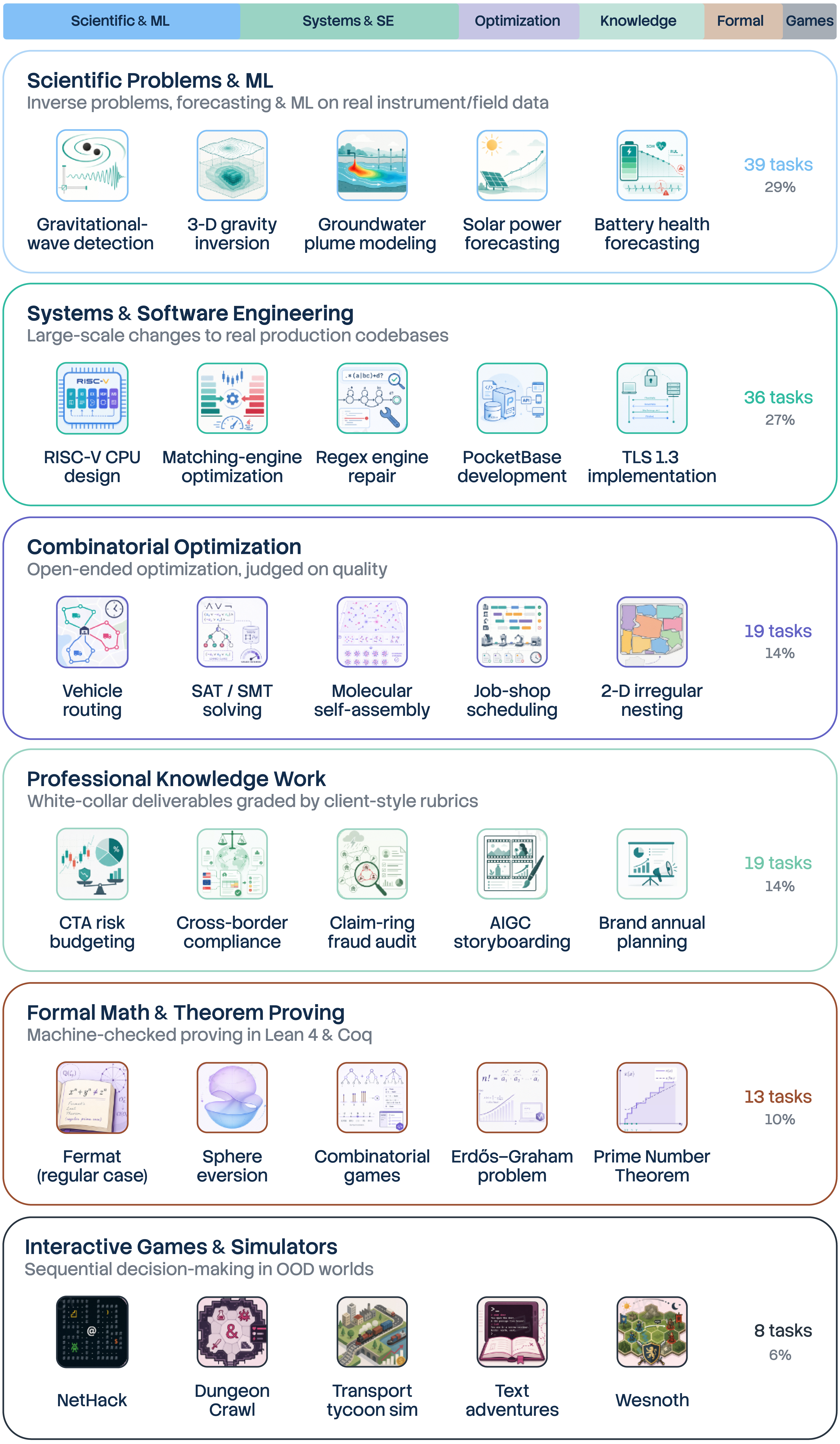
6 つのドメインにわたる多様なタスク
科学問題からゲームまで 6 つの領域にまたがる 134 のタスクが専門家の協力により構築され、その 90% 以上は新規作成された。これらのタスクは実世界の課題を基盤としており、エージェントの汎用的な学習能力を検証する。
重要な引用
EdgeBench, an ultra-long-horizon benchmark built to measure learning from real-world environments
the overall agent performance in "environment learning" closely follows a log-sigmoid curve
agent learning speed also appears to double roughly every three months
EdgeBench, by contrast, focuses on how agents learn from real-world environments when given sufficient time, feedback, and room for improvement.
編集コメントを表示
編集コメント
実環境での学習プロセスを定量化する試みは、AI が静的な知識から動的な適応へと移行する過程を理解する上で極めて重要である。このベンチマークが業界標準として広まれば、次世代エージェントの設計思想に大きな影響を与える可能性がある。
Source Article
元記事を日本語で読む
本文に関係しない購読案内、埋め込み通知、サイト内プロモーションは除いています。
ここ数年、事前学習におけるスケーリング則の議論を通じて、モデルの能力はデータと計算リソースがスケールするにつれて比較的予測可能な形で向上するというコンセンサスが広がりました。しかし、大規模モデルが実世界の環境に導入されると、より実践的な問いが浮き彫りになります。「持続的な環境との相互作用を通じて学習を続け、時間をかけて改善し続けることができるのか」という点です。
私たちは最近、実世界の環境からの学習を測定するために構築された超長期ホライズンのベンチマーク「EdgeBench」を発表しました。このベンチマークは、6 つの主要な能力ドメインにわたる 134 の現実的で多様なタスクで構成されており、各タスクではエージェントが少なくとも 12 時間にわたり継続的に動作することが可能になっています。
これらのタスクにおける長期ホライズンの相互作用実行に基づき、「環境学習」における全体的なエージェントの性能は対数シグモイド曲線にほぼ従うことが分かりました。適合度の平均値 R² は 0.998 に達しています。異なる世代の最先端モデルを横断して見ると、エージェントの学習速度も約 3 ヶ月ごとに倍増しているように見えます。
EdgeBench では現在、51 のタスクと完全な評価フレームワークをオープンソース化しており、より広いコミュニティが実世界の環境からどのように学習するかをさらに研究できるようになっています。
プロジェクトリンク: https://seed.bytedance.com/edgebench論文リンク: https://edge-bench.org/paper.pdfコードリンク: https://github.com/ByteDance-Seed/EdgeBenchデータセットリンク: https://huggingface.co/datasets/ByteDance-Seed/EdgeBench
実世界環境の学習を測定するための超長期ホライズンベンチマーク
実世界の現場において、モデルのパフォーマンスはトレーニング中に何を得たかだけでなく、その後の展開にも左右されます。実用的なタスクを解決するために必要な知識の多くは、トレーニングデータセットに明示的に含まれていないからです。
実際の業務では、単に入手しやすい情報を利用するだけでは不十分です。反復的な試行錯誤、フィードバックの解釈、そして継続的な修正が不可欠となります。
同時に、実世界の環境は常に変化し続けています。新しいツールや問題、知識が次々と登場するため、一度作成された静的なトレーニングデータセットで事前にすべてを網羅することは不可能です。その結果、環境から学習し、タスクのパフォーマンスを継続的に向上させるエージェントの能力が、ますます重要視されるようになっています。
既存のベンチマークは主に、モデルがすでに備えている知識や能力を測定するものが多いです。これに対し、EdgeBench は、十分な時間・フィードバック・改善余地を与えられた際に、エージェントが現実世界からどのように学習するかという点に焦点を当てています。
タスク設計における EdgeBench の特徴は以下の通りです。
- 環境学習に特化: 各作業空間、フィードバック信号、評価者はすべて実践に基づいて設計されており、スコアはエージェントがその環境内でいかに学習し改善するかを反映します。
- 超長期のホライズン: すべてのタスクで 12 時間以上の連続動作が可能であり、一部の拡張実験では 72 時間以上も実行されます。これにより、経験は時間をかけて蓄積されていきます。人間が関与した記録のあるタスクでは、専門家が単一のタスクを完了するために平均 57.2 時間を要し、最大で 320 時間に達しました。
- 6 つのドメインにわたる網羅性: 134 のタスクは、科学問題・機械学習、システム・ソフトウェアエンジニアリング、専門知識に基づく業務、組み合わせ最適化、形式数学・定理証明、インタラクティブゲーム・シミュレーターの 6 ドメインをカバーしています。これらは現実の問題に基づきドメインの専門家によって反復的に開発され、90% 以上がゼロから構築されました。
環境学習におけるスケーリング法則の解明
EdgeBench では、エージェントは一度提出しただけで終了するわけではありません。代わりに、タスク環境と継続的に相互作用し、スコアやエラーメッセージ、改善のためのヒントなどのフィードバックを受け取ります。その結果、これらの曲線が示すのは、エージェントが一度の試行でタスクを解決できる能力ではありません。むしろ、フィードバックを取り込み、戦略を調整し、持続的な相互作用を通じて結果を段階的に向上させる能力を捉えています。
134 の実世界タスクにわたる約 38,000 時間に及ぶ環境との相互作用に基づくと、エージェントのパフォーマンスは静的なものではないことがわかります。エージェントは、環境との継続的な相互作用を通じて学習し続けることができます。
詳しく見てみると、環境学習における成長の軌道は一様ではありません。エージェントは最終的なパフォーマンスだけでなく、どのように学び、フィードバックを吸収し、時間をかけて改善するかにおいても異なります。中には着実に向上するものもあれば、初期段階で急速に成果を上げその後頭打ちになるもの、あるいは長い間停滞した後にようやく突破するものもあります。
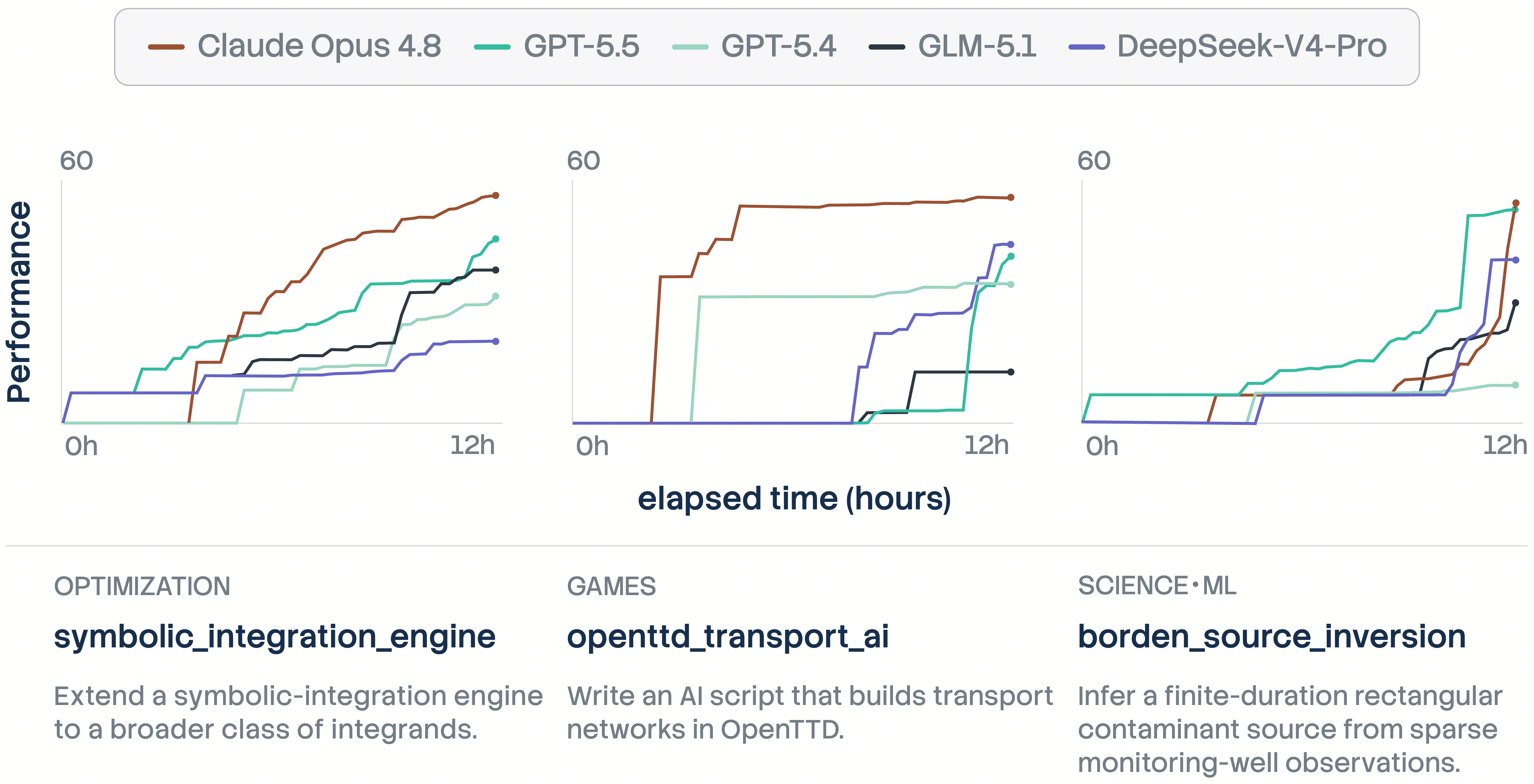
12 時間という期間における 3 つのタスクでのエージェント学習曲線は、左から右へ順に「着実な改善」「初期段階での急速な進歩」「後期段階での劇的な突破」を示しています。
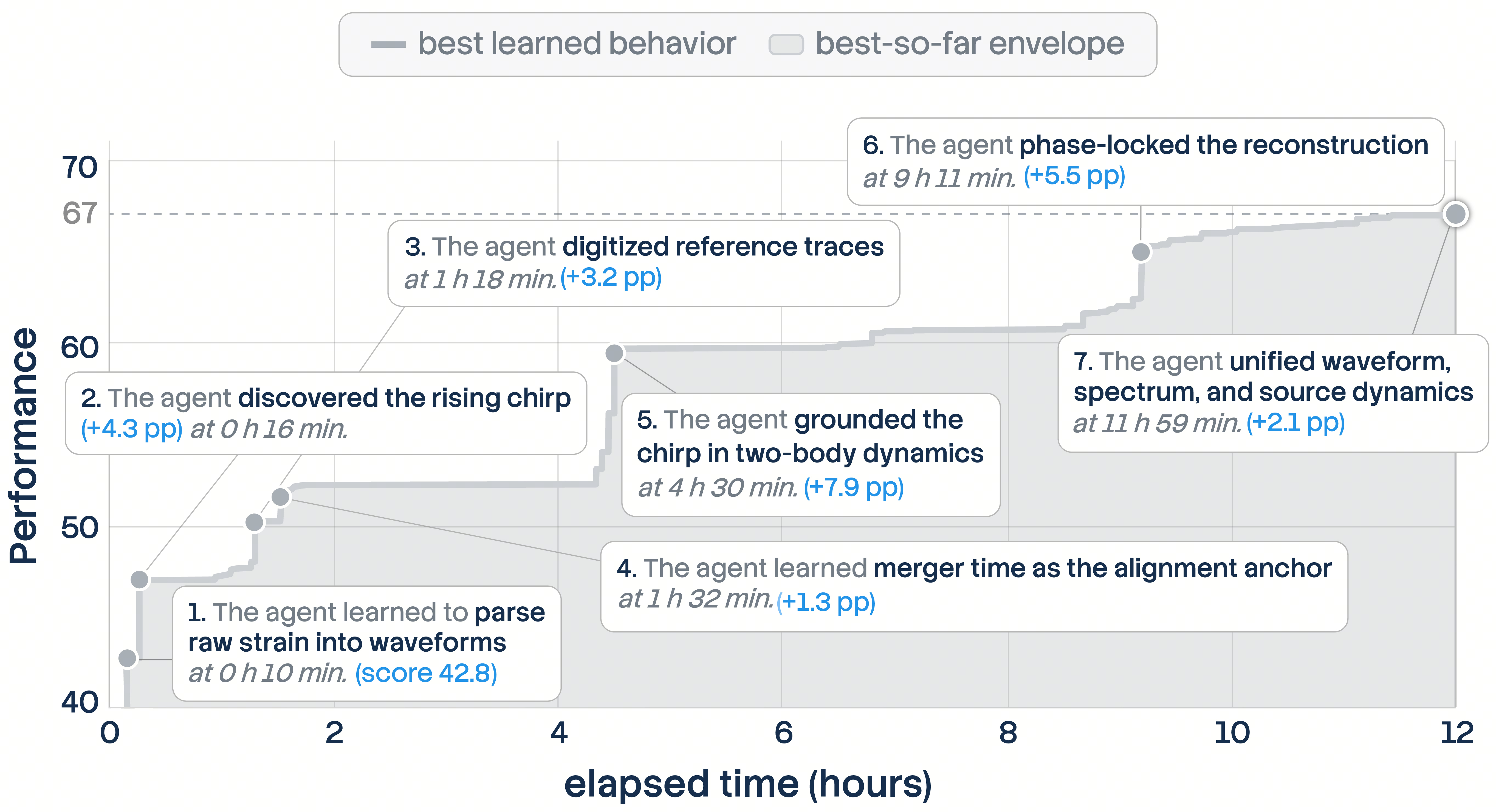
重力波検出タスクにおける 12 時間の実行を例にとりましょう。GPT-5.5 は 247 回の採点試行を通じてスコアを 42.8 から 67.0 に引き上げました。この事例は、環境学習が単なる反復的な微調整ではないことを示しています。フィードバックに応じて問題を再定義し、分解し、再構成する際に、大きなスコアの向上が生じるのです。
単一のタスクから複数のタスクにわたる集計パフォーマンスへと視点を移すと、より広範なパターンが浮かび上がります。この学習プロセスはランダムな変動ではなく、非常に安定した法則に従っているのです。
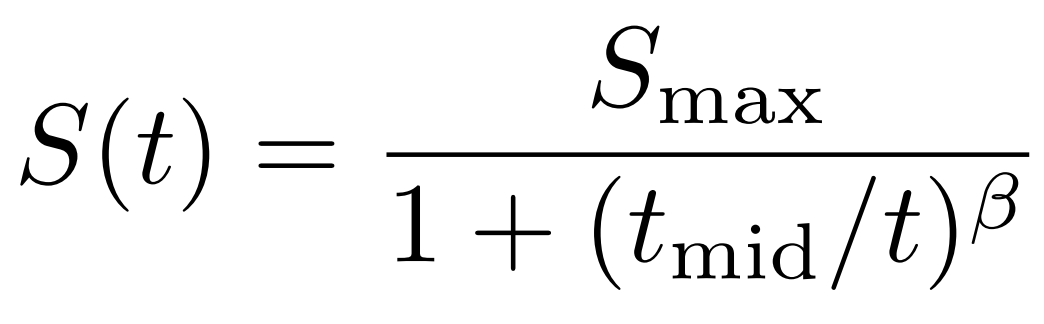
各モデルについて 134 の全タスクを網羅し、タスクごとに 3 回の独立した実行を行いました。その結果、モデルあたり 402 本の学習曲線が得られました。個別に見れば、単一のタスクにおける軌跡はノイズが多く不安定に思えるかもしれません。しかし、これらの軌跡を相互作用の時間軸で集計・平均化すると、シンプルながら極めて精度の高い対数シグモイド曲線へと収束することがわかります。
この関数形は、異なるモデルの平均的な学習軌跡を常に正確に記述するだけでなく、非常に高い精度で適合します。その結果得られる平均決定係数(R²)は 0.998 に達しています。これは単なる経験的な曲線当てはめにとどまらず、グラフ探索理論の観点からも理解できる現象です。
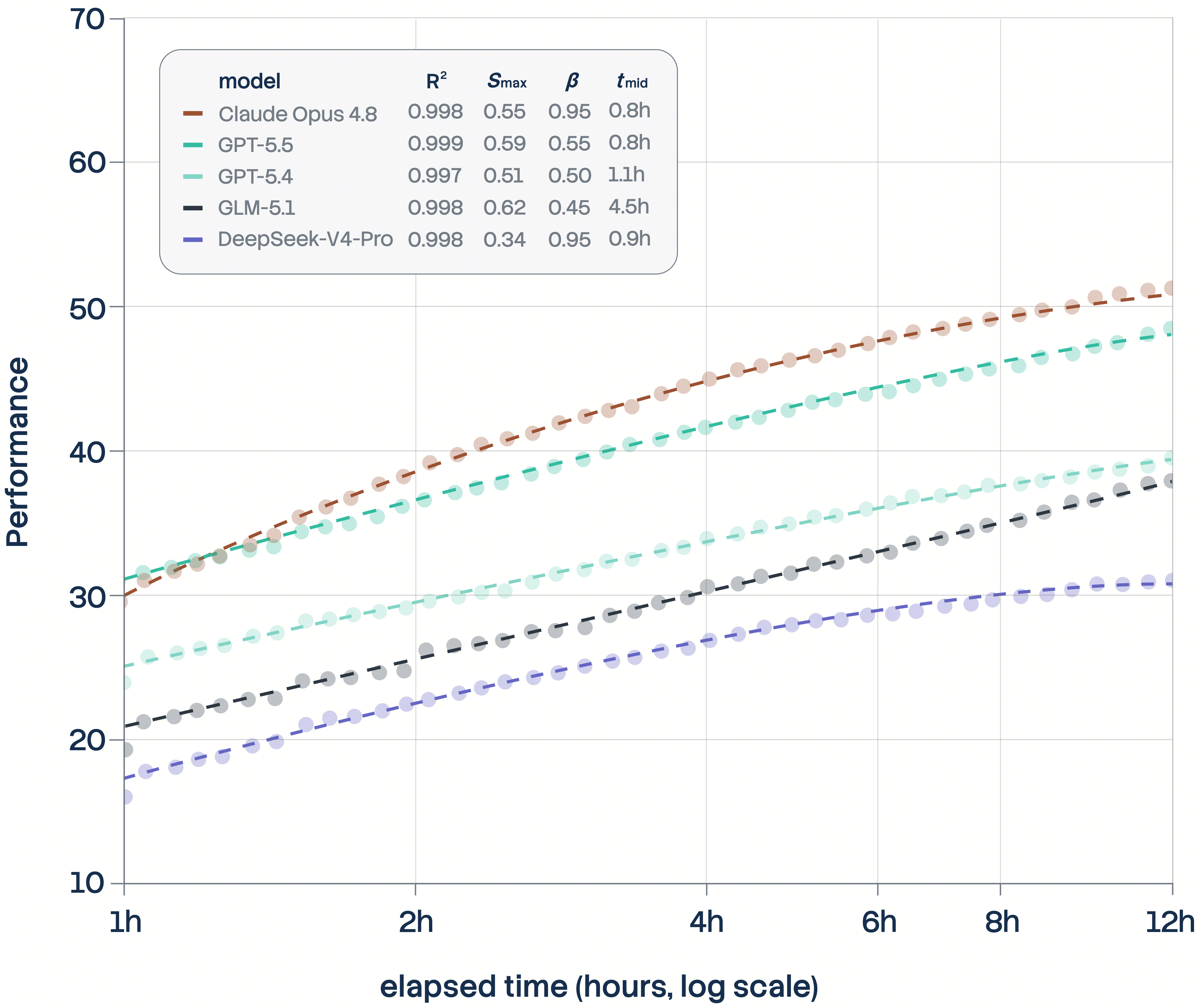
*134 のタスクにわたる平均では、環境との相互作用時間が長くなるほど、エージェントの全体的なパフォーマンスが向上することが示されています。より詳細な分析については、元の論文を参照してください。
さらに、モデル世代が進むにつれて、環境からの学習速度が変化するのかという問いも投げかけられています。
先行知識やベースライン能力の差による干渉を最小限に抑えるため、初期性能が類似した 18 のタスクを選定し、2025 年 9 月から 2026 年 5 月にかけてリリースされた連続する世代間モデルに対して 2 時間の評価を実施しました。この期間におけるパフォーマンスの向上度合いを「学習速度」の特徴として用いています。
その結果、モデルの世代が進むにつれて環境学習の速度が著しく向上することが示されました。当時利用可能だった最も先進的なモデルにおいては、この速度は約 3 ヶ月ごとに倍増するペースに近づいています。
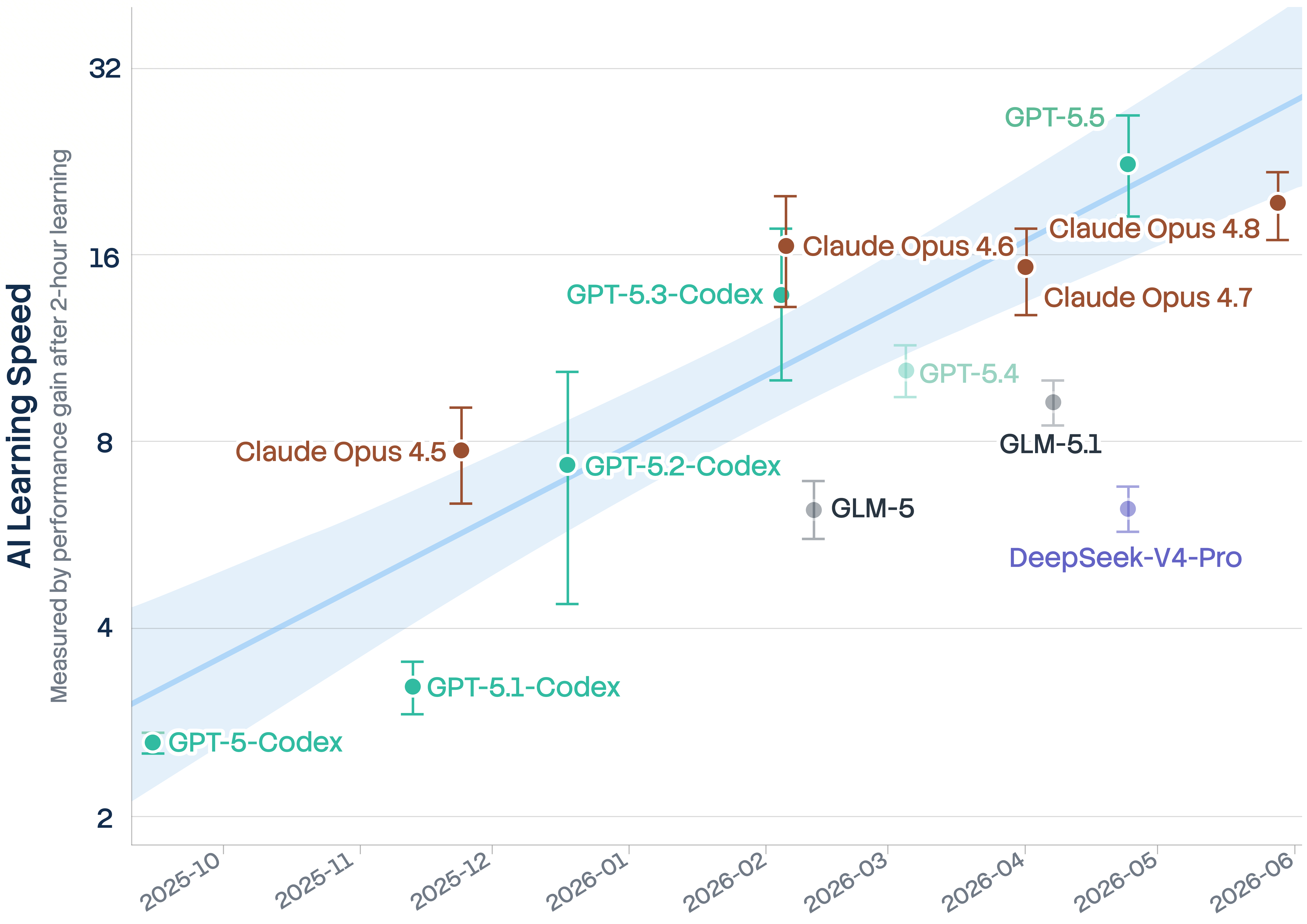
*異なる世代の大型言語モデルにおける学習速度の推移。
結びの言葉
モデルが環境から学習する速度がさらに向上していく中で、将来のモデル間の差は初期能力の違いだけでなく、環境に投入された後の学習スピードの速さにも大きく依存するようになるでしょう。フィードバックの解釈や経験の蓄積、そして戦略の調整といった能力は、長期かつ開放的なタスクにおいて持続的な優位性を築く上で、ますます中核的な役割を果たすようになります。
EdgeBench が関連研究や実用アプリケーションの有用な指針となることを願っています。また、モデルがオープンエンドな環境でどのように学習し、適応し、改善していくかという点に焦点を当てた今後の研究にも期待しています。同時に、現実世界での価値創造を支える能力や、将来の AI の上限を決定づける重要な能力について引き続き理解と研究を進め、知能の未開拓領域への探求も続けていきます。
原文を表示
Over the past few years, pretraining scaling laws have led to a broad consensus: model capabilities improve in a relatively predictable way as data and compute scale. But once large models enter real-world settings, a more practical question comes into focus: can they continue learning through sustained interaction with their environments and keep improving over time?
We recently released EdgeBench, an ultra-long-horizon benchmark built to measure learning from real-world environments. The benchmark comprises 134 realistic and diverse tasks spanning six major capability domains, each allowing agents to operate continuously for at least 12 hours.
Based on long-horizon interaction runs across these tasks, we find that the overall agent performance in "environment learning" closely follows a log-sigmoid curve, with an average goodness of fit of R² = 0.998. Across frontier models from different generations, agent learning speed also appears to double roughly every three months.
EdgeBench has now open-sourced 51 tasks and the full evaluation framework, enabling the broader community to further study how agents learn from real-world environments.
Project link: https://seed.bytedance.com/edgebenchPaper link: https://edge-bench.org/paper.pdfCode link: https://github.com/ByteDance-Seed/EdgeBenchData link: https://huggingface.co/datasets/ByteDance-Seed/EdgeBench
An ultra-long-horizon benchmark for measuring real-world environment learning
In real-world settings, model performance depends not only on what is learned during training. Much of the knowledge required for solving practical tasks is not explicitly present in training corpora. Real-world work also relies not merely on readily available information, but on repeated trial and error, feedback interpretation, and continual revision.
At the same time, real-world environments are constantly evolving. New tools, new problems, and new knowledge continue to emerge, meaning that no static training dataset can ever cover everything in advance. As a result, an agent's ability to learn from its environment and continuously improve task performance is becoming increasingly important.
Most existing benchmarks primarily measure knowledge and capabilities that models already possess. EdgeBench, by contrast, focuses on how agents learn from real-world environments when given sufficient time, feedback, and room for improvement. EdgeBench has the following characteristics in task design:
- Designed for environment learning: Each workspace, feedback signal, and evaluator is closely grounded in real-world practice, and the score reflects how the agent learns and improves within the environment.
- Ultra-long horizon: Every task supports more than 12 hours of continuous operation, and some extended experiments run for over 72 hours, allowing experience to accumulate over time. Among tasks with recorded human effort, human experts spent an average of 57.2 hours completing a single task, with the maximum reaching 320 hours.
- Coverage across six domains: The 134 tasks span scientific problems & ML, systems & software engineering, professional knowledge work, combinatorial optimization, formal math & theorem proving, and interactive games & simulators. They were iteratively developed by domain experts based on real-world problems, and more than 90% were built from scratch.
Unveiling scaling laws in environment learning
In EdgeBench, an agent does not finish after a single submission. Instead, it continuously interacts with the task environment and receives feedback such as scores, error messages, and hints for improvement. As a result, these curves do not reflect an Agent's ability to solve a task in one shot. Rather, they capture an agent's ability to absorb feedback, adjust its strategy, and progressively improve its results through sustained interaction.
Based on roughly 38,000 hours of environment interaction across 134 real-world tasks, we find that agent performance is not static. Agents can continue to learn and improve through sustained interaction with their environments.
A closer look shows that growth trajectories in environment learning are far from uniform. Agents differ not only in final performance, but also in how they learn, absorb feedback, and improve over time. Some improve steadily, some make rapid early gains before plateauing, and others remain stuck for a long time before eventually breaking through.
Take a 12-hour run on the gravitational-wave task as an example: GPT-5.5 improved its score from 42.8 to 67.0 over 247 scored attempts. This case shows that environment learning is more than simple iterative tuning: major score gains often arise when the agent redefines, decomposes, and reorganizes the problem in response to feedback.
If we shift from a single task to aggregate performance across tasks, a broader pattern emerges: this learning process is not random fluctuation, but follows a highly stable pattern.
For each model, the study covers all 134 tasks, with 3 independent runs per task, yielding 402 learning curves per model. Viewed individually, any single-task trajectory may appear noisy and volatile. But once these trajectories are aggregated and averaged by interaction time, they converge to a simple yet highly precise log-sigmoid curve:
This functional form not only fits the average learning trajectories of different models consistently, but does so with very high precision, achieving a mean R² of 0.998. This is not merely an empirical fitting result; it can also be understood through the lens of graph exploration theory.
We also ask a further question: does the speed at which models learn from the environment change across generations?
To minimize the interference from differences in prior knowledge and baseline capability, we selected 18 tasks on which models showed similar initial performance, ran 2-hour evaluations on successive generations of models released between September 2025 and May 2026, and used the performance gains over this period to characterize their "learning speed". The results show that as model generations evolve, the speed of environment learning increases significantly. For the most advanced models available at the time, this speed approaches a doubling every three months.
Closing thoughts
As the speed at which models learn from the environment continues to increase, future differences between models may lie not only in their initial capabilities, but increasingly in how quickly they can learn after entering an environment. The ability to interpret feedback, accumulate experience, and adjust strategies will become ever more central to building durable advantages in long-horizon, open-ended tasks.
We also hope EdgeBench can provide a useful reference for related research and practical applications, and we look forward to more future work focusing on how models learn, adapt, and improve in open-ended environments. At the same time, we will continue to understand and study the capabilities that sustain value creation in real-world settings, as well as the key capabilities that will define the upper bound of future AI, and keep exploring the uncharted frontiers of intelligence.
AI算出
主要ニュースainew評価標準
大規模モデルの継続的学習能力を測定する画期的なベンチマークと、対数シグモイド曲線に従う新しいスケーリング法則の発見は、AI 研究コミュニティにとって重要な新事実であり、新規性が高い。ただし、発表元が ByteDance Seed(中国企業)であり、日本固有の適用条件や規制に関する情報が含まれていないため、日本の関連性は限定的となる。
6つの評価軸を見る
- AI関連度
- 100
- 情報源の信頼性
- 25
- 新規性
- 75
- 調べる価値
- 75
- 重複の少なさ
- 100
- 日本での有用性
- 25
今日のまとめ
AIデイリーブリーフで今日の重要ニュースをまとめ読み