Weaviate、クリエイティブワークフローの分断点を分析する連載第2部を公開
本文の状態
日本語全文を表示中
詳細モードで約9分の本文を読めます。
同じ出来事の情報源
この情報源を基点に整理
Weaviate Blog
Weaviate は、プロジェクトの規模拡大に伴う命名規則の崩壊やメタデータの質低下が検索失敗を招く現状を分析し、フォルダ階層とタグ付けの限界を指摘して新しいワークフローの必要性を説いている。
Continue in AI NEW LAB
このニュースを、実務の判断につなげる
AI NEW LABで、試したことや先に確認したい条件を共有できます。まずはログインなしで読めます。
AI NEW LABで論点を見るAI深層分析を開く2026年8月13日 23:46
AI深層分析
キーポイント
フォルダ階層の構造的限界
プロジェクトが小規模で所有権が安定している間は有効だが、スケールすると部門ごとの異なる整理基準(生物群系別、スプリント別など)が互換性を失い、ファイルがどこに置かれたかしか示さなくなる。
タグ付けプロセスの脆弱性
納期プレッシャー下では完璧な記述的タグ付けは実施されず、チームは現在の納品物への最適化を図るため、将来的な検索を想定した一貫性のあるメタデータ付与がおろそかになる。
キーワード検索の語彙ミスマッチ
クエリと保存されたテキストが同じ単語を使用する場合にのみ機能する従来のキーワード検索は、クリエイティブな作業における自然言語の多様性や語彙の不一致に対応できない。
創造的作業における語彙の不一致と検索の限界
クリエイティブな作業では、クエリと保存されたテキストが同じ言葉を使わないことが多く、ファイル名も必要な説明を含んでいないため、従来のキーワード検索は機能しない。
システム不全による社会的記憶への依存
命名規則のズレやタグ付けの不備が時間とともに蓄積すると、チームは複数の部分的に重複するシステムを抱え、検索ではなく「誰かが覚えているか」という社会的記憶に頼らざるを得なくなる。
重要な引用
Folders still matter, but over time they describe where a file landed, not what that file is useful for.
Teams optimize for shipping what is needed now, not for a hypothetical retrieval request six months later.
Keyword search is excellent when the query and the stored text use the same words. But creative work is full of vocabulary mismatch.
Creative work is messy, and file names rarely contain the descriptions we need to find them again.
編集コメントを表示
編集コメント
Weaviate は、AI 検索技術の文脈において、単なるツールの話を超えて組織的なプロセスの欠陥を指摘している。この分析は、多くの企業が直面する「データが散在して活用できない」という課題の本質を理解する上で示唆に富む。
Source Article
元記事を日本語で読む
本文に関係しない購読案内、埋め込み通知、サイト内プロモーションは除いています。
Building Foundry
クリエイティブなワークフロー、セマンティック検索、そして Weaviate についての実践的なシリーズ。
本シリーズの第 1 回はこちら:「AI は創造性を奪うのではなく、摩擦を取り除く」
多くのクリエイティブチームは、すでに検索に時間を取られていることを実感しています。しかし、どこで問題が起きているのかまでは明確でないケースが多いです。通常、これはツールが悪いからでも、チームの不注意から始まるわけではありません。
プロジェクトが大きくなるにつれて、命名規則が曖昧になり、メタデータの質も低下します。その結果、すべてを完璧に整理し続けるコストが、多少の混乱を受け入れるコストよりも高くなってしまうのです。ある時期までは、このトレードオフは妥当に思えます。しかしやがて検索機能が機能しなくなり、誰も何も探せなくなってしまう。
最初の失敗:フォルダ構造
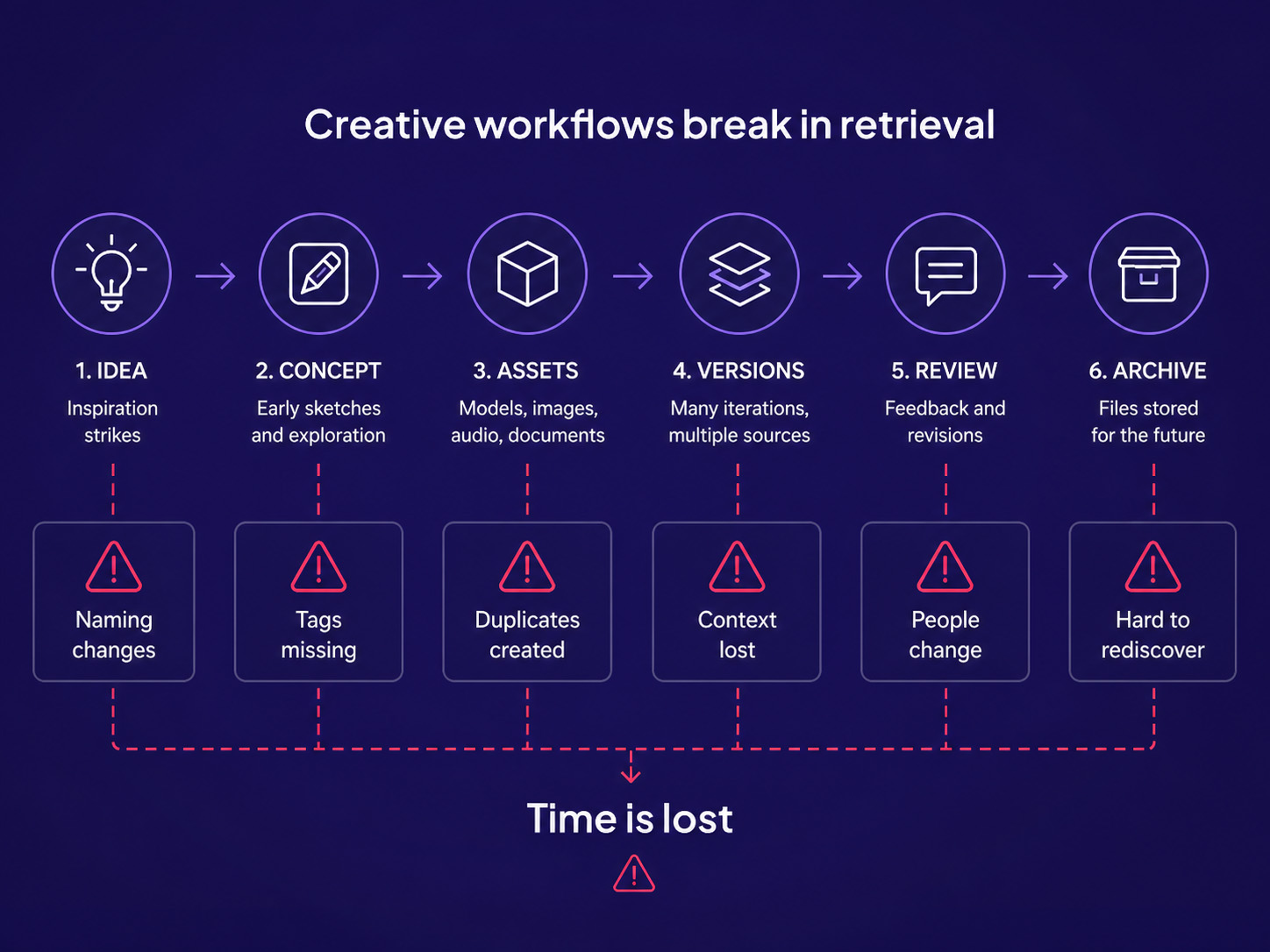
プロジェクトが小規模で、所有権が安定し、全員が同じメンタルモデルを共有している場合、フォルダツリーは最も効果的に機能します。しかし、クリエイティブな制作現場では、そのような状態が長く続くことは稀です。
ゲーム開発では、チームによって資産の整理方法がバラバラです。あるチームはバイオーム別、別のチームはスプリント別、さらに別のチームはエンジン対応状況で管理しています。それぞれのアプローチには一理ありますが、2 年規模のプロダクション全体で見れば、これらは互換性のない「同じ作業」の地図になってしまいます。
映画制作でも同様です。撮影された素材は当初は撮影日順に整理され、編集段階ではシーケンス別に入れ替えられますが、VFX やカラーグレーディングのチームは独自の派生構造を維持し続けます。デザインチームに至っては、クライアントワーク、探索用のファイル、最終エクスポートがそれぞれ別のシステムに置かれ、それらを繋ぐリンクも脆弱です。
フォルダ自体はまだ重要ですが、時間が経つとフォルダ構造は「ファイルがどこに保存されたか」を示すだけで、「そのファイルを何に使えるか」という本質的な情報は失われます。
2 つ目の失敗:タグ付け
タグ付けは、散らかったフォルダの問題に対する解決策として提案されることがよくあります。管理された環境下では確かに機能しますが、課題は「一貫したタグ付け」がプロセスの規律に依存している点です。しかし、納期というプレッシャーの下では、このプロセスの規律は脆くなります。
厳しいスケジュールでシーケンスを納品するアニメーションチームは、バージョン管理されたシーンファイル一つひとつに完璧な説明的なタグを付与するために作業を中断しません。セッション間を行き来する音楽プロデューサーも、各ステム(音源)に再利用可能な意味的なラベルを分類するために一時停止することはありません。また、複数のチャネル向けにキャンペーンバリアントを準備するデザイナーは、将来の検索を見据えて中間の探索プロセス一つひとつに注釈をつけることは稀です。
これは技術の未熟さによるものではありません。インセンティブ構造の問題です。チームは、今すぐ必要なものを納品することに最適化されており、6 ヶ月後に発生するかもしれない仮想的な検索リクエストには対応していません。その結果、タグの品質は不均一になりがちです。公式成果物については高水準ですが、作業中のファイルでは情報が不足しており、個人間でも一貫性がありません。
3 つ目の失敗:キーワード検索
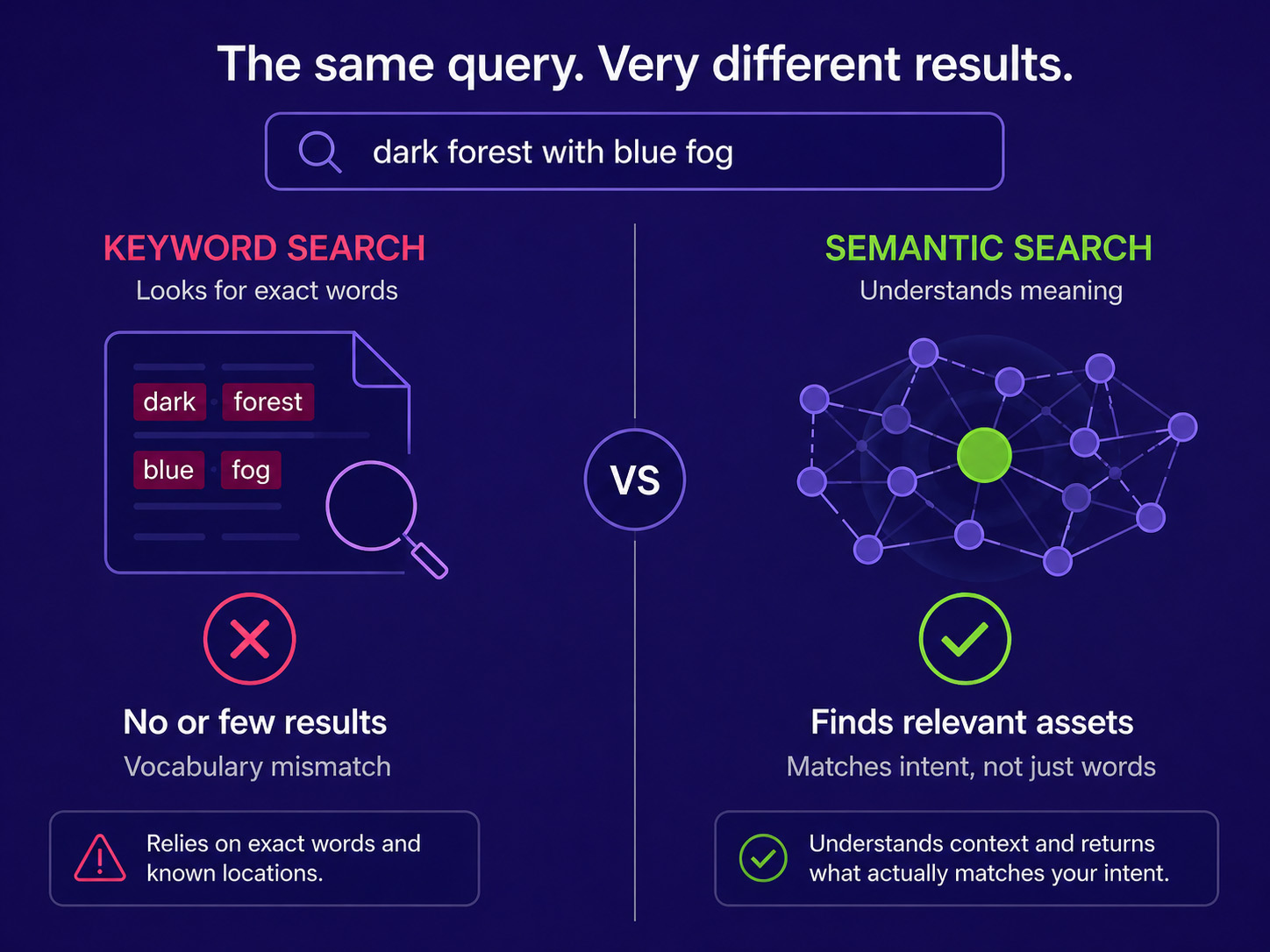
クエリと保存されたテキストが同じ単語を使用している場合、キーワード検索は非常に有効です。しかし、クリエイティブな作業では語彙の不一致が頻繁に発生します。
映像編集者が「静かなる感情を込めたクローズアップ」を検索しても、クリップ内部では「俳優 B のリアクションの別テイク(CU actor B reaction alt take)」として記述されている可能性があります。ゲームアーティストが「湿ったブルータリズムの廊下」を検索しても、ファイル名はレベル ID やスプリント番号に基づいて付けられているかもしれません。グラフィックデザイナーが「遊び心のある幾何学的なロゴ案」を探している場合、クライアントからの修正依頼が 6 回以上あったため、「final_FINAL_logo_v7」というタイトルで保存されているファイルを求めていることもあります。
クリエイティブな作業は混沌としており、ファイル名には再発見に必要な説明が含まれていないことがほとんどです。
これらの失敗は時間とともに蓄積します
いずれの課題も単独であれば管理可能です。しかし、これらが複合すると、悪影響が連鎖的に増幅されます。
プロジェクトは、整然とした構造から始まります。チームメンバーが交代し、ベンダーもそれぞれ異なる規約で資産を提供します。その結果、命名規則にズレが生じ、タグ付けの徹底度は期限や役割によってばらつき、アーカイブ量も膨れ上がります。
やがてチームは単一のシステムではなく、部分的に重複する複数のシステムを抱えることになります。そうなると、素材を探すことは検索技術の問題から、誰かが覚えているか尋ねる「社会的記憶」の領域へと移行してしまいます。
このアプローチではスケーラビリティは確保できず、組織的なナレッジへのアクセス格差も生みます。ベテランメンバーが暗黙の検索エンジンとなり、新規メンバーはすでに存在するファイルから文脈を再構築するために時間を費やすことになりますが、そのファイル自体を見つけにくいというジレンマに陥ります。
検索システムが取り組むべき課題
これを組織化の問題ではなく、検索(リトリーバル)の問題として捉え直せば、要件も変わります。
検索機能は、命名が完璧でない状況でも動作する必要があります。タグ付けが不完全な場合でも、またユーザーが作成時の正確な用語を再現できなくても、意図を明確に記述できる状態であれば動作し続けなければなりません。さらに、プロジェクト、日付範囲、権利ステータス、納品フォーマット、資産タイプなど、厳密な制約が求められる場面では、精度を保証することも不可欠です。
そのため、現代のシステムは複数のシグナルを組み合わせることで対応します:
意味的な類似性(セマンティック・シンメトリ)による意味の理解
キーワードマッチングによる正確な用語の一致
メタデータフィルタによる厳密な制約の適用
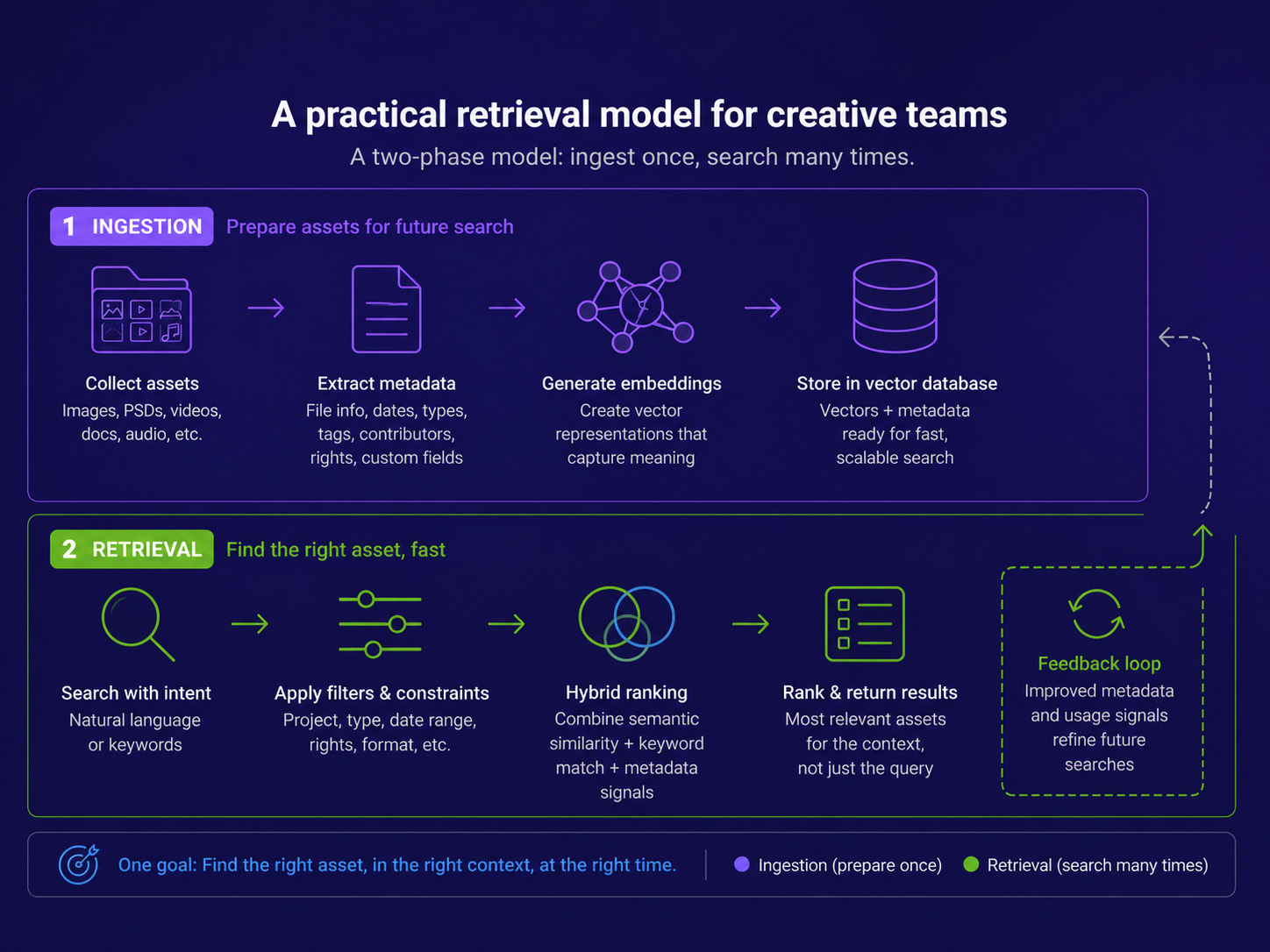
これは、まずインゲスト(取り込み)を行い、次に検索を行うという二段階のプロセスで構築可能です。
アセットの準備は、将来の検索に備えて行われます。ファイルが処理され、埋め込みベクトルが生成され、利用可能なメタデータが付与されます。クリエイティブなパイプラインでは、プロジェクト識別子、ファイルタイプ、タイムスタンプ、貢献者の役割、権利やライセンス情報、すでに追跡している生産特有の属性などがこれに含まれます。目的は、将来のクエリが正しい結果へたどり着くための複数の経路を持てるよう、十分な構造と意味的表現を捉えることです。
検索(Retrieval)とは、これらの経路を組み合わせて結果を出す場所です。ユーザーは自然言語で検索し、メタデータフィルターで絞り込み、最後に意味的スコアとキーワードスコアを融合したハイブリッドランキングに頼ることがあります。ベクトルデータベースでは、大規模な埋め込みベクトルをメタデータとともに保存できるため、意味的検索とフィルタリング検索を一つの整合性のあるフローで実行できます。
実装の例として Weaviate を挙げると、埋め込みベクトルとメタデータを付与したアセットを取り込み、ベクトル信号とキーワード信号でクエリを実行し、最終的に生産環境でも安全に使える結果を得るためにメタデータ制約を適用できます。
次のステップ
クリエイティブなワークフローが破綻するのは、チームが整理されていないからではありません。むしろ、生産システムは「納品」のために最適化されている一方、メディア検索システムは現実のプロジェクトでは維持できない理想的なデータの清潔さを前提に最適化されていることが原因です。
ベクトルベースの検索システムを構築することは、検索にかける時間を減らし、アーカイブに取り残されたクリエイティブ作業を解消したいチームにとって、現実的な解決策となります。
次の記事では、実装の基礎となるデータ取り込みから始めます。読み取り専用の探索パスが散らかったクリエイティブアーカイブをスキャンし、メタデータの付与やベクトル埋め込みの準備ができる構造化されたマニフェストに変換します。
その後、これらのレコードを Weaviate に取り込んで、ハイブリッドクエリやメタデータフィルタリングを追加できます。
構築を始めたいですか?
クイックスタートチュートリアルをチェックするか、無料の Weaviate Cloud アカウントを登録してください。
GitHub
フォーラム
X (Twitter)
次のブログ記事を見逃したくないですか?
隔週ニュースレターに登録して最新情報をキャッチアップしましょう!
送信することで、利用規約およびプライバシーポリシーに同意したことになります。
原文を表示
Building Foundry
A practical series on creative workflows, semantic search, and Weaviate.
Read the previous post in the series: Part 1: AI isn't replacing creativity, it's removing friction.
Most creative teams already know they are losing time to search. What is less obvious is where the breakdown actually happens. It usually doesn’t begin with bad tools or careless teams. Instead, as projects scale, naming conventions drift, metadata quality drops, and the cost of keeping everything perfectly organized becomes higher than the cost of living with a little chaos. For a while, that tradeoff feels reasonable. Then retrieval starts to fail, and no one can find anything anymore.
The first failure: folders
Folder trees work best when projects are small, ownership is stable, and everyone agrees on the same mental model. Creative production rarely stays in that state for long.
In game development, one environment team might organize assets by biome, another by sprint, and another by engine-ready status. All three structures make sense locally. Across a two-year production, they become incompatible maps of the same work. In film production, footage often starts organized by shoot day, then gets reorganized by sequence in editorial, while VFX and color keep their own derivative structures. In design teams, client work, exploration files, and final exports often live in separate systems with weak links between them.
Folders still matter, but over time they describe where a file landed, not what that file is useful for.
The second failure: tags
Tagging is usually proposed as the cure for messy folders, and in controlled environments it can work well. The challenge is that consistent tagging is a process discipline, and process discipline is fragile under deadline pressure.
Animation teams shipping sequences on tight schedules do not stop to apply perfect descriptive tags to every versioned scene file. Music producers bouncing between sessions do not pause to classify each stem with reusable semantic labels. Designers preparing campaign variants for multiple channels rarely annotate every intermediate exploration with future retrieval in mind.
None of this reflects poor craft. It reflects incentives. Teams optimize for shipping what is needed now, not for a hypothetical retrieval request six months later. As a result, tag quality tends to be uneven: high for formal deliverables, sparse for working files, and inconsistent across individuals.
The third failure: keyword search
Keyword search is excellent when the query and the stored text use the same words. But creative work is full of vocabulary mismatch. A film editor might search for "quiet emotional close-up" while a clip is described internally as "CU actor B reaction alt take." A game artist may search "wet brutalist corridor" while files are named around level IDs and sprint numbers. A graphic designer searching for "playful geometric logo options" may be looking for a file titled final_FINAL_logo_v7, because the client came back half a dozen times with edits.
Creative work is messy, and file names rarely contain the descriptions we need to find them again.
These failures compound over time
Any one of these issues is manageable. Together, they create a compounding effect.
A project starts with a clean structure. Team members rotate. Vendors contribute assets using different conventions. Naming drift increases. Tagging discipline varies by deadline and role. Archive volume grows. Eventually the team has not one system but several partially overlapping systems. At that point, finding material becomes less about search and more about social memory: asking the person who might remember.
That approach does not scale. It also creates uneven access to institutional knowledge. Senior contributors become implicit search engines, and new team members spend longer rebuilding context that already exists in files they cannot easily discover.
What retrieval needs to do differently
If we treat this as a retrieval problem rather than an organization problem, requirements change.
Retrieval has to work when naming is imperfect. It has to work when tags are incomplete. It has to work when the user can describe intent clearly but cannot reproduce the original wording used at creation time. It also has to preserve precision when exact constraints matter, such as project, date range, rights status, delivery format, or asset type.
That is why modern systems combine multiple signals:
semantic similarity for meaning
keyword matching for exact terms
metadata filters for hard constraints
This can be built using a two-phase path: ingestion first, retrieval second.
Ingestion is where assets are prepared for future search. Files are processed, embeddings are generated, and available metadata is attached. In creative pipelines, this can include project identifiers, file types, timestamps, contributor roles, rights or licensing fields, and any production-specific attributes you already track. The goal is to capture enough structure and enough semantic representation that future queries have multiple routes to the right result.
Retrieval is where those routes are combined. A user might search in natural language, then refine with metadata filters, then rely on hybrid ranking that blends semantic and keyword scores. Vector databases can store embeddings with metadata at scale, which means semantic and filtered search can run in one coherent flow.
Using Weaviate as an implementation example, we can ingest assets with embeddings and metadata, query with vector and keyword signals, then apply metadata constraints for production-safe results.
What’s next
Creative workflows do not break because teams are disorganized. They break because production systems are optimized for shipping, while media retrieval systems are often optimized for ideal data hygiene that real projects cannot maintain.
Building a vector-based retrieval system is the practical direction for teams that want less time lost to searching and less creative work stranded in archives.
In the next post, we’ll begin that implementation with the foundation: data ingestion. A read-only discovery pass will scan a messy creative archive and turn it into a structured manifest ready for metadata enrichment and vector embeddings. From there, we can ingest those records into Weaviate and add hybrid queries and metadata filtering.
Ready to start building?
Check out the Quickstart tutorial, or sign up for a free Weaviate Cloud account.
GitHub
Forum
X (Twitter)
Don't want to miss another blog post?
Sign up for our bi-weekly newsletter to stay updated!
By submitting, I agree to the Terms of Service and Privacy Policy.
今日のまとめ
AIデイリーブリーフで今日の重要ニュースをまとめ読み