本番環境向けAIエージェント構築・展開に役立つ5つのツール
本文の状態
日本語全文を表示中
詳細モードで約11分の本文を読めます。
同じ出来事の情報源
この情報源を基点に整理
KDnuggets
本記事は、生成 AI パイロットが実環境で失敗する主要因である基盤層の課題を解決するため、状態管理や実行制御など 5 つのレイヤーに対応するツール群を紹介し、2026 年の生産環境における標準的な構成を示唆している。
AI深層分析を開く2026年8月19日 22:07
AI深層分析
キーポイント
実運用における AI エージェントの難易度
ノートブック上での動作と、本番環境での耐障害性やデータ漏洩防止は別次元の問題であり、多くのチームがこれを過小評価している。
5 つのレイヤーによるスタック構成
エージェントロジックの構築、生成コードの実行、メモリ機能の付与、監視、そしてスケーリングという 5 つの層を補完するツール群が提案されている。
LangGraph のグラフベースアプローチ
LangGraph はエージェントを単なるループではなく有向グラフとして表現し、分岐や再試行、人間による承認プロセス、およびサーバー再起動後の状態回復を可能にする。
ツール間の競合と組み合わせ
提案された 5 つのツールは互いに競合するものではなく、それぞれが異なる層を担当し、将来的な生産環境ではこれらを組み合わせて使用することが一般的になると予測される。
エージェント状態の永続化と複雑なワークフロー
LangGraph はエージェントを単純なループではなく有向グラフとして扱い、分岐や失敗時の再試行、人間による承認ステップを可能にする。
重要な引用
Getting that same agent to survive real traffic, recover from a crash at 3 am, and not leak someone else's data while it runs large language model (LLM)-generated code is a different job entirely
Only a very small percentage of generative AI pilots actually reach production, and the gap usually isn't the model. It's the five layers underneath it that nobody thinks about until something breaks.
LangGraph represents an agent as a directed graph instead of a flat chain.
Every transition gets checkpointed automatically, which is what makes pause-and-resume, time-travel debugging, and human-in-the-loop approval steps possible without you building that infrastructure yourself.
編集コメントを表示
編集コメント
この記事は、AI エージェントの導入においてモデル性能以上に重要なインフラ設計の視点を提示しており、実務家にとって非常に示唆に富んでいる。特に状態管理やグラフベースの制御を強調している点は、単なるプロトタイプから本番運用へ移行する際の現実的な課題解決策として評価できる。
Source Article
元記事を日本語で読む
本文に関係しない購読案内、埋め込み通知、サイト内プロモーションは除いています。
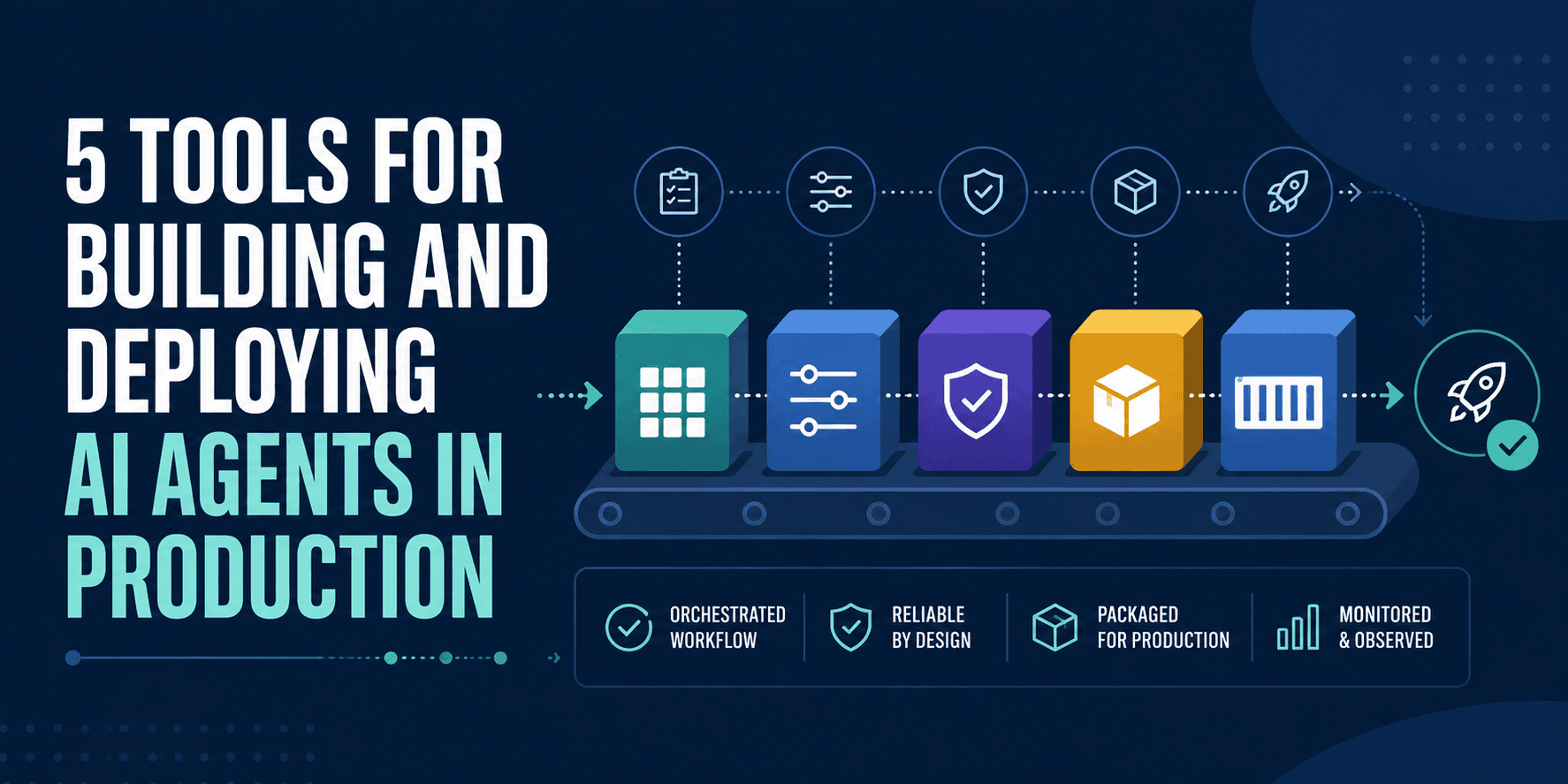
ノートブック上で動くエージェントを構築するのは午後あれば十分です。しかし、同じエージェントを実際のトラフィックに耐えさせ、深夜3時のクラッシュから復旧し、大規模言語モデル(LLM)が生成したコードを実行中に他者のデータを漏らさないようにすることは、全く異なる仕事であり、多くのチームがこの難易度を過小評価しています。
生成AIの実験プロジェクトのほんの一部しか本番環境に到達できず、そのギャップの原因は通常、モデル自体ではありません。問題なのは、何か壊れるまで誰も気にかけない、その下にある5つのレイヤーです。
この記事では、そのギャップを埋める5つのツールを紹介し、スタックの各層に対応するものを解説します。エージェントロジックの構築、生成されたコードの実行、記憶機能の付与、動作の監視、そしてスケールした運用です。これら5つは互いに競合するものではなく、積み重ねて使います。2026年に遭遇する本番環境のエージェントの多くは、この5つのツールを組み合わせて稼働しているはずです。
# 1. LangGraph
基本的なエージェントのループは、LLM を呼び出す Python の while ループで構成されます。これは単純なケースでは問題なく動作しますが、分岐が必要になったり、失敗したツールの呼び出しを再試行したり、人間の承認を待って一時停止したり、タスク実行中にサーバーが再起動して回復する必要が生じたりする段階では通用しません。
その時点で必要となるのは、エージェントの状態をプロセスが終了した瞬間に消えてしまう変数ではなく、実体のある永続的なものとして扱う仕組みです。

LangGraph は、エージェントをフラットなチェーンではなく有向グラフとして表現します。ノードは関数であり、エッジはオプションの条件付きルーティングでそれらを接続し、実行全体はメッセージのリストではなく一連の状態遷移として追跡されます。各遷移は自動的にチェックポイントされ、これによりインフラストラクチャを自分で構築することなく、一時停止と再開、タイムトラベルデバッグ、人間による承認ステップが可能になります。Klarna、LinkedIn、Uber、Replit といった企業も LangGraph でエージェントワークフローを実行しており、その普及度の高さは GitHub リポジトリがスター数 30,000 を突破したことから伺えます。
導入前に知っておくべき重要な点は、デフォルトのメモリ内チェックポインタは開発用途には十分ですが、プロセスを再起動するとメモリ上の状態がすべて失われてしまうため、本番環境では使用できないことです。多くのチームは本番環境へ移行する際、すぐに Postgres ベースのチェックポインタへと切り替えます。この一行の変更こそが、LangGraph プロジェクトを単なるスクリプトから堅牢なインフラとして機能させる転換点となります。
# 2. E2B

エージェントが自分自身でコードを記述・実行できるようになると、ウェブサーバーが想定していなかった重大な問題が発生します。ユーザーにサービスを提供している同じマシン上でモデル生成された Python コードを実行することはできません。なぜなら、そのコードが何を行おうとしているか全く見当がつかないからです。
必要なものは、タスク完了と同時に即座に破棄できる隔離された環境です。
E2B はまさにこの課題のために設計されました。同社は AI エージェント向けの安全なサンドボックスを専門としており、Firecracker マイクロVMによる分離を活用した一時的なコード実行に注力しています。つまり、各サンドボックスはホストと共有するコンテナではなく、独自のカーネルを持つ仮想マシン内で動作します。これは単なるコンテナベースの隔離よりも、はるかに強力なセキュリティ境界を提供します。
E2B は、最先端のエージェントワークフローにおいて Fortune 100 企業の 88% に採用されており、Perplexity、Hugging Face、Manus、Groq などのユーザーを抱えています。
導入前に知っておくべきトレードオフ: E2B のランタイム制限はプラン別に設定されており、Hobby プランでは最大 1 時間、Pro プランでは最大 24 時間に制限されています。そのため、スクリプトの実行や生成されたコードのテスト、単一の分析ジョブなど、短時間で完了する一時的な実行タスクには最適ですが、数日間にわたって状態を保持し続ける必要があるエージェントには向きません。もしそのような長期継続的な永続性が必要であれば、それは単にサンドボックスの稼働時間を長くすれば解決する問題ではなく、前述のようなメモリ層の導入も検討すべきサインです。
3. Mem0

LLM への呼び出しは、関連する履歴を手動で渡さない限り、毎回ゼロから始まります。単発の質問であれば問題ありませんが、セッションを跨いでユーザーの好みを記憶したり、数日かけて中断したタスクを引き継いだりするエージェントにとっては、「記憶がない」ことは致命的です。記憶を持たないモデルは、有用性を支えてきた情報を静かに忘却してしまいます。
Mem0 は、独自のリトリーバルパイプラインを構築しなくてもこの課題を解決します。会話中、保持すべき事実を抽出し、ユーザー、セッション、エージェントごとにタグ付けした上でベクトルデータベースに保存します。モデルが回答する前には、意味的類似性、キーワード一致、エンティティマッチングを組み合わせて関連情報を検索します。これにより、エージェントはあたかもユーザーの記憶を持っているかのように振る舞います。実際には、すべての返信前にターゲットを絞った検索ステップが裏で実行されているだけであり、Mem0 は独自の実装を避けたいチームにとって、最も一般的な差し込み型ソリューションです。
ここで自然な組み合わせとなるのが LangGraph です。LangGraph 標準のチェックポインタは、スレッド内の会話継続やフォールトトレランスには優れていますが、ユーザーの好みや、完全に異なるセッションにまたがって永続させる必要がある事実といった「耐久性のあるクロススレッドメモリ」を扱うようには設計されていません。Mem0 のような専用メモリレイヤーは、まさにこのギャップを埋めるために作られています。
4. LangSmith

本番環境で静かに失敗するエージェントは、大声で失敗するものよりも悪いです。なぜなら、大声の失敗であれば、どこを調べればよいかを示してくれるからです。本番のエージェントにおいて、派手さはないが絶対に欠かせないのが「トレーシング」です。これは、エージェントが実行したすべてのツール呼び出し、意思決定、観測結果を記録するものです。何か問題が起きた際、推測ではなく証拠に基づいてデバッグできるようになります。
LangSmith はまさにそのために作られたプラットフォームで、LangGraph と密接に連携しますが、他のフレームワークとも互換性があります。これはトレーシング、デバッグ、評価、デプロイを支援する商用のエージェントエンジニアリング用プラットフォームであり、最終的な出力だけでなく、エージェントが何を行ったかをランごとに見渡せる機能を提供します。無料プランでは月間 5,000 トレースまで利用でき、データ保持期間は 14 日間です。有料の Plus プランは月額 39 ドル(シートあたり)で、10,000 トレースの利用が可能であり、大規模展開前に試すには手頃な価格設定となっています。

ログだけでは得られないのが、特定のランを再生して、どこが期待値から外れたのかを特定できる機能です。「エージェントが失敗した」という事実を知るのと、「なぜ失敗したか」を理解するのでは、対応に要する時間が数分で済むか数日かかるかの差になります。
# 5. Modal

ロジック、サンドボックス化、メモリ管理、観測性を整えたとしても、最終的にそれをホストするのは人間です。エージェントのワークロードは突発的であることが多く、数時間アイドル状態が続いたかと思えば、トラフィックが集中した瞬間に急激な負荷がかかります。このパターンに対応するために固定サーバーを準備すると、アイドル時の過剰なコスト負担や、負荷発生時の対応追従という問題が生じます。
Modal は、この種の AI ワークロードのために特別に設計されたサーバーレスコンピューティングプラットフォームです。対話型のコーディングエージェントから長時間実行されるロールアウトまでスケーリングし、必要なハードウェアに合わせて孤立したサンドボックスを瞬時に起動・停止できます。Modal は 10,000 チーム以上のインフラを支えており、顧客には DoorDash、Anthropic、Meta、Ramp などがあります。その成長は非常に速く、Sacra の推計によると、2026 年 4 月には年間収益が約 3 億ドルに達し、2025 年末の約 1 億 1,900 万ドルから大幅に増加したとされています。
エージェントワークロードにおいて特に重要なのがコールドスタート時間です。エージェントが作業を開始する前にサンドボックスの起動を数秒待たされるのは避けたいものです。Modal の GPU メモリスナップショット機能を使えば、特定のワークロードではコールドスタート時間を最大 10 倍短縮できます。これは一見小さな改善に思えますが、1 日に数千回の短いエージェントセッションを実行している場合、この遅延はすべてのセッションで累積し、大きな影響を及ぼします。
まとめ
これら 5 つのツールは、互いを置き換えることを目指しているわけではありません。LangGraph はエージェントのロジックを永続的に格納する場所を提供し、E2B は生成されたコードを実行するための安全な環境を与え、Mem0 は単一のセッションを超えて続く記憶機能を実現します。LangSmith は実際に何が行われたかを可視化し、Modal は需要に応じて自動的にスケールアップ・ダウンする実行基盤を全体に提供します。
本番環境へエージェントを導入しているチームは、「最も優れた 1 つのフレームワーク」を選んだから成功したわけではありません。それぞれの課題を個別かつ解決可能な問題として捉え、一つのツールがすべての機能を自動的にこなすことを期待しなかったからこそです。
ゼロから始める場合、推奨される順序はまず構築を行い、次にサンドボックス環境を整えることです。単一のエージェント実行がエンドツーエンドで確実に動作することが確認できて初めて、メモリ機能や大規模なインフラを追加すべきです。観測性(Observability)は、最初のインシデントが発生してから問いかけられるべき課題ではなく、リリースする最初バージョンから組み込んでおく必要があります。
Shittu Olumide はソフトウェアエンジニアであり技術ライターです。最先端の技術を駆使して説得力のある物語を紡ぐことに情熱を注ぎ、細部への鋭い眼と複雑な概念をシンプルに説明する能力を持っています。また Twitter でも活動しています。
原文を表示
**
Building an agent that works in a notebook takes an afternoon. Getting that same agent to survive real traffic, recover from a crash at 3 am, and not leak someone else's data while it runs large language model (LLM)-generated code is a different job entirely, and it's the job most teams underestimate. Only a very small percentage of generative AI pilots actually reach production, and the gap usually isn't the model. It's the five layers underneath it that nobody thinks about until something breaks.
This article walks through five tools that close that gap, one for each layer of the stack: building the agent's logic, executing the code it generates, giving it memory, watching what it does, and running all of it at scale. None of these competes with the others. They sit on top of one another, and most production agents you'll encounter in 2026 are running some combination of all five.
# 1. LangGraph
A basic agent loop is just a Python while loop calling an LLM. That works fine until the loop needs to branch, retry a failed tool call, pause for a human to approve something, or recover after the server it was running on restarts mid-task. At that point, you need something that treats agent state as a real, persisted thing rather than a variable that disappears the moment the process dies.
LangGraph represents an agent as a directed graph instead of a flat chain. Nodes are functions, edges connect them with optional conditional routing, and the entire execution is tracked as a series of state transitions** rather than a flat message list. Every transition gets checkpointed automatically, which is what makes pause-and-resume, time-travel debugging, and human-in-the-loop approval steps possible without you building that infrastructure yourself. Klarna, LinkedIn, Uber, and Replit all run agent workflows on LangGraph, and the framework has become common enough in production settings that its GitHub repository has passed 30,000 stars.
The detail worth knowing before you adopt it: the default in-memory checkpointer is fine for development, but it only stores state in memory and loses everything when the process restarts, which is unacceptable for anything real. Most teams move to a Postgres-backed checkpointer the moment they go to production, and that one-line swap is usually the actual point where a LangGraph project starts behaving like infrastructure instead of a script.
# 2. E2B
**
The moment an agent can write and execute its own code, you have a problem your web server was never built to handle. You can't run model-generated Python directly on the same machine serving your users, because you have no idea what that code will try to do. You need an isolated, disposable environment that can be destroyed the second the task is done.
E2B** is built specifically for this. It specializes in secure sandboxes for AI agents, focusing on ephemeral code execution with Firecracker microVM isolation, meaning each sandbox runs in its own virtual machine with its own kernel, not just a container sharing the host's. That's a meaningfully stronger security boundary than container-based isolation alone. E2B states it is used by 88% of Fortune 100 companies for frontier agentic workflows, with users including Perplexity, Hugging Face, Manus, and Groq.
The tradeoff to know going in: E2B's runtime limits are tier-based, capping at one hour on the Hobby plan and 24 hours on Pro, so it fits short, ephemeral execution tasks (running a script, testing generated code, a single analysis job) better than agents that need to hold state open for days. If your agent needs that kind of long-lived persistence, that's usually a sign you also need the memory layer below, not just a longer-running sandbox.
# 3. Mem0
**
Every call to an LLM starts from zero unless you hand it the relevant history yourself. For a single question, that's not a problem. For an agent that's supposed to remember a user's preferences across sessions, or pick up a multi-day task where it left off, a model with no memory is one that quietly forgets everything that made it useful.
Mem0** handles this without you building a custom retrieval pipeline. During a conversation, it extracts the facts worth keeping and stores them in a vector database tagged by user, session, and agent, then retrieves whatever's relevant using a mix of semantic similarity, keyword matching, and entity matching before the model responds. The agent appears to remember the user. What's actually happening is a targeted retrieval step running quietly before every reply, and Mem0 is the most common drop-in choice for teams that want that without rolling their own.
A natural pairing here is with LangGraph specifically. LangGraph's own checkpointers handle short-term, thread-scoped memory well, but they're designed for conversation continuity and fault tolerance within a single thread, not for durable, cross-thread memory like user preferences and facts that need to persist across completely separate sessions. That's the gap a dedicated memory layer like Mem0 is built to fill.
# 4. LangSmith
**
An agent that fails silently in production is worse than one that fails loudly, because at least the loud failure tells you where to look. The unglamorous but non-negotiable piece of any production agent is tracing: a record of every tool call, every decision, and every observation the agent made along the way, so when something goes wrong, you're debugging from evidence instead of guessing.
LangSmith is built for exactly this, and it pairs closely with LangGraph, though it works with other frameworks too. It's a commercial agent engineering platform for tracing, debugging, evaluating, and deploying agents, giving you a full run-by-run view of what an agent did rather than just its final output. Its free tier includes 5,000 traces a month with 14-day retention, and the Plus tier runs $39 a seat per month with 10,000 traces**, which makes it reasonably accessible to try before committing to it at scale.
**
What tracing gives you that logging alone doesn't is the ability to replay a specific run and see exactly which step diverged from what you expected. That distinction — between knowing an agent failed and knowing why — is usually the difference between a five-minute fix and a multi-day investigation.
# 5. Modal
Even with the logic, sandboxing, memory, and observability sorted, someone still has to host all of it, and agent workloads are notoriously bursty: idle for hours, then a sudden spike when traffic hits. Provisioning fixed servers for that pattern means either overpaying for idle capacity or scrambling when load shows up.
Modal** is a serverless compute platform built specifically for this kind of AI workload. It scales from interactive coding agents to long-running rollouts, spinning up isolated sandboxes that scale to the hardware needed and back to zero when done. Modal powers infrastructure for over 10,000 teams, with customers spanning DoorDash, Anthropic, Meta, and Ramp, and its growth has been fast enough that Sacra estimated the company hit $300 million in annualized revenue by April 2026, up from roughly $119 million at the end of 2025.
The part that matters most for agent workloads specifically is cold-start time, since nobody wants to wait several seconds for a sandbox to boot before their agent can even start working. Modal's GPU memory snapshots can reduce cold starts by up to roughly 10x for some workloads, which is the kind of detail that sounds small until you're running thousands of short agent sessions a day, and that latency adds up across every single one.
# Wrapping Up
**
None of these five tools is trying to replace the other four. LangGraph gives your agent's logic somewhere durable to live, E2B gives it a safe place to run the code it generates, Mem0 gives it a memory that outlasts a single session, LangSmith lets you see what it actually did, and Modal gives the whole thing somewhere to run that scales up and down on its own. The teams that get agents into production aren't the ones who picked the single best framework. They're the ones who treated each of these as a separate, solvable problem instead of hoping one tool would quietly handle all five.
If you're starting from nothing, the order that tends to work is build first, sandbox second, and only add memory and heavier infrastructure once a single agent run is actually reliable end-to-end. Observability should be wired in from the very first version you ship, not added after the first incident forces the question.
Shittu Olumide** is a software engineer and technical writer passionate about leveraging cutting-edge technologies to craft compelling narratives, with a keen eye for detail and a knack for simplifying complex concepts. You can also find Shittu on Twitter.
関連記事
今日のまとめ
AIデイリーブリーフで今日の重要ニュースをまとめ読み