スタンフォード HAI、AI が科学発見を加速する役割について解説
本文の状態
日本語全文を表示中
詳細モードで約14分の本文を読めます。
同じ出来事の情報源
この情報源を基点に整理
Stanford HAI News
スタンフォード大学HAIは、9兆塩基対を学習した世界最大規模のDNA言語モデル「Evo 2」が生物学研究を加速し、仮想実験による疾患理解や遺伝子設計を可能にしていることを発表した。
AI深層分析を開く2026年8月4日 18:39
AI深層分析
キーポイント
世界最大規模のDNA言語モデル「Evo 2」の登場
スタンフォード大学のブライアン・ヒイ氏らが中心となり、9兆塩基対と400億パラメータを有する生物分野向け最大のAIモデル「Evo 2」が2025年2月に導入された。
生物学研究プロセスの劇的な加速
従来の観察や遅い実験に依存していた生物学において、AIは遺伝子変異の予測や新しい塩基配列の設計を可能にし、仮想実験によって研究速度を大幅に向上させている。
科学発見におけるAIの多面的役割
AIは単なる速度向上だけでなく、分野横断的な協力の促進、文献レビュー、仮説生成、データ分析、理論検証など、科学発見の全プロセスを支援するツールとして機能している。
リスク管理と公平なアクセスの必要性
バイアスやデータの質の問題といった技術的リスクが存在するため、モデルが真の科学的価値を提供し、その恩恵が広く共有されるようガバナンス体制の確立が不可欠であると指摘されている。
Evo 2 の開発と能力
スタンフォード大学のブライアン・ハイ氏らが中心となり、9兆塩基対と400億パラメータで訓練された生物分野最大のモデル「Evo 2」が2025年2月に発表された。
重要な引用
AI doesn't just speed up discovery. It can facilitate collaboration across disciplines, review literature, generate hypotheses, analyze data, and validate theories.
Evo 2 is the largest model ever trained for biology.
"Evo 2 illuminates complex biological processes, such as protein biochemistry, enabling us to accelerate the study of gene function and disease."
"In a short period of time, our team has built the largest fully open language model ever trained, the first AI-generated genomic database, and the first AI-generated viable genomes – all important steps on the journey to design new genetic sequences with specific functions of interest."
編集コメントを表示
編集コメント
生物学的データ処理における AI の限界を突破する「Evo 2」の登場は、創薬や遺伝子治療の分野に新たな地平を開く画期的な進展である。スタンフォード大学 HAI が主導するこの動きは、学術界と産業界の連携による科学技術革新の加速を示す象徴的な事例と言える。
Source Article
元記事を日本語で読む
本文に関係しない購読案内、埋め込み通知、サイト内プロモーションは除いています。
宇宙の起源からゲノムの役割まで、人類は大きな問いに対する答えを求め続けてきました。しかし科学発見は常に人間の限界に制約されてきました。時間不足、リソースの不足、そして情報の不足です。
今や AI がこれらの障壁を取り払い、すべての科学者に 5 年前には想像もできなかった計算資源と、疲れ知らずの研究支援を提供しています。
AI は単に発見を加速させるだけではありません。学際的な協力を促進し、文献レビューを行い、仮説を生成し、データを分析し、理論を検証することも可能です。バイオエンジニアリングから医療、宇宙探査に至るまで、ほぼすべての分野で AI が研究者の支援役となり、膨大なデータセットの中からパターンを見つけ出し、大規模な研究を実行し、結果を解釈するのを助けています。
この技術にはリスクも伴います。バイアスやデータの質の問題、アクセスの不平等です。チームは、モデルが真の科学的価値を提供し、科学 AI の恩恵が広く共有されることを保証するためのガードレールを確立する必要があります。
それでも、これらの新しいツールはすでに科学者に、何が知り得るかの境界を広げる力を授け、私たちをより人間らしくしています。好奇心旺盛になり、知識を深め、世界の謎を解き明かす能力を高めています。
スタンフォード大学人間中心 AI 研究所(HAI)では、教員が AI を活用し、物理・生命科学から工学、政策に至るまで科学発見を探求しています。
生物学における境界の突破
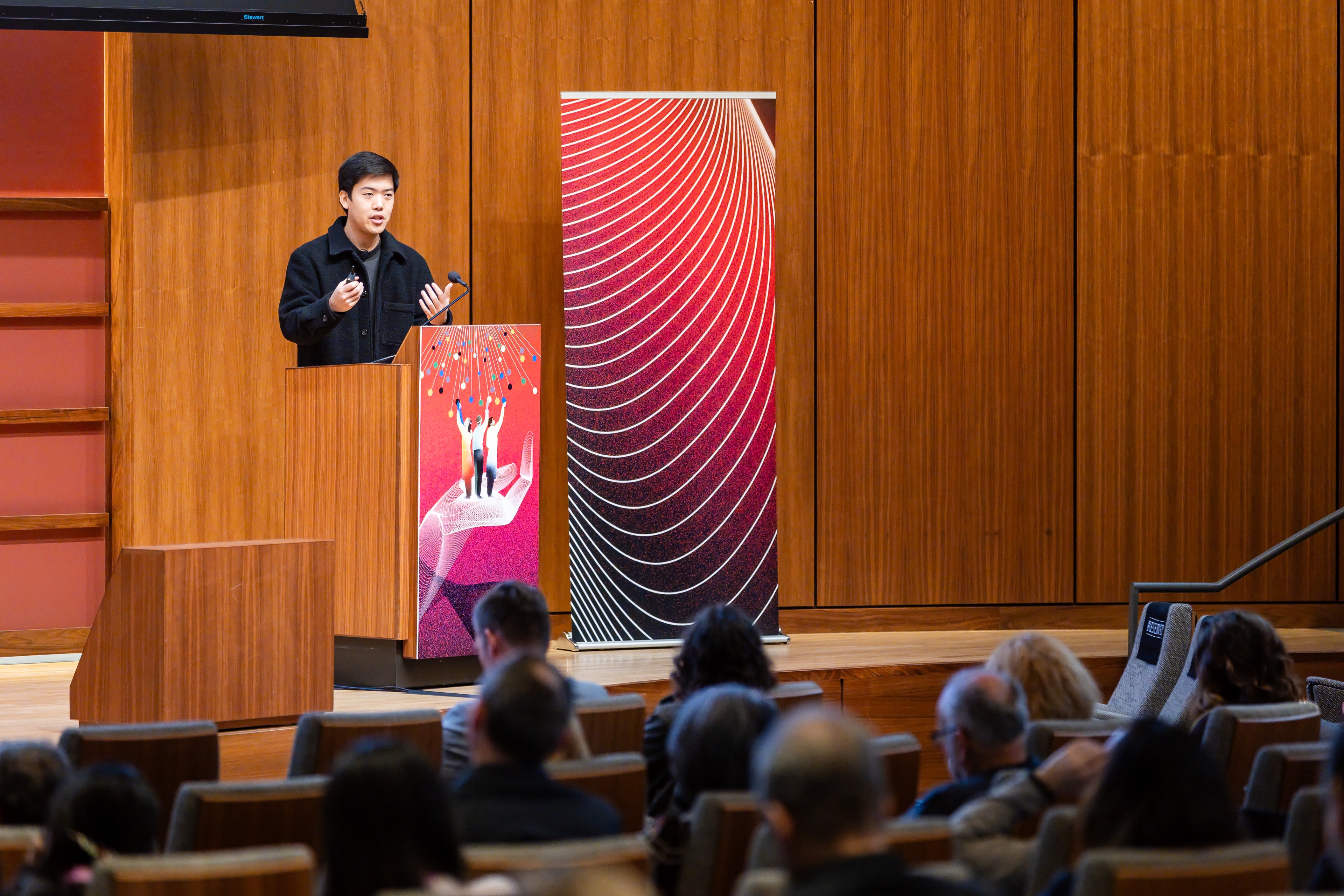
生物学的研究は従来、観察と緩慢な実験の連続でした。しかし現在、AI がそのプロセスを劇的に加速させています。仮想実験を通じて遺伝子変異を予測したり、新しい塩基配列を設計したり、疾患の理解を深めたりすることが可能になったのです。
この変革の最前線にあるのが「Evo 2」です。これはヒトを含むすべての生命体の遺伝データを学習対象とした DNA ランゲージモデルで、これまで生物分野で訓練されたモデルの中で最大規模となります。スタンフォード大学の研究者ブライアン・ハイ(Brian Hie)氏らが中心となって開発し、2025 年 2 月に発表されました。
「Hoffman-Yee Research Grant」の初期資金支援を受け、エンジニア、遺伝学者、神経生物学者からなるチームは、Evo 2 を 9 兆塩基対と 400 億パラメータ規模で事前学習しました。
このモデルはチャットボットのようにはたらくが、単語を連続して入力するのではなく、ユーザーは遺伝子配列の始まりを表す DNA 文字列を入力します。Evo 2 はその遺伝子を自動補完し、生きている生物と完全に同一のものになることもあれば、改善案を提示する場合もあります。科学者は、変異した遺伝子配列を分析することで、人間の健康やより耐性の高い農作物などに関する新たな知見を得ることができます。
「Evo 2 はタンパク質の生化学といった複雑な生物学的プロセスを解明し、遺伝子の機能や疾患の研究を加速させます」と語るのは、化学工学准教授かつスタンフォード大学データサイエンス faculty fellow の Brian Hie です。「短期間で私たちは、これまでに訓練された最も大規模で完全オープンな言語モデルを構築し、AI によって生成された最初のゲノムデータベースと、生存可能な最初の AI 生成ゲノムを実現しました。これらは、特定の機能を持つ新しい遺伝子配列を設計するという旅路における重要なステップです。」
AI を用いたヒト細胞のモデリング
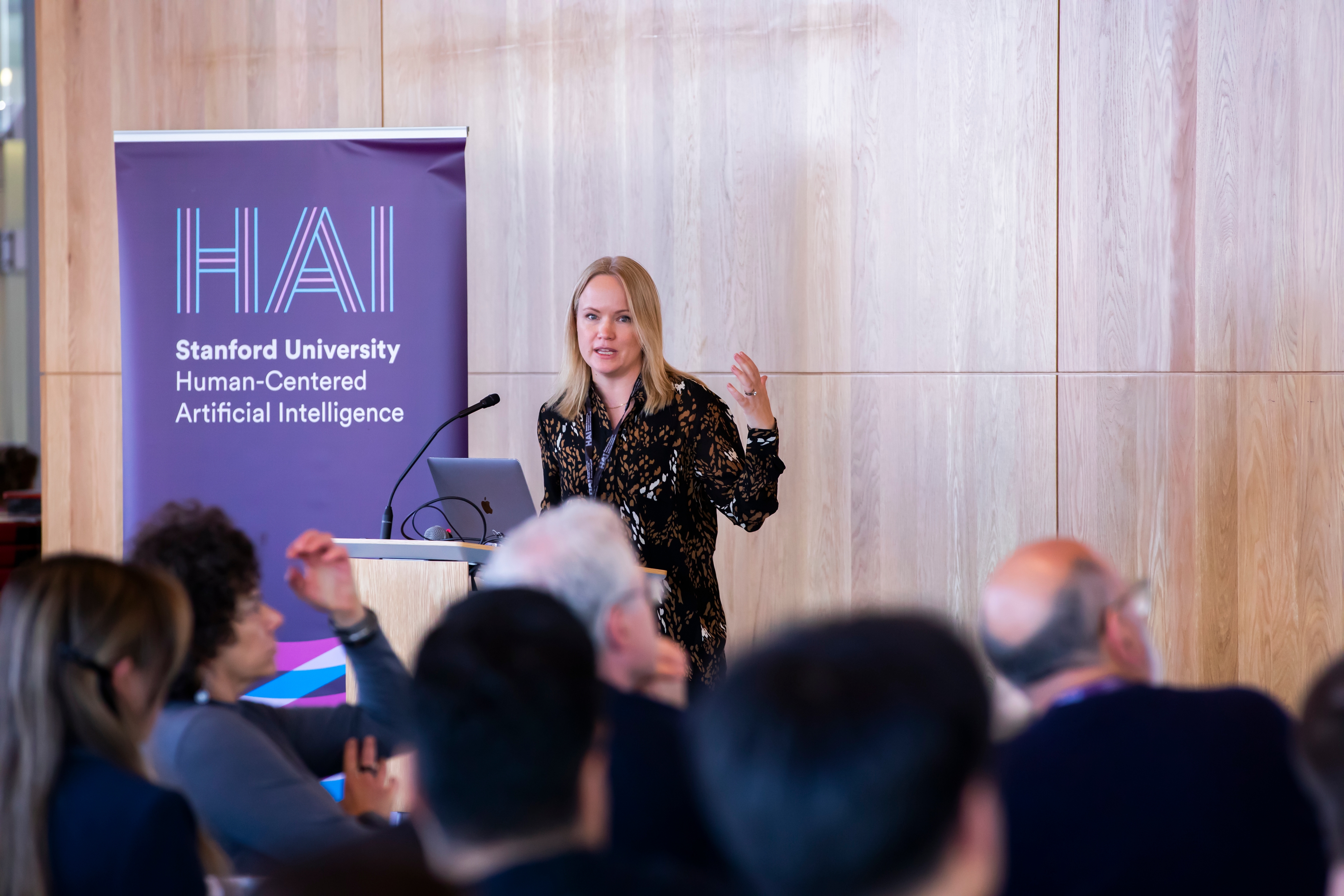
生体工学および病理学の准教授である Emma Lundberg は、創薬と個別化医療の加速を目的としてヒト細胞をシミュレートする基盤モデルを開発するチームを率いています。 | Christine Baker
科学者たちは、1665 年にロバート・フックが生命の最小単位を発見して以来、ヒト細胞をモデル化することを夢見てきました。AI が膨大な生物データから学習する能力によって、この目標は現実味を帯びてきています。
スタンフォード大学のチームは、薬物発見や疾患に対する個別化治療を加速させるために、ヒト細胞をシミュレートできる人間中心の基盤モデル構築に向けて協力しています。
「細胞のモデル化について考えるのは私たちだけではありませんが、AI を用いることで新たな可能性が開かれました」と、スタンフォード大学の生体工学および病理学准教授であるエマ・ランバーグ氏は語ります。
処方箋を飲む前に、患者自身の細胞のデジタルツイン上で実験薬を試すことを想像してみてください。患者は、錠剤を飲み込む前に薬剤の有効性と副作用を理解できるようになります。これは大胆なビジョンですが、同時に多くの技術的課題も伴っています。
仮想細胞を成功裡に構築するためには、チームはいくつかの課題を克服する必要があります。まず、モデルは DNA/RNA/タンパク質配列やタンパク質構造、細胞画像、科学文献など、異なる種類の生物データを読み取る必要があります。さらに、分子から細胞、組織、臓器、そして個体全体に至るまで、異なる生物単位がどのようにスケールを超えて接続されているかを理解することも求められます。
第二に、生物学者がデータと対話し、独自のデータをアップロードして分析できるようにするためのチャットインターフェースを備えた「バーチャルセルモデル」が必要です。このニーズに応えるため、チームは Biomni(後述)を開発しました。
課題は山積していますが、成功すれば同分野にとって貴重な新ツールが生まれます。「生成モデルは実験コストを下げるという点において、驚くべき平等化の力を持っています。例えば、Google DeepMind のオープンソース AI システムである AlphaFold は、アミノ酸配列からタンパク質の立体構造を予測するシステムですが、ここ数年で構造生物学へのアクセスを民主化しました。バーチャルセル基盤モデルを通じて、世界中の細胞生物学者がさらに多くのこうした生成ツールを利用できるようにしたいと考えています」と Lundberg 氏は語ります。
AI を共研究者として
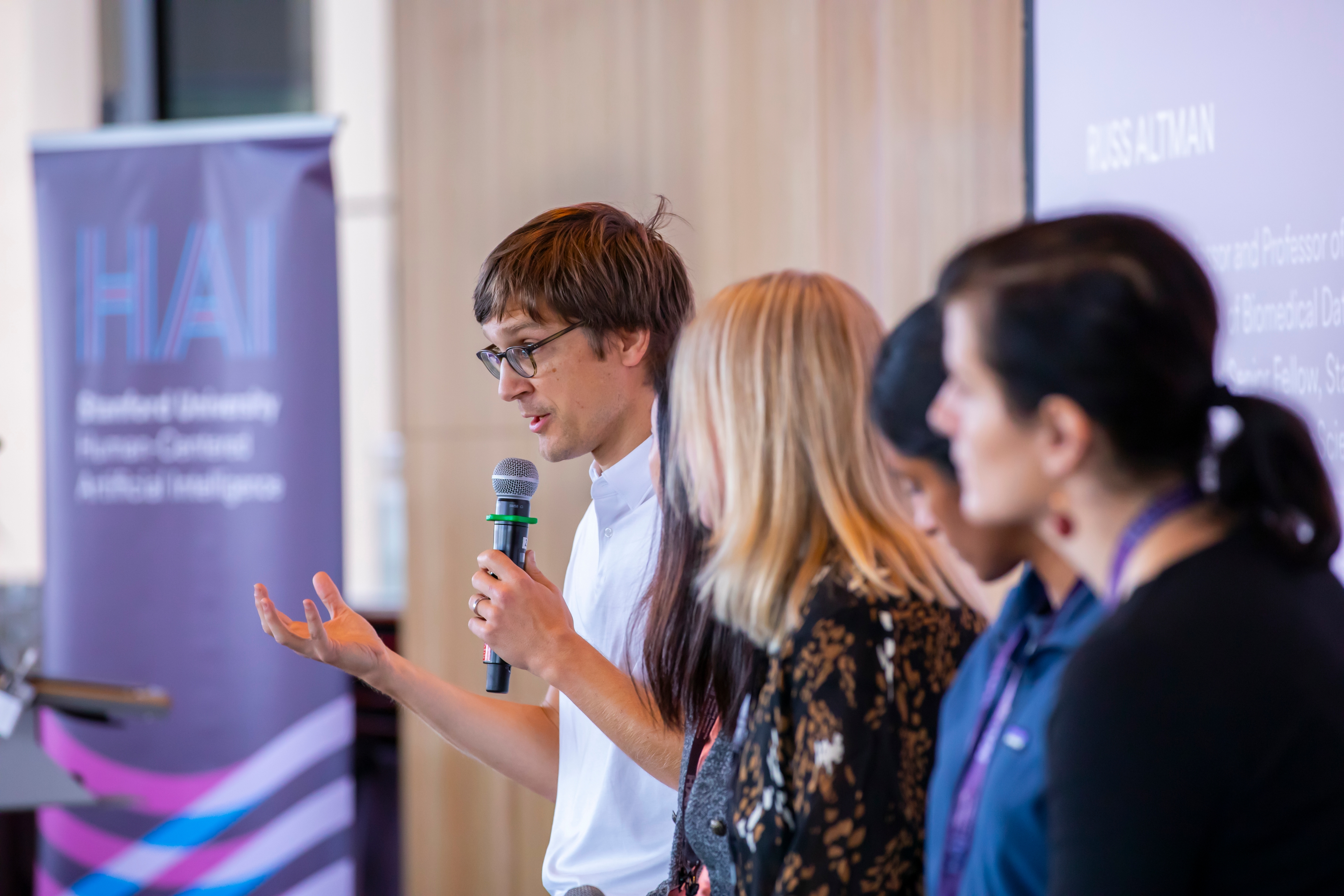
コンピュータサイエンス教授の Jure Leskovec 氏は、Biomni の共同開発者です。Biomni は AI 研究アシスタントであり、これまでに 15,000 人の科学者に利用され、10 万件以上の生体医学ワークフローを自動化してきました。| Christine Baker
膨大なデータセット、複雑な実験、そして増え続ける分析ツールのリストが、研究プロセスを分断させ、生物医学の革新を阻害しています。エージェント型 AI は、科学者が専門性を拡張する手段を提供します。
スタンフォード大学、ジェネンテック、Arc Institute、ワシントン大学、プリンストン大学、カリフォルニア大学サンフランシスコ校の研究者らが共同で「Biomni」を開発しました。これは遺伝子優先度の選定や薬の再利用、希少疾患の診断、マイクロバイオーム解析、分子クローニングなど、あらゆる分野で人間の科学者と協働する生体医学 AI エージェントです。
Biomni は数百もの専門ツール、データベース、ソフトウェアパッケージを統合し、統一された科学研究環境を構築します。推論能力と Python コードの記述機能を備えているため、エージェント単独でもタスクを完遂できます。
ユーザーは Biomni に指示を出して、実験室での実験設計や臨床意思決定の自動化、生体医学データの分析、科学文献のレビューなどを依頼可能です。新たな仮説の生成を要求することもでき、事前定義されたテンプレートや特定のタスク向けに微調整を行う必要はありません。
「Biomni は真の協力者です」とスタンフォード大学のコンピュータサイエンス教授である Jure Leskovec 氏は語ります。「生物学の知識を持ち、これまでに発表されたすべての論文を学習済みで、複雑な処理も自律的に実行できます。」
現在までに 15,000 人の科学者が Biomni に依頼し、10 万種類もの科学的ワークフローの自動化を実現しました。これにより膨大な人間の研究時間を節約し、Leskovec 氏いわく「世界で最も利用されている AI 科学者」へと成長しています。
斬新だが実現可能性に疑問が残るアイデア
AI に科学の最も人間的な営みの一つ、「次の大きな問いを立てる」ことを任せてみるとどうなるのか。大規模言語モデルは数秒で無数のアイデアを生成できるが、それらが本当に価値あるものなのか、単に量が多いだけなのかは必ずしも明らかではない。
AI の研究ブレインストーミング能力を検証するため、スタンフォード大学の研究者チームは、高度な資格を持つ自然言語処理(NLP)の専門家と、シンプルな AI アイデア生成エージェントを直接比較する初の試みを行った。head-to-head comparison
彼らは 100 人の専門家を募集し、人間が書いたアイデアと AI が生成したアイデアを混ぜて盲検評価させた。専門家は、バイアス、コーディング、安全性など 7 つの研究トピックにわたる 49 のアイデアをレビューした。
公平な比較を行うため、研究者たちは人間参加者とエージェントの両方に、同じトピックの説明、アイデアのテンプレート、提出例を与えた。論文検索、アイデア生成、アイデアランキングの機能を備えたエージェントには、各研究トピックについて 4,000 の種となるアイデアを生成するよう指示した。
専門的な評価者は、アイデアそのものと、それを伝えるための文章、そしてその文章に対する専門家による評価の両方を審査した。審査員はその後、斬新さ、興奮度、実現可能性、期待される効果に基づいて各アイデアにスコアをつけた。
結果はどうだったか? 人間による評価では、AI が生成したアイデアの方が人間のアイデアよりも著しく斬新であると判断されたが、そこには重要な条件がつきまとった。多くのアイデアは実現不可能だったのである。
「最終的に、大規模言語モデル(LLM)は優れた技術的創造性を示しましたが、既存の研究に基づいているため、人間の方がより実践的な提案を思いつくことが分かりました」と、スタンフォード大学自然言語処理グループの博士課程3年生であり、本研究の筆頭著者であるChenglei Si氏は語ります。AIが生成したアイデアは新規性や興奮度において優れていましたが、Si氏によると、LLMには自己評価能力がなく、人間の回答と比較するとアイデアの多様性に欠けていました。
最終的に、大規模言語モデル(LLM)は優れた技術的創造性を示しましたが、人間の方がより実践的な提案を思いつくことが分かりました。
— Chenglei Si
博士課程学生
追加の研究[1]では、Si氏とチームは最初の研究で考慮されなかった研究成果に基づいてAIの提案を評価しました。この続編となる調査から、アイデア創出能力と実行能力の間には大きな隔たりがあることが明らかになりました。プロジェクトの実行を評価項目に含めたことで、人間の方が優位であることが示されました。
「多くの研究者は、自律型エージェントが新しい科学的アイデアを生成し検証する未来に興奮しています。しかしその前に、LLMに対して、アイデアが新規性だけでなく実現可能で効果的であるための要因を教える方法が必要です」とSi氏は述べています。現時点では、AIは依然として、人間科学者が問題を分析し、あらゆる角度から仮説を立てるのを支援する仮想アシスタントとして価値を提供し続けています。
[1] https://arxiv.org/abs/2506.20803
スタンフォード大学コミュニティ内外で、あらゆる分野の科学者が AI を活用して研究を加速・強化する新たな方法を模索しています。膨大なデータセットからパターンを発見し、次々と新しいアイデアを生み出し、実験室では不可能なシナリオを実行できるその能力は、人間が世界を理解するための理想的なパートナーとなる可能性があります。
宇宙の解読
物理学教授であり、カブリ素粒子天体物理学・宇宙論研究所所長を務めるリサ・ウェクスラーは、「宇宙の解読センター」を率いています。同センターでは、膨大な天文データから洞察を引き出すための AI 手法の開発に取り組んでいます。
写真:アンドリュー・ブロッドヘッド氏撮影
最先端の天体物理学分野で活動する研究者たちは、AI を活用して驚くほど精密に宇宙の解読を進めています。現在の研究は主に二つの重要な取り組みに注力しています。一つは、コンピュータシミュレーションを用いて時間の経過に伴う変化を予測し、宇宙そのものをモデル化する試みです。もう一つは、強力な望遠鏡によって生成された膨大なデータを分析し、宇宙の詳細な地図を作成するアプローチです。
天文学は古くからデータに富む分野ですが、今年チリのルビン天文台で開始される新たな空の観測プロジェクトが、前例のない課題を突きつけています。この望遠鏡は南天の地図作成を進めながら、10 年間にわたり毎晩、数百万枚のデジタル画像を生成し、世界中の数千名の科学者へリアルタイムでアラートを配信します。
「この観測プロジェクトは、宇宙が時間とともにどのように進化するかという新たな理解をもたらすことを約束していますが、この分野での発見には利用可能なすべてのデータを駆使する能力が不可欠です。しかし現状では、その水準に達していません」と語るのは、スタンフォード大学人文科学・自然科学学部物理学教授であり、カブリ素粒子天体物理学宇宙論研究所(KIPAC)の所長でもあるライザ・ヴェクスラー氏です。
ここで登場するのが「宇宙解読センター」です。KIPAC とスタンフォード大学のデータサイエンス部門が共同で設立したこのセンターは、ヴェクスラー氏が率いる同僚たちを、天体物理学、統計学、コンピュータ科学の専門家が一堂に集め、大規模で多様なデータセットから洞察を引き出す新たな手法の開発に取り組んでいます。所属教員らは、複雑な科学的ワークフローにおける AI エージェントの活用方法や、科学的推論の限界を広げる最先端モデルを構築する方法について研究を進めています。
「今後5年間は非常に大きな成果が期待できる」とウェクスラーは語る。「暗黒エネルギーの謎や、星が爆発する際の現象を解明できるかもしれない。これは完全に人間による取り組みであり、その規模は大きく、どこまで到達するかはまだ見通せない。」
原文を表示
From the origin of the universe to the role of the genome, humans crave answers to the big questions. Yet scientific discovery has always been constrained by human limitations: too little time, too few resources, and not enough information.
Now AI is removing those barriers, giving every scientist access to computational power and tireless research support unimaginable five years ago.
AI doesn’t just speed up discovery. It can facilitate collaboration across disciplines, review literature, generate hypotheses, analyze data, and validate theories. In almost every field, from bioengineering to medicine to space exploration, AI is poised to help researchers find patterns in massive datasets, run studies, and interpret results at unprecedented scales.
The technology carries risks: bias, data quality issues, inequitable access. Teams must establish guardrails to ensure models provide real scientific value and that the benefits of science AI are broadly shared.
Still, these new tools are already empowering scientists to push the boundaries of what’s knowable, helping us to be even more human: more curious, more informed, and more capable of unlocking the mysteries of our world.
Here at the Stanford Institute for Human-Centered AI (HAI), faculty are embracing AI to explore scientific discovery from the physical and biological sciences to engineering and policy.
Pushing Boundaries in Biology
Brian Hie, assistant professor of chemical engineering and Stanford Data Science faculty fellow, helped create Evo 2, the largest DNA language model ever trained for biology, with 40 billion parameters across 9 trillion base pairs. | SF Photo Agency
Biology has always been a study of observation and slow experimentation; AI is now significantly speeding that process by allowing virtual experiments that can predict gene mutations, design new sequences, and help us better understand disease.
At the forefront of this transformation is Evo 2, a DNA language model trained on genetic data across all domains of life – including humans. Introduced in February 2025 by a team including Stanford scholar Brian Hie, Evo 2 is the largest model ever trained for biology.
With initial funding from a Hoffman-Yee Research Grant, the team of engineers, geneticists, and neurobiologists trained Evo 2 on 9 trillion base pairs and 40 billion parameters.
The model operates like a chatbot, except instead of entering a series of words, the user prompts it with a string of DNA letters representing the beginning of a gene sequence. Evo 2 then autocompletes the gene, sometimes as an exact replica of the living being, other times with suggested improvements. Scientists can analyze the mutated gene sequences for possible insights relating to human health and more resilient agricultural crops, for example.
“Evo 2 illuminates complex biological processes, such as protein biochemistry, enabling us to accelerate the study of gene function and disease,” says Hie, assistant professor of chemical engineering and Stanford Data Science faculty fellow. “In a short period of time, our team has built the largest fully open language model ever trained, the first AI-generated genomic database, and the first AI-generated viable genomes – all important steps on the journey to design new genetic sequences with specific functions of interest.”
Using AI to Model a Human Cell
Emma Lundberg, associate professor of bioengineering and of pathology, is leading a team building a foundation model that simulates human cells to accelerate drug discovery and personalized medicine. | Christine Baker
Scientists have dreamed of modeling the human cell ever since Robert Hooke discovered the fundamental unit of life in 1665. With AI’s ability to learn from vast amounts of biological data, the goal may be within reach.
A team at Stanford is collaborating to build a human-centered foundation model that can simulate human cells to accelerate drug discovery and personalized treatment for disease.
“We are not the first generation to think about modeling cells, but with AI, the opportunities are completely new,” says Emma Lundberg, associate professor of bioengineering and of pathology at Stanford.
Imagine testing experimental drugs on a digital twin of one’s cells before taking a prescription. A patient could understand the drug’s efficacies and side effects before swallowing a single pill. It’s a bold vision that comes with a host of technical challenges.
To successfully build a virtual cell, the team must overcome several challenges. First, the model needs to recognize different types of biological data, including DNA/RNA/protein sequences, protein structures, cellular images, and scientific literature. It also needs to understand different biological units and how they connect across scales, from molecules to cells to tissues, organs, and whole organisms.
Second, the virtual cell model needs a chat interface for biologists to interact with the data and upload their own datasets for analysis. To meet this need, the team developed Biomni (see below).
The hurdles are steep, but if they succeed, the team will create a valuable new tool for the field. “Generative models are incredible equalizers when it comes to lowering the cost of experiments. “For example, AlphaFold [the open-source AI system from Google DeepMind that predicts a protein’s 3D shape from its amino acid sequence] has democratized access to structural biology in recent years. With our virtual cell foundation model, we hope to make more such generative tools available to every cell biologist around the world,” Lundberg says.
AI as Co-Scientist
Jure Leskovec, professor of computer science, co-created Biomni, an AI research assistant that's been used by 15,000 scientists to automate 100,000 different biomedical workflows. | Christine Baker
Massive datasets, complex experiments, and a growing list of analytical tools create a fragmented research process that hinders biomedical innovation. Agentic AI gives scientists a way to scale their expertise.
Scholars from Stanford, Genentech, Arc Institute, the University of Washington, Princeton, and the University of California, San Francisco, created Biomni, a biomedical AI agent that collaborates with human scientists on everything from gene prioritization and drug repurposing to rare disease diagnosis, microbiome analysis, and molecular cloning.
Biomni pulls together hundreds of specialized tools, databases, and software packages into a unified scientific research environment. With reasoning capabilities and the ability to write Python code, the agent can work through tasks on its own.
Users can prompt Biomni to design a wet-lab experiment, automate clinical decision support, provide biomedical data analysis, or review a body of scientific literature. They can even ask it to generate a new hypothesis – and the model doesn’t need predefined templates or task-specific tuning to help.
“Biomni is a true collaborator,” says Jure Leskovec, professor of computer science at Stanford. “It knows biology, is trained on every paper ever published, and can do complex workloads autonomously.”
So far, 15,000 scientists have asked Biomni to automate 100,000 different scientific workflows, saving countless human research hours and making it, in Leskovec’s words, “the most-used AI scientist on the planet.”
Novel (If Impractical) Ideas
What happens when you ask AI to do one of the most human parts of science – come up with the next great question? Large language models can generate endless ideas in seconds, but it’s not obvious whether these ideas are valuable or simply voluminous.
To evaluate AI’s research brainstorming capability, a team of Stanford scholars designed the first head-to-head comparison between highly qualified natural language processing (NLP) researchers and a simple AI ideation agent.
They recruited 100 human experts to contribute ideas and blindly review a mix of human-written and AI-generated ideas. The experts reviewed 49 ideas covering seven research topics – including bias, coding, and safety.
To ensure a fair comparison, the scholars gave both human participants and the agent the same topic description, idea template, and example submission. The agent, equipped with paper retrieval, idea generation, and idea ranking capabilities, was prompted to generate 4,000 seed ideas on each research topic.
The expert reviewers evaluated the idea itself, the write-up that communicated the idea, and an expert evaluation of the write-up. Judges then scored each idea based on novelty, excitement, feasibility, and expected effectiveness.
The result? Human experts judged AI-generated ideas as significantly more novel compared to human ideas, but with a catch: Many of the ideas weren’t feasible.
“In the end, we found that while LLMs have excellent technical creativity, humans come up with more practical proposals, given they are grounded in existing research,” says Chenglei Si, a third-year PhD candidate in the Stanford NLP Group and lead author of the study. Although AI-generated ideas proved more novel and exciting, Si adds, the LLM was not capable of self-evaluation and lacked a diversity of ideas when compared to human responses.
In the end, we found that while LLMs have excellent technical creativity, humans come up with more practical proposals.
— Chenglei Si
PhD candidate
In an additional study, Si and colleagues evaluated AI proposals based on research outcomes, which were not factored into the first study. This follow-on work revealed a sizable gap between AI’s ability to ideate and execute. With project execution as part of the assessment, humans prevailed.
“Many researchers are excited about a future where autonomous agents generate and validate new scientific ideas. But first, we need a way of teaching LLMs what factors make an idea not only novel but also viable and effective,” Si says. For now, AIs continue to add value as virtual assistants that help human scientists analyze problems and hypothesize answers from all possible angles.
Across the Stanford community and beyond, scientists in every field are finding new ways to accelerate and enhance their research with AI. With its abilities to find patterns in massive datasets, generate new ideas rapid-fire, and run scenarios that would be impossible to set up in a lab, AI could be the ideal partner to help humans understand our world.
Decoding the Universe
Risa Wechsler, professor of physics and director of the Kavli Institute for Particle Astrophysics and Cosmology, leads the Center for Decoding the Universe, which develops AI methods to extract insights from massive astronomical datasets. | Andrew Brodhead
Scientists working at the frontier of astrophysics are using AI to decode the universe with remarkable precision. Current research focuses on two key initiatives: Some teams are working to model the universe, using computer simulations to predict changes over time; others are analyzing vast datasets generated by powerful telescopes to create a detailed map of the cosmos.
Astronomy has always been a data-rich field, but a new sky survey launching this year at theRubin Observatory in Chile presents an unprecedented challenge. As the telescope maps the southern sky, it will generate millions of digital images and push real-time alerts to thousands of scientists all over the world – every night for 10 years.
“This survey promises to give us a new understanding of how the universe evolves over time, but discovery in this field depends on our ability to use all the available data, and we’re nowhere close to that,” saysRisa Wechsler, a professor of physics in the Stanford School of Humanities and Sciences and director of the Kavli Institute for Particle Astrophysics and Cosmology (KIPAC).
This is where theCenter for Decoding the Universe comes in. As a joint initiative between KIPAC and Stanford Data Science, with Wechsler at the helm, the center brings together experts in astrophysics, statistics, and computer science to develop new methods for extracting insights from massive, multimodal datasets. Affiliated faculty are studying both how to use AI agents in complex scientific workflows and how to build frontier models capable of pushing the boundaries of scientific inference.
“The next five years are going to be tremendous,” Wechsler says. “We may discover the mystery of dark energy, or what happens when stars explode. It’s an entirely human endeavor – the scope is large, and we don’t know the end of it.”
AI算出
論評・提言ainew評価標準
Stanford HAI の公式見解として AI の役割を論じているが、特定のモデル名や新機能の発表はなく、既存の知見の整理と将来への提言に留まるため新規性は低く、検索意図も抽象的である。
6つの評価軸を見る
- AI関連度
- 75
- 情報源の信頼性
- 100
- 新規性
- 25
- 調べる価値
- 25
- 重複の少なさ
- 100
- 日本での有用性
- 25
今日のまとめ
AIデイリーブリーフで今日の重要ニュースをまとめ読み