Mozilla、新モデル追従から統一アクセスへ移行を提案するプラットフォーム戦略を発表
本文の状態
日本語全文を表示中
詳細モードで約9分の本文を読めます。
同じ出来事の情報源
この情報源を基点に整理
Mozilla AI
Mozilla AI は、新モデルへの直接接続がインフラ複雑化を招く現状に対し、依存関係の管理と同様の抽象層を導入し、モデル変更を構成変更として扱うべきだと提言する。
AI深層分析を開く2026年8月4日 01:28
AI深層分析
キーポイント
モデル統合の隠れたコスト
新モデルへの対応は単なる名前変更ではなく、SDK、認証、エラー処理、環境変数など多様なプロバイダー固有ロジックの追加を意味し、結果としてチームが AI アプリケーション維持から互換性レイヤー維持へ移行する。
依存関係の地獄との類似性
LLM プロバイダーごとの独立した進化は、かつてパッケージ管理やコンテナ化で解決された「依存関係の地獄」と同様の問題を引き起こし、アプリケーションコードがシステムと過剰に結合する原因となる。
ライフサイクルの分離提言
アプリケーションとモデルは異なるリリースサイクルを持つため、新モデル導入をアプリケーションの書き換えではなく構成変更として扱う抽象化層が必要であると主張する。
アプリケーションとモデルの分離による安定性向上
アプリケーションは製品動作を、プラットフォームはモデルアクセスと運用ポリシーをそれぞれ担当することで、コード変更の頻度を減らし安定性を保つ。
小規模モデルでも管理機能を利用可能に
Web 検索やサンドボックス型コード実行などのツールをプロバイダーから切り離すことで、軽量モデルでも高付加価値な利用が可能になる。
重要な引用
The real challenge is not accessing more models. It is preventing every new model from becoming another infrastructure project.
Eventually, the team is no longer maintaining an AI application. It is maintaining an internal provider compatibility layer.
A new model should be a configuration change, not an application rewrite.
That separation lets the application own product behaviour while the platform owns model access and operational policy.
編集コメントを表示
編集コメント
この記事は、AI モデルの爆発的な増加がもたらす技術的負債に警鐘を鳴らすとともに、成熟したソフトウェア開発プラクティスへの回帰を促している。Mozilla AI が提唱する抽象化のアプローチは、短期間のモデルチェンジ対応だけでなく、長期的なシステム安定性の維持において不可欠な視点となるだろう。
Source Article
元記事を日本語で読む
本文に関係しない購読案内、埋め込み通知、サイト内プロモーションは除いています。

新しい大規模言語モデル(LLM)がリリースされる。処理速度が速くなり、コストが下がり、推論能力が向上する。あるいは、特定のワークロードに最適化されたモデルだ。
プロダクトチームは、その新モデルを試したいと考えている。外側から見れば、単にモデル名を変更して評価を数回実行すれば済むように思える。
しかし、プラットフォームやインフラの観点からすれば、そんな簡単な話ではない。
新しいモデルが、アプリケーションがサポートしていないプロバイダー経由で登場することもある。そうなると、別の SDK や認証方式、リクエスト形式、エラーハンドリング、環境変数のセット、そしてプロバイダー固有の挙動の対応が必要になる。
真の課題は、より多くのモデルにアクセスできるかどうかではない。新しいモデルが、次々とインフラプロジェクト化されてしまうのを防ぐことだ。
モデル自体は統合の一部に過ぎない
アプリケーションが直接 LLM プロバイダーと接続する場合、依存するのはモデルそのものだけではない。
プロバイダーの SDK や認証情報、リクエスト・レスポンスのスキーマ、ストリーミングの実装方法、ツール呼び出しの規約、レート制限、リトライ処理、モデル識別子、利用状況データなどにも依存する。
プロバイダー固有のロジックは、アプリケーションコードやシークレット管理、観測性(オプサーバビリティ)、テスト、デプロイパイプライン、インシデント対応といった領域に徐々に広がり始める。
2 つのベンダーであれば管理可能ですが、新しいベンダーが現れ、モデルが廃止され、API が進化し、チームが異なるワークロードに異なるモデルを求め始めると、状況は難しくなります。
最終的に、チームは AI アプリケーションの維持ではなく、内部のベンダー互換性レイヤーの維持に追われることになります。
この問題は以前にも経験済みです。
ソフトウェアチームは、再現可能なパッケージ管理やコンテナ化された環境が標準化する以前から、同様の問題に直面していました。ライブラリ、ランタイム、オペレーティングシステムが互換性の低いバージョンを要求していたため、アプリケーションが頻繁に壊れていました。ある依存関係を更新すると、無関係なコンポーネントが破綻し、同じソフトウェアを 2 つの異なる環境にデプロイしても結果が異なってしまうことがありました。
私たちはこれを「依存関係の地獄」と呼びました。
問題は依存関係そのものが悪かったわけではありません。アプリケーションコードが、独立して進化していくシステムと過度に密結合していたのです。
エンジニアリングプラクティスは、安定した境界を設けることで改善されました。具体的には、パッケージマネージャー、ロックファイル、コンテナ、そして一貫したインターフェースの導入です。
LLM プロバイダーは現在、それぞれが独自の SDK、API、認証情報、モデル、ツール、課金メカニズムを進化させる、別々の依存関係エコシステムと似ています。アプリケーションを各プロバイダーに直接接続することは、他で数年かけて排除してきた密結合を再生産するに等しいのです。
アプリケーションのライフサイクルとモデルのライフサイクルを切り離す必要があります。
新しいモデルは、アプリケーションの書き換えではなく、設定の変更として扱われるべきです。
アプリケーションとモデルは異なるリリースサイクルで動いています。アプリケーションの変更にはコードレビュー、セキュリティチェック、統合テスト、段階的なデプロイ、本番環境への承認などが必要ですが、新しいモデルは絶えず登場し、より迅速な評価やルーティングの再設定が求められることがあります。
Otari は、アプリケーションとプロバイダーの間に安定した OpenAI/Anthropic 互換エンドポイントを提供します。アプリケーション側では API キーを一つ使ってリクエストを送るだけで、プロバイダーの選定、上流側の認証情報、ルーティングポリシー、フォールバック動作などはゲートウェイの背後で管理されます。現在 Otari は 40 社以上のプロバイダーをサポートしています。
アプリケーション側の統合は安定したまま維持できます:
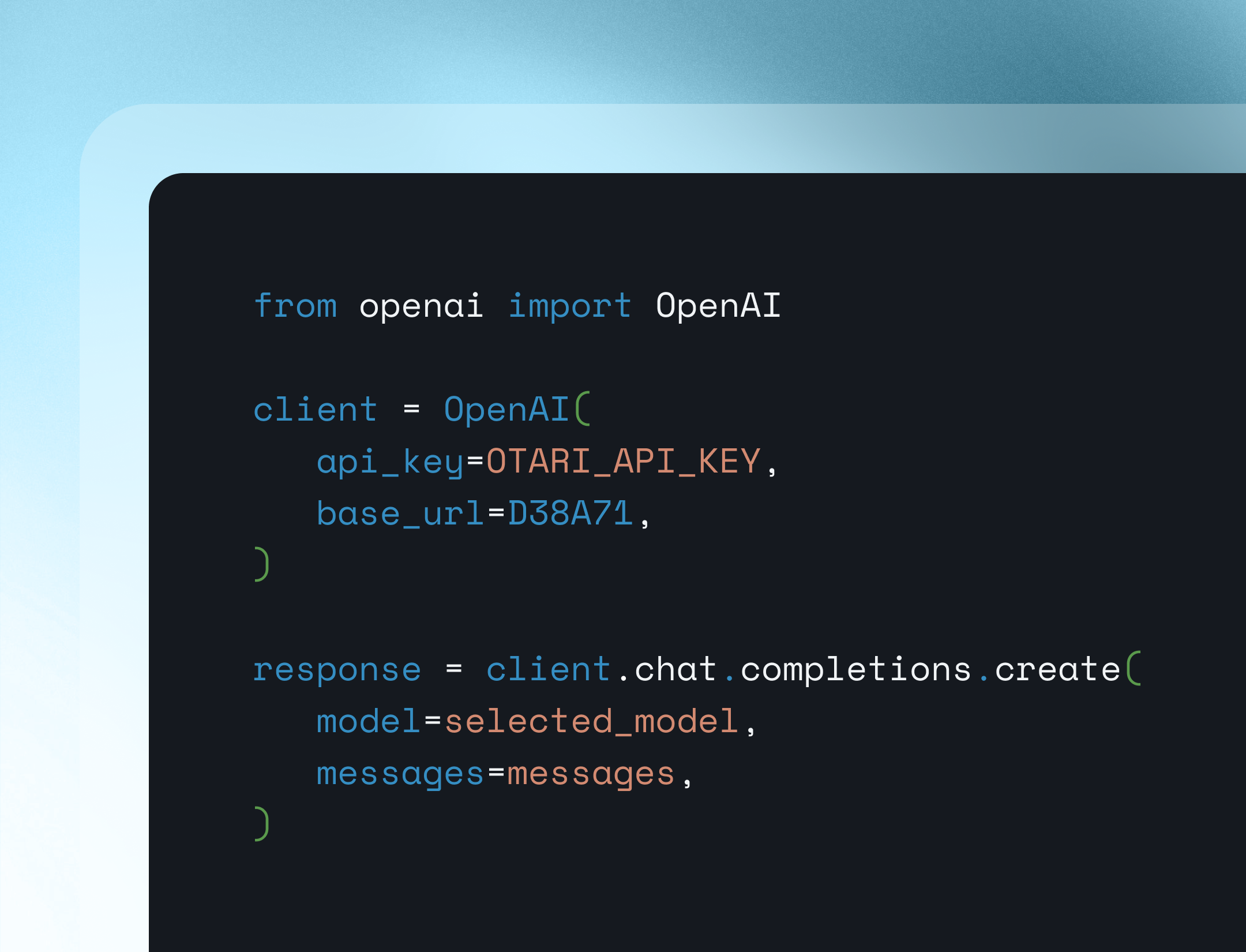
この分離により、アプリケーション側は製品としての振る舞いを、プラットフォーム側はモデルへのアクセスと運用ポリシーをそれぞれ担当できます。
「どのプロバイダーに対応するためにコードを変更すべきか?」と問うのではなく、「どのモデルがこのワークロードを担当すべきか?」と考えることができます。
チームが品質、レイテンシ、プライバシー、信頼性、価格の評価を行う必要はありません。Otari はエンジニアの判断を代替するものではありません。各意思決定に伴う反復的な統合作業を取り除くだけです。
小さなモデルだからといって、プラットフォームも小さくなるわけではありません。
モデルの能力とプラットフォームの能力は別物です。
コスト、レイテンシ、プライバシー、あるいはデプロイ要件に基づいたワークロードであれば、軽量モデルやオープンウェイトモデルの方が適している場合があります。しかし、それらは一部の最先端モデル API に同梱されている管理機能に欠けることが多々あります。
Otari は、ウェブ検索やサンドボックス化されたコード実行など、プロバイダーに依存しないツールを同じゲートウェイを通じて提供することで、このギャップを埋めます。
ツールがプロバイダーから切り離されれば、小規模なモデルもはるかに魅力的になります。
断片化は統合だけではない
プロバイダーごとの直接連携は、コードの断片化を引き起こすだけでなく、認証情報をシステム全体にばらまき、財務の可視性を複数のアカウントや請求ダッシュボードに分散させてしまいます。
認証情報の一元化とリスク低減
Otari は上流プロバイダーの認証情報を中央で管理し、アプリケーションはワークスペーススコープの API キーを使用してゲートウェイを呼び出します。アプリケーションがプロバイダーのシークレットに直接アクセスする必要はありません。
これにより、より明確なセキュリティ境界が形成されます。プロバイダーの認証情報は中央で管理・ローテーションでき、アプリケーションのアクセス権限は別途スコープを設定できます。また、漏洩したアプリケーションキーの影響範囲(ブラスト半径)を抑制しやすくなります。
利用状況の統一とコスト管理
複数のプロバイダーアカウントがあると、コストの帰属特定が困難になります。請求書の合計金額だけでは、どのアプリケーション、チーム、ユーザー、モデル、あるいは環境でその費用が発生したのかを説明できません。
Otari は、複数のプロバイダーからのリクエストとコストを一元管理し、予算設定や利用状況の可視化、支出制御をサポートします。ホスト型プラットフォームでは、組織単位やワークスペース単位でアクセス権限と支出を整理できます。
これにより、コスト管理をリクエストそのものに近づけることが可能になります。複数の請求書が届いてから予期せぬ利用を発見するのではなく、チームは制限を設定し、モデルへのアクセス権限を付与する同じ制御層を通じて支出を追跡できます。
新しいプロバイダーの抽象化ではなく、製品自体を構築しよう
モデル選定は常に変化します。チームは新しいモデルを採用し、古いモデルを廃止し、異なるワークロードを別々のプロバイダーにルーティングしていくでしょう。
「一つの永続的なプロバイダー」を予測してプラットフォーム戦略を立てることは現実的ではありません。また、すべてのアプリケーション内でプロバイダー固有のロジックを再構築するアプローチも同様です。
持続可能なアプローチは、アプリケーションに対して安定した契約(インターフェース)を提供し、その背後でモデル層を進化させることです。
モデルには依然としてテストが必要ですし、コスト測定や信頼性・セキュリティの設計も不可欠です。ただし、これらの判断はアプリケーションコードベースを繰り返し書き換えるのではなく、専用の制御プレーンで行うべきです。
プロバイダーとの統合を追いかけるのをやめましょう。一つの安定したインターフェースに対して製品を構築し、背後でモデルエコシステムが変化していくことを許容してください。
Otari を探索する
Otari のマルチプロバイダールーティングガイドを確認すれば、1 つの統合で複数のプロバイダー間でのリクエストルーティング、認証情報の一元管理、フォールバック動作の実装、そして利用状況と支出を一つの運用ビューに集約する方法がわかります。
原文を表示
imageA new LLM is released. It is faster, cheaper, better at reasoning, or simply a stronger fit for one of your workloads.
The product team wants to test it. From the outside, that sounds like changing a model name and running a few evaluations.
From a platform or infrastructure perspective, it is rarely that simple.
A new model may arrive through a provider your application does not support. That means another SDK, authentication method, request format, error model, set of environment variables, and collection of provider-specific behaviours.
The real challenge is not accessing more models. It is preventing every new model from becoming another infrastructure project.
The Model Is Only Part of the Integration
When an application connects directly to an LLM provider, it depends on much more than the model itself.
It also depends on the provider’s SDK, credentials, request and response schemas, streaming implementation, tool-calling conventions, rate limits, retries, model identifiers, and usage data.
Provider-specific logic begins to spread across application code, secrets management, observability, testing, deployment pipelines, and incident response.
This may be manageable with two providers. It becomes harder when new vendors appear, models are deprecated, APIs evolve, and teams want different models for different workloads.
Eventually, the team is no longer maintaining an AI application. It is maintaining an internal provider compatibility layer.
We Have Seen This Problem Before
Software teams have dealt with a similar problem before.
Before reproducible package management and containerised environments became standard, applications frequently broke because libraries, runtimes, and operating systems expected incompatible versions. Updating one dependency could break an unrelated component. Deploying the same software in two environments could produce different results.
We called it dependency hell.
The issue was not that dependencies were inherently bad. Application code was too tightly coupled to systems that evolved independently.
Engineering practices improved by introducing stable boundaries: package managers, lock files, containers, and consistent interfaces.
LLM providers now resemble separate dependency ecosystems. Each evolves its own SDKs, APIs, credentials, models, tools, and billing mechanisms. Connecting applications directly to each provider recreates the coupling we spent years removing elsewhere.
Decouple the Application Lifecycle from the Model Lifecycle
A new model should be a configuration change, not an application rewrite.
Applications and models operate on different release cycles. Application changes may require code review, security checks, integration testing, staged deployments, and production approval. New models appear continuously and may need to be evaluated or rerouted much faster.
Otari provides a stable OpenAI/Anthropic-compatible endpoint between applications and providers. The application sends one request using one API key, while provider selection, upstream credentials, routing policies, and fallback behaviour remain behind the gateway. Otari currently supports more than 40 providers.
The application integration can remain stable:
imageThat separation lets the application own product behaviour while the platform owns model access and operational policy.
Instead of asking, “What code must change to support this provider?”, the team can ask, “Which model should serve this workload?”
Teams must still assess quality, latency, privacy, reliability, and price. Otari does not replace engineering judgement. It removes the repeated integration work surrounding each decision.
A Smaller Model Should Not Mean a Smaller Platform
Model capability and platform capability are not the same thing.
Lighter or open-weight models may be a better fit for a workload based on cost, latency, privacy, or deployment requirements. However, they often lack the managed capabilities bundled with some frontier model APIs.
Otari helps close that gap by providing model-agnostic tools such as web search and sandboxed code execution through the same gateway.
Once tools are decoupled from the provider, smaller models become much more interesting.
Fragmentation Goes Beyond Integration
Direct provider integrations do not only fragment code. They also spread credentials across systems and divide financial visibility across several accounts and billing dashboards.
Centralise Credentials and Reduce Exposure
Otari stores upstream provider credentials centrally, while applications use workspace-scoped API keys to call the gateway. The application never needs direct access to the provider secret.
This creates a cleaner security boundary. Provider credentials can be managed and rotated centrally, application access can be scoped separately, and the blast radius of a leaked application key is easier to contain.
Unify Usage and Control Spend
Multiple provider accounts make cost attribution difficult. A consolidated invoice total does not explain which application, team, user, model, or environment generated the spend.
Otari records requests and costs across providers in one place and supports budgets, usage visibility, and spending controls. Its hosted platform also organizes access and spend through organizations and workspaces.
This moves cost management closer to the request itself. Rather than discovering unexpected usage after several invoices arrive, teams can define limits and trace spend through the same control layer that authorizes model access.
Build the Product, Not Another Provider Abstraction
Model choice will keep changing. Teams will adopt new models, retire older ones, and route different workloads to different providers.
Trying to predict one permanent provider is not a realistic platform strategy. Neither is rebuilding provider-specific logic inside every application.
The sustainable approach is to give applications a stable contract and allow the model layer to evolve behind it.
Models still need testing. Costs still need measuring. Reliability and security still need designing. But those decisions should happen in a dedicated control plane, not through repeated rewrites across application codebases.
Stop chasing provider integrations. Build the product against one stable interface and let the model ecosystem change behind it.
Explore Otari
Explore Otari’s multi-provider routing guide to see how one integration can route requests across providers, centralize credentials, add fallback behavior, and bring usage and spend into one operational view.
関連記事
今日のまとめ
AIデイリーブリーフで今日の重要ニュースをまとめ読み