OpenAI、Codex にアニメーションペットと設定ファイル自動インポート機能を追加
本文の状態
日本語全文を表示中
詳細モードで約3分の本文を読めます。
同じ出来事の情報源
6媒体で確認
TechCrunch AI · The Decoder · Simon Willison Blog · TLDR AI · 404 Media · Ars Technica AI
各社の報じ方を比較 ↓OpenAI は開発ツール「Codex」を更新し、画面にオーバーレイ表示されるアニメーションペット機能や、他コードエージェントからの設定ファイル自動インポート、音声入力精度向上のための辞書機能を追加した。これによりデスクトップアプリとしての利便性と魅力が強化された。
Continue in AI NEW LAB
このニュースを、実務の判断につなげる
AI NEW LABで、試したことや先に確認したい条件を共有できます。まずはログインなしで読めます。
AI NEW LABで論点を見るSource Article
元記事を日本語で読む
本文に関係しない購読案内、埋め込み通知、サイト内プロモーションは除いています。
OpenAI はデスクトップアプリ Codex に新たなアップデートをリリースしました。その目玉機能は間違いなく遊び心にあふれた Pets です。これは、Codex 自体が最小化されているときでも画面のオーバーレイとして存在するアニメーション付きの相棒です。箱から出した直後には、意図的に愛らしいピクセルアートスタイルで描かれた 8 種類のプリセットペットが用意されており、背景で Codex が何をしているかを反映した短いメッセージバブルを表示します。タスク実行中にペットが発言した場合、それをクリックするとエージェントへの返信経路が開かれ、受動的なステータス表示から双方向の小さなチャネルへと変化します。ユーザーは /pet コマンドを使ってこれらを呼び出したり隠したりできます。
クリエイティブな側面を担うのが、バンドルされたスキル「Hatch」です。これはアップロードした画像を任意に読み込み、それをアニメーション付きペットに変換し、ローカルの Codex ホームフォルダ内のファイルとして保存します。これによりパッケージ化して共有することが可能になります。リリースから数時間後には、コミュニティ主導のディレクトリである PetShare や PetDex などが次々と登場し、X(旧 Twitter)のタイムラインもカスタム作品で埋め尽くされました。私が生成したペットはプロフィールアバターから作られ、Minty という名前で呼ばれています。
もっと詳しく知る
Pets
開発ツール
pet
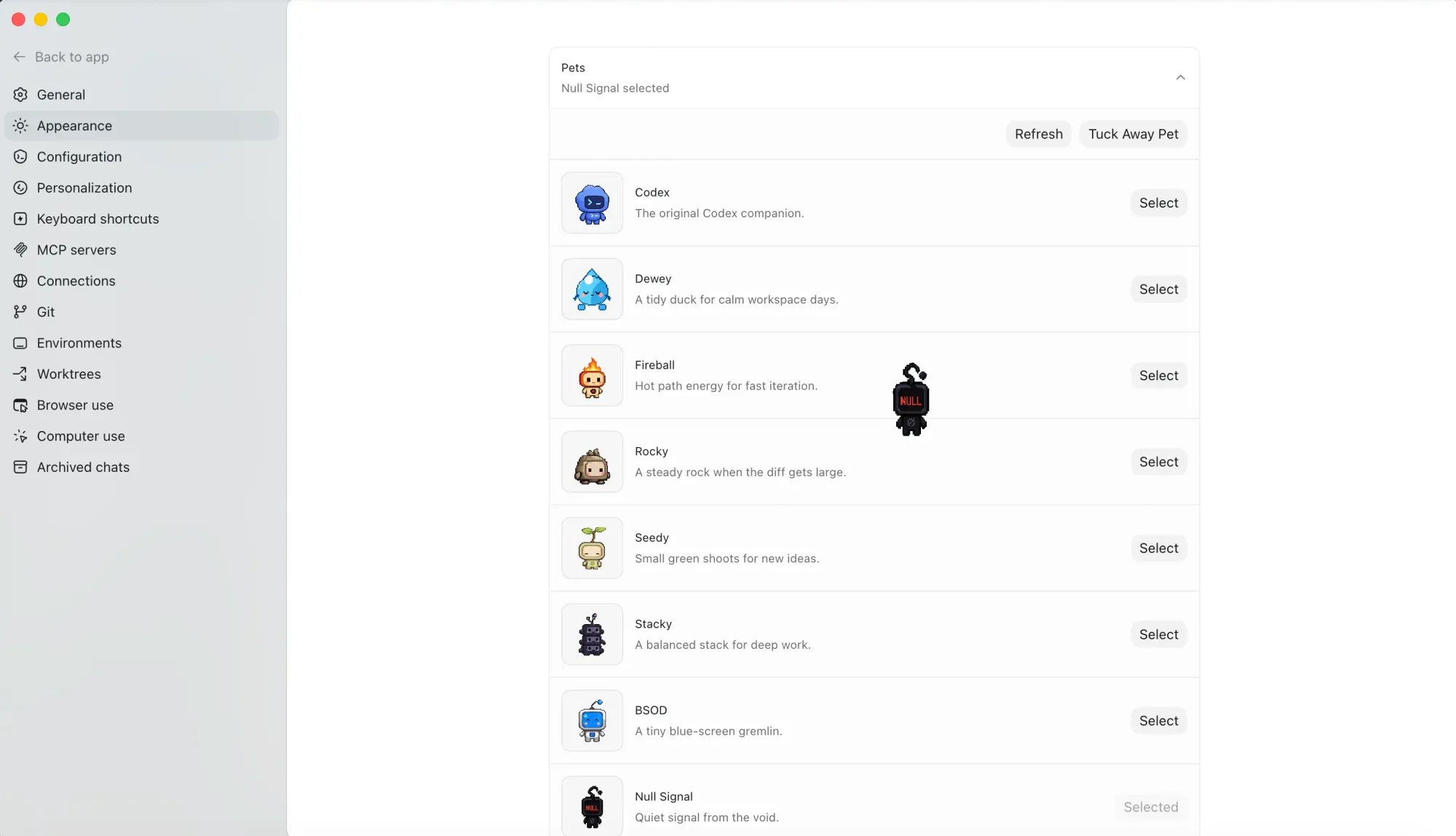 image今回のリリースでは、長期的にはより重要となる可能性のある 2 つの機能強化が静かに追加されました。Codex は now、Claude Code の CLAUDE.md など、他のコーディングエージェントによって残された設定ファイルを自動検出し、それらをインポートします。これにより、プラグイン、プロジェクトの慣習、カスタムルールを手動で書き直すことなく引き継ぐことが可能になります。週ごとの利用制限を回避するために複数のエージェントを行き来する開発者にとって、これはタスク中に切り替える際の摩擦を低減します。
設定画面に新しい音声入力辞書が追加されたことで、ユーザーは音声入力で誤変換されやすい略語や個人的なフレーズを事前に読み込むことができます。これにより、Codex の音声フローにおける最も退屈な修正ループの 1 つが削減されました。
これらの機能をまとめると、OpenAI は Codex を単なるコーディングのコマンドセンターから、より包括的なデスクトップスーパーアプリのインターフェースへと再位置づけし続けていることが読み取れます。個性を備えたオーバーレイ、エージェント間での設定の移植性、音声ツールの整備は、チャーム(魅力)や定着性が純粋な機能と同様に重要視されるようになりつつある、Atlas と並ぶ ChatGPT の運用層としての Codex への広範な取り組みと整合しています。
原文を表示
OpenAI shipped a fresh update to its Codex desktop app, and the headline addition is unmistakably playful: Pets, animated companions that live as overlays on top of the screen even when Codex itself is minimized. Eight predefined pets ship out of the box in a deliberately cute pixel-art style, with short message bubbles mirroring what Codex is doing in the background. If a pet pipes up while a task is running, clicking on it opens a reply path back to the agent, turning a passive status indicator into a small two-way channel. Users summon or hide them with the /pet command.
The creative side comes through a bundled skill called Hatch, which takes any uploaded image and spins it into an animated pet, saved as a file in the local Codex home folder so it can be packaged up and shared. Within hours of release, community-driven directories such as PetShare and PetDex started popping up, with X timelines filling with custom creations. My own, generated from a profile avatar, ended up named Minty.
Discover morePetsDevelopment Toolspet
The same release quietly tucked in two utility moves that may matter more in the long run. Codex now auto-detects configuration files left behind by other coding agents, including Claude Code's CLAUDE.md, and imports them so plugins, project conventions, and custom rules carry over without manual rewrites. For developers bouncing between agents to dodge weekly limits, that lowers the friction of switching mid-task.
A new dictation dictionary in Settings also lets users pre-load abbreviations and personal phrases that voice input would otherwise mangle, cutting one of the more tedious correction loops in the Codex voice flow.
Taken together, the bundle reads as OpenAI continuing to reposition Codex from a coding command center into a fuller desktop super-app surface. Personality-bearing overlays, cross-agent config portability, and voice tooling line up with the broader push toward Codex as the operating layer for ChatGPT alongside Atlas, where charm and stickiness now count as much as raw capability.
同じ出来事を6媒体で確認
同じ出来事を扱う別媒体の記事です。見出しと公開時刻を比較できます。
関連記事
News to Guide
ニュースの次に確認する
発表内容を、現在の料金や仕様と照らし合わせられる関連ガイドです。
今日のまとめ
AIデイリーブリーフで今日の重要ニュースをまとめ読み