Pixieset、Amazon Bedrock で AI 機能の採用率 35% を達成
本文の状態
日本語全文を表示中
詳細モードで約14分の本文を読めます。
同じ出来事の情報源
この情報源を基点に整理
AWS Machine Learning Blog
Pixieset は生成 AI の懐疑的な写真家向けに、Amazon Bedrock を活用して手動での代替テキスト作成という課題を解決し、4 ヶ月で実装・導入し、16 ヶ月後も利用者が定着する成功事例を発表した。
Continue in AI NEW LAB
このニュースを、実務の判断につなげる
AI NEW LABで、試したことや先に確認したい条件を共有できます。まずはログインなしで読めます。
AI NEW LABで論点を見るAI深層分析を開く2026年8月12日 02:11
AI深層分析
キーポイント
ユーザーの真の問題へのアプローチ
Pixieset は生成 AI の懐疑的な写真家に対し、技術の可能性ではなく「創作から離れさせる業務」を解決する問いかけからプロジェクトを開始した。
Amazon Bedrock による迅速な実装
同社は Amazon Bedrock を利用して、写真の代替テキスト生成機能を概念からローンチまでわずか 4 ヶ月で実現し、750,000 枚以上の画像を処理した。
高い採用率と定着
この機能は導入初週に大きな反響を呼び、16 ヶ月後でも適用可能なユーザーベースの 35% が継続して利用していることが確認された。
ユーザーの時間損失に焦点を当てた問題定義
Pixieset は技術の可能性ではなく「クリエイティブでない作業でユーザーが時間を失っている場所」を特定し、写真撮影そのものへの干渉を避けるメタデータ作成という課題を選定した。
段階的な信頼構築による導入アプローチ
AI 生成の代替テキストは一度に全サイトに適用せず、1枚ずつ承認・編集・却下できる形式で提供し、ユーザーが品質に慣れるまで「自動適用」を遅らせる設計とした。
重要な引用
"What tasks are our users forced to do that pull them away from their craft?"
In the first week alone, Pixieset generated alt text for over 750,000 photos, proving that this was a part of the workflow that photographers were happy to hand over to AI.
"We talked a lot about how this first AI feature must solve a real problem."
"The photographer retains final say, and the AI earns trust incrementally."
編集コメントを表示
編集コメント
本記事は、生成 AI の導入において「技術ありき」ではなく「課題解決ありき」でアプローチする成功事例を明確に示している。Pixieset が写真家の懐疑心を克服したプロセスは、クリエイティブ業界における AI ツールの設計指針として極めて参考になる。
Source Article
元記事を日本語で読む
本文に関係しない購読案内、埋め込み通知、サイト内プロモーションは除いています。
この記事は、Pixieset の Ry Rainey 氏と Graham Gibson 氏との共著です。
写真家やアーティストは、生成 AI に対して最も懐疑的な層の一つです。彼らは自らの技術が脅かされ、業界に合成作品があふれる様子を見てきました。2025 年の MIT の調査では、エンタープライズ向けの生成 AI パイロットプロジェクトの 95% が、測定可能なリターンをもたらしていないことが明らかになっています。
Pixieset は、フォトギャラリー、ウェブサイト、オンラインストア、スタジオ管理、写真編集機能を備えた写真家向けオールインワンサービスです。同社は 80 億枚以上の写真をホストし、世界中の数百万人の写真家に信頼されています。Pixieset がこの懐疑的な層に受け入れられたのは、「自らの創作活動から離れさせられる作業は何か」という適切な問いを立てたからです。その答えは、コンセプト段階から実装までわずか 4 ヶ月で実現し、初週にはサブスクリプションのアップグレードを大幅に押し上げました。そして現在も、対象ユーザーの 35% がこの機能を 16 ヶ月以上にわたって使い続けています。
Pixieset では毎年、全社的なハッカソンを開催しています。チームはそこで新技術を実験し、何が実現可能かを探求します。そのハッカソンを通じて、チームは生成 AI の可能性を初めて知ることになりました。そして製品開発においては、その好奇心を顧客が抱える課題解決へと結びつけたのです。
Pixieset Websites は、写真家がビジネス用のウェブサイトを手軽に作成できるプラットフォームです。データによると、多くの写真家サイトでは代替テキスト(alt text)がほとんど、あるいは全く記載されていませんでした。代替テキストとは、ページ上の各画像に対する独自かつ正確な説明のことです。これがなければ、検索エンジンにとって画像は存在しないのと同じです。
一般的な写真家のポートフォリオには数百から数千枚の画像が含まれており、それぞれの画像に独自で詳細な代替テキストを書くのは、退屈で時間のかかる作業です。写真家たちは、ビジネスを宣伝するためには代替テキストが必要だと理解していますが、手作業で入力する量が膨大すぎるため、このタスクは常に先送りされてしまいます。
Pixieset は Amazon Bedrock を活用し、AI による画像代替テキスト生成機能を概念段階から、4 ヶ月という短期間で数百万人のユーザーに向けて本格的にリリースしました。Pixieset のスタッフプロダクトマネージャーである Graham Gibson 氏はこう振り返ります。「最初の週だけで Pixieset は 75 万枚以上の写真の代替テキストを生成し、これが写真家たちが AI に任せても問題ないと考えるワークフローの一部であることを証明しました。」
課題
機能そのものを構築するのではなく、いかにしてユーザーに採用してもらうかが課題でした。ユーザーが信頼しないツールには価値がなく、それどころか、本来支援すべきクリエイティブな専門家を遠ざけてしまう恐れさえあります。
「最初の AI 機能は、必ず現実的な課題を解決するものでなければならない」と語るのは、Pixieset のスタッフエンジニアである Ry Rainey 氏です。Pixieset の製品哲学は一貫して、「写真撮影以外の作業に時間を費やしている瞬間」を見つけ出し、その摩擦を解消することにあります。この考え方を生成 AI にも適用し、チームは「この技術で何ができるか?」と問うのではなく、「ユーザーが創造的な活動以外でどこで時間を失っているのか?」という視点からアプローチしました。
この枠組みにより、Pixieset チームは、写真家が自らのクリエイティブな仕事に誇りを持つ領域を侵す恐れのある、派手な AI 生成画像といった応用分野ではなく、別の方向へと目を向けました。彼らが着目したのはメタデータです。ポートフォリオを技術や検索エンジンに対して可視化するための見えない足場となるものですが、写真家たちが書くことを好むものではありません。
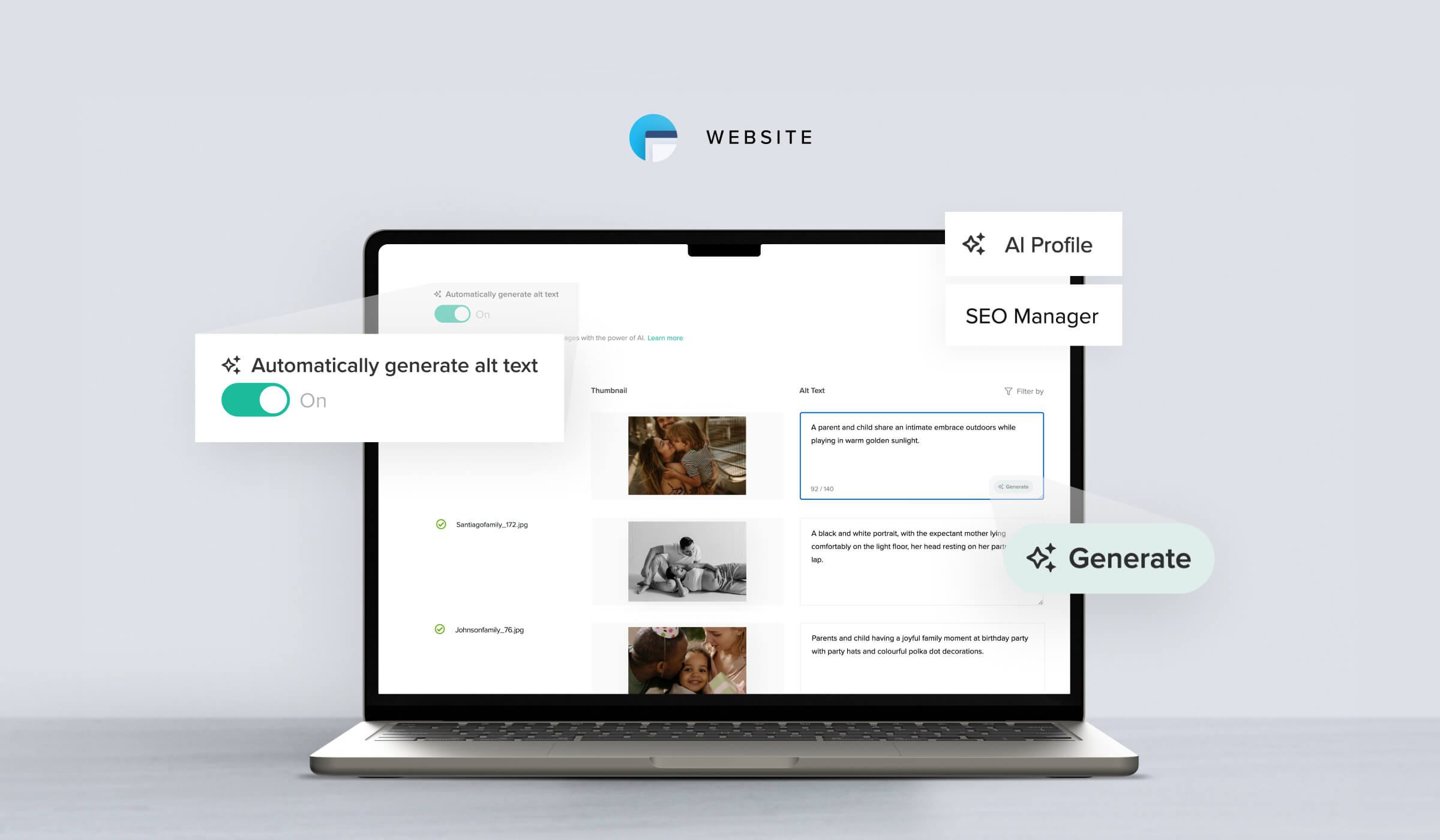
図 1: Pixieset のウェブサイトビルダーにおける AI 生成の代替テキスト確認インターフェース
AI で生成された代替テキストをサイト全体に一括適用するのではなく、この機能は画像単位で提供されます。写真家は一度に一つの画像に対して提案された代替テキストを確認し、採用するか編集するか拒否するかを選択してから、対象範囲を広げていきます。こうして写真家は、自分のペースで出力の品質に対する信頼を築いていきます。
写真家が十分に安心した段階で「自動適用」を有効化すれば、ポートフォリオ全体に展開できますが、それでも各キャプションはいつでも編集可能です。最終的な決定権は常に写真家にあり、AI はその都度の信頼獲得を通じて徐々に信頼を勝ち取っていきます。
ソリューション概要
以下の図は、Pixieset の AI 生成代替テキスト機能の全体フローを示しています。Pixieset は、Amazon Elastic Compute Cloud (Amazon EC2)、AWS Lambda、Amazon Simple Queue Service (Amazon SQS) を活用したイベント駆動型アーキテクチャで構築されています。
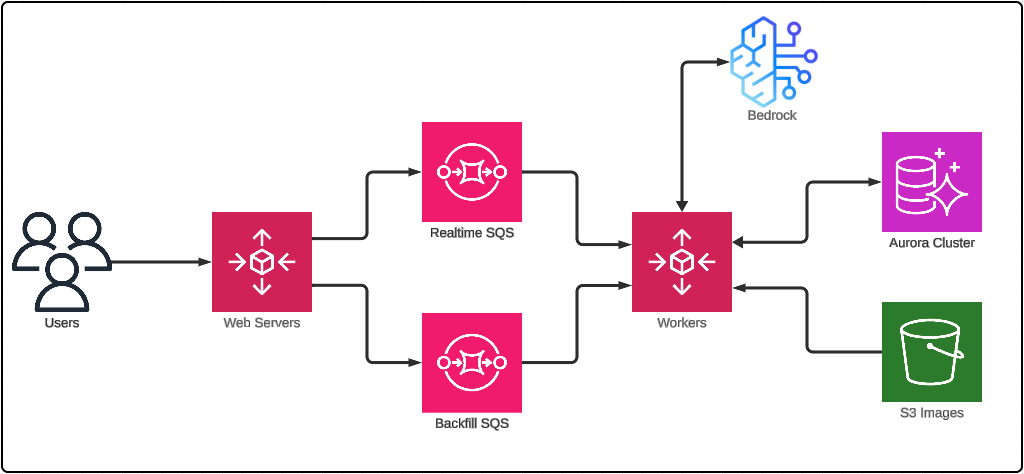
図 2: Pixieset の AI 生成代替テキスト機能の全体フロー
写真家が画像をアップロードするとイベントが発生します。この AI 生成の代替テキスト機能では、Pixieset チームが既存のワーカーパイプラインに 1 つの手順を追加しました。具体的には、画像を Amazon Bedrock に送信してマルチモーダル大規模言語モデル(LLM)で推論させ、生成されたキャプションを写真と一緒に保存し、写真家が日常的に利用しているウェブサイトビルダー内でレビューできるように表示しています。
この統合では、新しいインフラの構築や GPU のプロビジョニング、モデルのホスティングは不要でした。単一の API 呼び出しだけで済みます。「これが Amazon Bedrock を選んだ主な理由の一つです」と Graham は語っています。完全管理型の Amazon Bedrock を使用し、単一の API で主要な基盤モデルへの安全なアクセスを実現したことで、Pixieset はサーバーを 1 つも用意することなく、初週に推論リクエスト数をゼロから 750,000 件まで拡大しました。
Pixieset チームにとって、この機能が常に利用可能であることは極めて重要でした。ユーザーが生成 AI によるキャプションの空白や「もう一度お試しください」といったエラー表示を見てしまうと、信頼性が損なわれ、機能の普及が妨げられるからです。
Amazon Bedrock のクロスリージョン推論機能は、定義された地理的範囲内でリクエストを自動的に複数のリージョンに振り分け、Pixieset がルーティングロジックを構築する必要なくスループットを維持します。Pixieset チームはこの仕組みを一歩進め、最初のモデルでの失敗を検知して、同等の品質を持つセカンダリモデルで再試行する処理を追加しました。その結果、この機能はローンチ以来一度もダウンしたことがありません。
Pixieset は 2025 年初頭に、Amazon Bedrock を介して Anthropic Claude 3.5 Sonnet を活用し、この機能をリリースしました。選定理由として、多様な画像理解能力、高速な推論速度、そして大規模運用におけるコスト効率の高さが挙げられます。
Amazon Bedrock はモデルプロバイダーに依存しない統一 API を提供しているため、Pixieset は特定のバージョンやプロバイダーに縛られることなく、最新モデルを評価・導入できます。また、統合の再設計を行うことなく、必要に応じてモデルを切り替えることも可能です。さらに、Amazon Bedrock の高度なプロンプト最適化機能により、既存のプロンプトを新しいモデルの特性に合わせて自動的に調整できるため、モデル変更のコストも大幅に低下します。
リリース以降、Amazon Bedrock のモデルカタログは拡大を続けており、2026 年 6 月時点では最新の Claude Sonnet 5 も含まれています。その他にも、OpenAI の GPT-5.5、Amazon Nova、Meta や Mistral、Cohere などのモデルが利用可能です。つまり、2025 年にリリースされた機能は、基盤となるモデルの進化に伴って継続的に改善され、エンジニアリングへの投資を最小限に抑えながら実現されています。
Response
この機能をリリースした際、写真家たちからの反応は「正しい問いかけを行い、本当に役立つものを構築できた」というものでした。
「OMG Pixieset!普段は AI 利用にはあまり好意的ではないのですが、画像説明を大量生成するために AI を使うのは本当に素晴らしいです。もちろん承認のために一つずつ確認しますが、これはゲームチェンジャーになります!」
「画像の SEO に役立つ新しい生成 AI の代替テキスト機能がすべての写真に適用されるなんて最高!すごく時間が節約できます。細かい微調整は必要ですが、全体的には正確で、Pixieset のこの機能は素晴らしいです!」
「この革新性を活かせるようサブスクリプションを更新しました。ご尽力ありがとうございます」
開発者が応用できる 3 つの原則
Pixieset が生成 AI を活用した代替テキストで成功を収めたのは、単なる幸運やタイミングの問題ではありませんでした。コードを書き始める前に下された 3 つの設計判断が、その結果を決定づけたのです。
AI 機能を「参入障壁」と「必須機能」に分類する
すべての AI 機能が同じレベルで投資されるべきではありません。Pixieset は早い段階から、AI 生成による代替テキストは「参入障壁(モート)」ではなく「必須機能(マストハブ)」であると認識しました。これは、独自のデータによって時間とともに深まる独自性の壁ではなく、多くのウェブサイトビルダーが最終的に提供するようになる標準的な機能です。この区別がチームに示したのは、過剰な設計に時間を費やすのではなく、市場への投入スピードを最優先すべきだという方針でした。その集中こそが、差別化のために 1 年かけて開発するのではなく、4 ヶ月でコンセプトから本番環境までの移行を実現させた要因です。
自らの専門分野ではない業務を解決する
ユーザーが誇りを持つ業務に踏み込む AI 機能ほど、採用されにくいものはありません。Pixieset はあえて、写真という創造行為そのものに触れる機能ではなく、ポートフォリオを検索可能にする目に見えない足場であるメタデータの自動化を選びました。その結果、写真家は「置き換えられた」と感じるのではなく、「放置していた雑務から解放された」と感じることになりました。これが、この機能が解約ではなくサブスクリプションのアップグレードを促す理由です。
ユーザーが信頼を築くペースに合わせる
どんなにターゲットを絞った機能でも、一度にユーザーにコントロール権をすべて委ねようとしていれば失敗します。Pixieset は AI を画像 1 枚ずつ導入し、写真家が単一のキャプションを確認してから、範囲をポートフォリオ全体に広げるかどうかを決められるようにしました。この忍耐が実を結び、最終的に 35% のユーザーが自分たちのペースで完全自動化を選択しています。彼らが得た自信は、製品チームの保証ではなく、実際の製品体験を通じて築かれたものです。
結論
Pixieset の AI 生成代替テキスト機能において最も印象的なのは、必要なインフラが極めて少なくて済んだ点です。既存のイベント駆動パイプラインに埋め込まれた単一の Amazon Bedrock 推論呼び出しで、35% という高いユーザー採用率を達成し、頭打ちになる兆候も見せていません。しかし、技術的な簡素さが最大の教訓ではありません。成功したのは、「どの問題を解決すべきか」「誰の業務を自動化するか」「一度にどれだけのコントロール権を委ねるか」を知り抜くという規律でした。
Amazon Bedrock を使って、推論を活用した機能の構築を始めてみましょう。本格的なマルチステップ型エージェントワークフローに移行する際は、Amazon Bedrock AgentCore が管理インフラを提供し、そこからスケールアップが可能です。最初から AI を活用して開発を行う場合は、AI-Driven Development Lifecycle (AI-DLC) というフレームワークが、ソフトウェア開発の全段階で AI を協働パートナーとして活用するための指針となります。
執筆者について

Kinman Lam
Kinman は AWS の ISV シニア ソリューションアーキテクトです。生成 AI をプロトタイプから本番環境へ移行する際の戦略を、ソフトウェア企業の経営層にアドバイスしています。また、AWS を活用した実用レベルの AI エージェント構築に関する月例ウェビナーシリーズ「Agentic AI」も主宰しています。最新の活動については LinkedIn (linkedin.com/in/kinmanlam) でフォローできます。

Rob Yang
Rob はカナダ・カルガリーに拠点を置く Amazon Web Services のシニア・テクニカル・アカウントマネージャーです。クラウド上の財務管理を専門とし、顧客が AWS 上で財務運営の成熟度を高めるお手伝いをしています。仕事以外では、家族や友人のための旅行計画と最適化を楽しんでいます。

Graham Gibson
Graham は Pixieset のスタッフ・プロダクトマネージャーで、写真家向けプロダクト開発に 8 年の経験があります。写真家のワークフローを効率化し、彼らが好きな仕事により多くの時間を割けるよう、シンプルかつ意図的に設計されたソリューションの構築を専門としています。

Ry Rainey
Ry は Pixieset のスタッフエンジニアで、EC サイトやクリエイティブ企業向けウェブアプリの開発に 11 年の経験があります。Pixieset では主に「Client Gallery(クライアントギャラリー)」と「Website」の構築に関わり、写真家がデジタルの世界で成功するよう支援しています。
原文を表示
*This post is co-written with Ry Rainey and Graham Gibson from Pixieset.*
Photographers and artists are among the most skeptical audiences for generative AI. They have watched it threaten their craft and flood their industry with synthetic work. A 2025 MIT study found 95% of enterprise Generative AI pilots deliver zero measurable returns.
Pixieset is an all-in-one photography business service providing photo galleries, websites, stores, studio management, and photo editing. Pixieset hosts over 8 billion photos and is trusted by millions of photographers worldwide. They cut through that skepticism by asking the right question: what tasks are our users forced to do that pull them away from their craft? The answer took them from concept to production in four months, drove significant subscription upgrades in week one, and has 35 percent of their applicable user base still using the feature sixteen months later.
Each year, Pixieset runs a company-wide hackathon where teams experiment with new technology and explore what’s possible. It was through the hackathon that the team first saw what generative AI could do. When it came to product development, they brought that curiosity back to the customer problem.
Pixieset Websites makes it straightforward for photographers to create a website for their business. The data showed that most photographer websites had little to no alt text. Alt text is a unique and accurate description for each image on a page. Without alt text, images are invisible to search engines. A typical photographer’s portfolio contains hundreds to thousands of images. Writing a unique and descriptive alt text for each image is tedious and time-consuming. Photographers know they should have alt text to get their business promoted, but the sheer volume of manual alt text entries makes it a task they perpetually defer.
Using Amazon Bedrock, Pixieset moved from concept to production launch of an AI image alt text generator to millions of users in 4 months. Graham Gibson, Staff Product Manager at Pixieset recalls, “In the first week alone, Pixieset generated alt text for over 750,000 photos, proving that this was a part of the workflow that photographers were happy to hand over to AI.”
The challenge
The challenge isn’t building the feature but driving its adoption. A tool has no value if users don’t trust it, or worse it alienates the creative professionals it’s designed to serve.
“We talked a lot about how this first AI feature must solve a real problem,” says Ry Rainey, Staff Engineer at Pixieset. Pixieset’s product philosophy has always been to identify moments where photographers spend time on work that isn’t photography and then alleviate that friction. The team applied this same lens to generative AI by not asking “what can this technology do?” but “where are our users losing time to tasks that are not creative?” That framing led the Pixieset team past flashier applications like AI-generated images, which would have encroached on the creative work photographers take pride in. They instead looked toward metadata, the invisible scaffolding that makes a portfolio visible to technologies and search engines but that no photographer enjoys writing.
Figure 1: The AI-generated alt text review interface in the Pixieset website builder
Rather than applying AI-generated alt-text across an entire website at once, the feature is available one image at a time. A photographer reviews a single suggested alt text, choosing to accept, edit, or reject it before expanding the scope. The photographer builds confidence in the output quality at their own pace. When the photographer is comfortable, they enable “auto-apply” across their portfolio, and even then, every caption remains editable. The photographer retains final say, and the AI earns trust incrementally.
Solution overview
The following diagram shows the end-to-end flow for Pixieset’s AI-generated alt text feature. Pixieset is built on event-driven architecture using Amazon Elastic Compute Cloud (Amazon EC2), AWS Lambda, and Amazon Simple Queue Service (Amazon SQS).
Figure 2: End-to-end flow for Pixieset’s AI-generated alt text feature
When a photographer uploads an image, an event is triggered. For this AI-generated alt text feature, the Pixieset team added one more step to that existing worker pipeline by sending the image to Amazon Bedrock for inference by a multimodal large language model (LLM), storing the generated caption alongside the photo, and surfacing it for review within the website builder photographers already use daily.
This integration required only a single API call without new infrastructure, GPU provisioning, or model hosting. “This is one of the primary reasons we chose Amazon Bedrock,” says Graham. By using the fully managed Amazon Bedrock with secure access to leading foundation models through a single API, Pixieset scaled from zero to 750,000 inference requests in the first week without provisioning a single server.
The Pixieset team needed the feature to be highly available because if a user sees empty generative AI captions or “please try again” errors, it erodes trust and hinders the adoption of the feature. Cross-Region inference in Amazon Bedrock automatically routes requests across Regions within a defined geographic boundary, maintaining throughput without requiring Pixieset to build routing logic. The Pixieset team took it one step further by catching failures from the first model and retrying with a secondary model of similar quality. As a result, this feature has had zero downtime since launch.
Pixieset launched the feature at the beginning of 2025 using Anthropic Claude 3.5 Sonnet through Amazon Bedrock, selecting it for its multimodal image understanding, fast inference, and cost efficiency at scale. Because Amazon Bedrock presents a unified API across model providers, Pixieset evaluated newer models without locking into a particular version or provider and swap them without re-architecting the integration. The advanced prompt optimization in Amazon Bedrock further lowers the switching cost by adapting existing prompts to a new model’s strengths automatically. Since launch, the Amazon Bedrock model catalog has continued to expand, including the latest Claude Sonnet 5 as of June 2026. It also includes OpenAI’s GPT-5.5, Amazon Nova, and models from Meta, Mistral, Cohere and many more. This means the feature they shipped in 2025 continues to improve as the underlying models do, with minimal engineering investment.
Response
Upon launching the feature, the response from photographers confirmed they had asked the right question and built something truly useful:
“OMG Pixieset! Okay, I don’t normally like the use of AI, but using AI to mass-generate image descriptions is absolutely fantastic. Obviously I’m checking through to approve them, but this is a game-changer!”
“This new ’SEO for images’ generative AI alt-text for all pictures on website is great!! Saves me so much time. Very few minor tweaks needed here and there but overall accurate. Excellent feature Pixieset!”
“I updated my subscription to benefit from this innovation thank you for your work”
Three principles builders can apply
Pixieset’s success with AI-generated alt text wasn’t a matter of luck or timing. Three design decisions, made before a line of code was written, shaped the outcome.
Categorize your AI features into moats and must-haves
Not every AI feature deserves the same level of investment. Pixieset recognized early that AI-generated alt text is a must-have, not a proprietary moat that deepens over time with unique data. It’s a table-stakes capability that most website builders will eventually offer. That distinction told the team to prioritize speed to market instead of over-engineering. That focus is how they moved from concept to production in four months rather than spending a year building differentiation that wouldn’t compound.
Solve work that isn’t their craft
The most adoption-resistant AI features are the ones that encroach on work users take pride in. Pixieset deliberately chose to automate metadata, the invisible scaffolding that makes a portfolio discoverable, rather than anything that touches the creative act of photography itself. The result was that photographers didn’t feel replaced but relieved of a chore they’d been neglecting, which is why the feature drives subscription upgrades rather than cancellations.
Let users build trust at their own pace
Even a well-targeted feature can fail if it asks users to hand over too much control at once. Pixieset introduced the AI one image at a time, letting photographers review a single caption before deciding whether to expand scope to their full portfolio. That patience paid off, and 35 percent of users eventually chose full automation on their own terms. They arrived at that confidence through direct product experience rather than a product team’s assurance.
まとめ
The most striking thing about Pixieset’s AI-generated alt text feature is how little infrastructure it required. A single Amazon Bedrock inference call, embedded into an existing event-driven pipeline, delivered a feature with 35 percent user adoption that shows no signs of plateauing. But the technical simplicity is the lesser lesson. What made it succeed was the discipline of knowing which problem to solve, whose work to automate, and how much control to hand over at once.
Get started with Amazon Bedrock to build your first inference-powered feature. When you’re ready to move into multi-step agentic workflows, Amazon Bedrock AgentCore provides the managed infrastructure to scale from there. If you’re building with AI from the start, the AI-Driven Development Lifecycle (AI-DLC) offers a framework for using AI as a collaborator across every phase of software development.
About the authors
Kinman Lam
Kinman is an ISV Senior Solutions Architect at AWS, where he advises software companies executives on bringing GenAI from prototype to production. He hosts a monthly Agentic AI webinar series on building production-ready AI agents with AWS. Follow his latest work on LinkedIn at linkedin.com/in/kinmanlam
Rob Yang
Rob is a Senior Technical Account Manager Lead at Amazon Web Services based in Calgary, Canada. He specializes in cloud financial management and helps customers mature their financial operations on AWS. Outside of work, he enjoys planning and optimizing travel experiences for his family and friends.
Graham Gibson
Graham is a Staff Product Manager at Pixieset with 8 years of experience building products for photographers. He specializes in creating simple, thoughtfully designed solutions that streamline photographers’ workflows and help them spend more time doing the work they love.
Ry Rainey
Ry is a Staff Engineer at Pixieset with 11 years of experience building web apps for e-commerce and creative businesses. At Pixieset, he has primarily contributed to Client Gallery and Website, helping photographers succeed in a digital world.
関連記事
今日のまとめ
AIデイリーブリーフで今日の重要ニュースをまとめ読み