AI ラボの知的傲慢さが天才の失敗を招くとの指摘
本文の状態
日本語全文を表示中
詳細モードで約19分の本文を読めます。
同じ出来事の情報源
この情報源を基点に整理
TLDR AI
TLDR AI が発表した記事は、AI ラボの天才神話への疑問を提起し、技術的傲慢さがイノベーションの阻害要因となる可能性を指摘している。
AI深層分析を開く2026年8月3日 23:52
AI深層分析
キーポイント
天才神話への批判
AI ラボが抱える「天才」や「独創性」という自己認識が、現実的な課題解決から目を逸らす原因となっていると分析する。
技術的傲慢の危険性
自らの能力過信による判断ミスが、重大な失敗や技術的停滞を招くリスクがあることを警告している。
組織文化の再考
天才への依存ではなく、健全な批判精神と謙虚さが持続的な発展に不可欠であると論じている。
専門家の領域外への過信
ある分野の専門家であることが、すべての分野の専門家であることを意味しない。
AI ラブ文化における知的謙虚さの欠如
レオポルド・アシェンブレナーが属するフロンティア AI ラブの文化には、金融管理以外の分野にも及ぶ知的謙虚さの欠如が見られる。
重要な引用
When Genius Fails—The Intellectual Arrogance of the AI Labs
"Being an expert in one field doesn’t make you an expert in all fields."
"The lack of intellectual humility within the frontier AI lab culture he hails from extends beyond him into many verticals other than money management."
Then it blew up so spectacularly in 1998 that the Federal Reserve had to rally Wall Street banks to help bail it out (in a preview of 2008).
編集コメントを表示
編集コメント
本記事は特定の製品やモデルの性能比較ではなく、業界全体の風土に対する警鐘である。技術的進歩が加速する中で、人間の判断や組織のあり方を見直す視点は極めて貴重だ。
Source Article
元記事を日本語で読む
本文に関係しない購読案内、埋め込み通知、サイト内プロモーションは除いています。
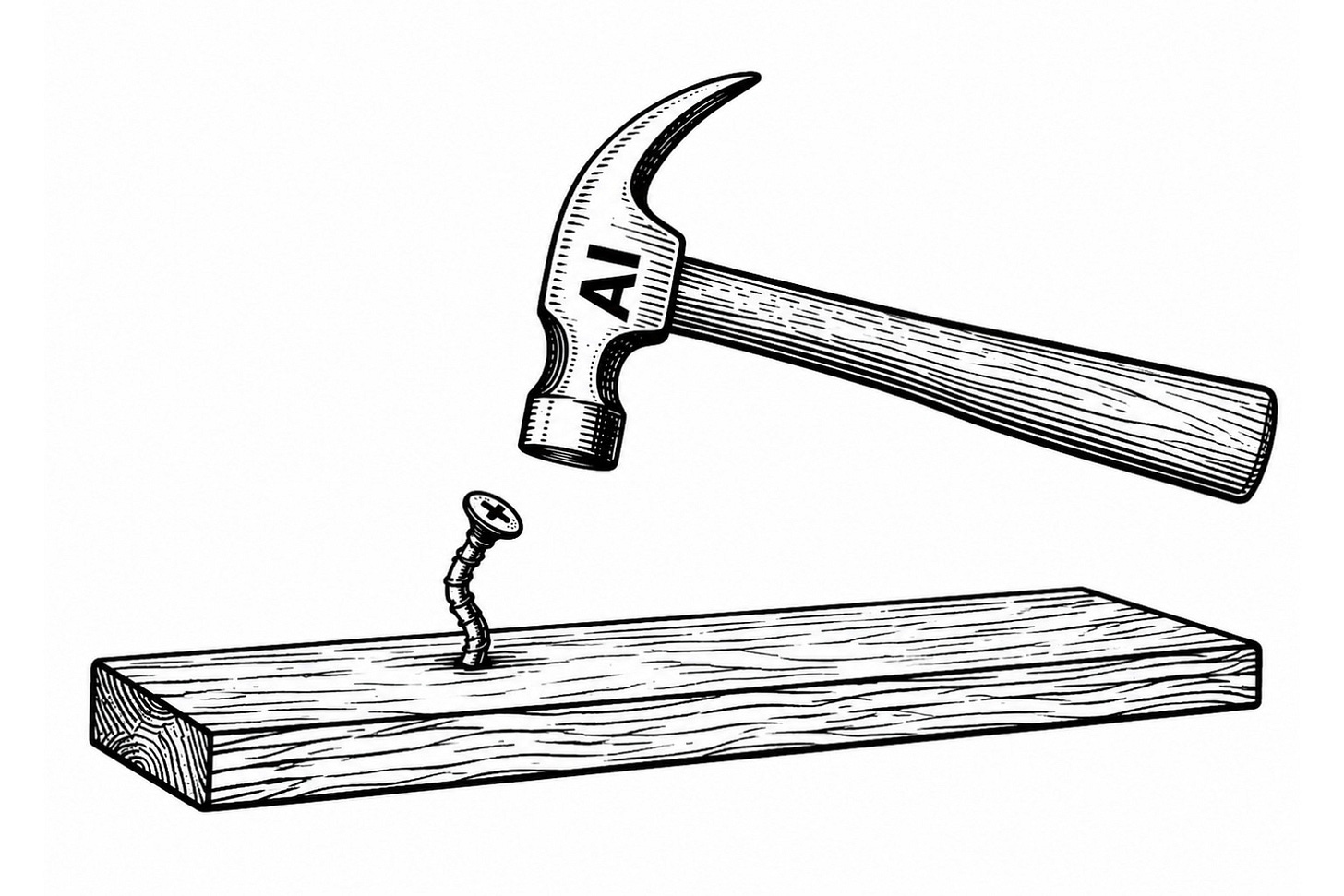
ある分野の専門家だからといって、すべての分野で専門家になれるわけではありません。今週、レオポルド・アシェンブレナーが設立したヘッジファンド「Situational Awareness」は、200億ドル規模のポートフォリオを大幅に減損させるという結果になりました。
彼の名声の源泉は、OpenAI のスーパーアライメントチームの一員だったこと、そして機密情報漏洩の疑い(本人は否定)で解雇された後、2024 年に「AGI の到来とその重要性」について論じた論文を発表し、メディアからのインタビューが殺到したことでした。さらに彼は、200億ドル規模のヘッジファンドを運営していました。そして、その事業は破綻しました。
今週、このニュースに踊らされる人が大勢いるでしょう。多くの人が彼を「我慢できない人物」だと感じていたからです。私自身も、「Situational Awareness への投資を検討すべきか」という質問から解放され、慎重な対応を迫られる必要がなくなったことを、実は心から喜んでいます。
しかし、私はより大きな問題提起をしたいのです。アシェンブレナーが出自とする最先端 AI ラボの文化には、知的謙虚さの欠如が見られます。これはマネー管理という分野に限らず、他の多くの領域にも及んでいるのです。もちろん、私自身も元ヘッジファンド関係者であり、AI 業界の背景も持っているため、この点について少し触れる資格はあると考えています。
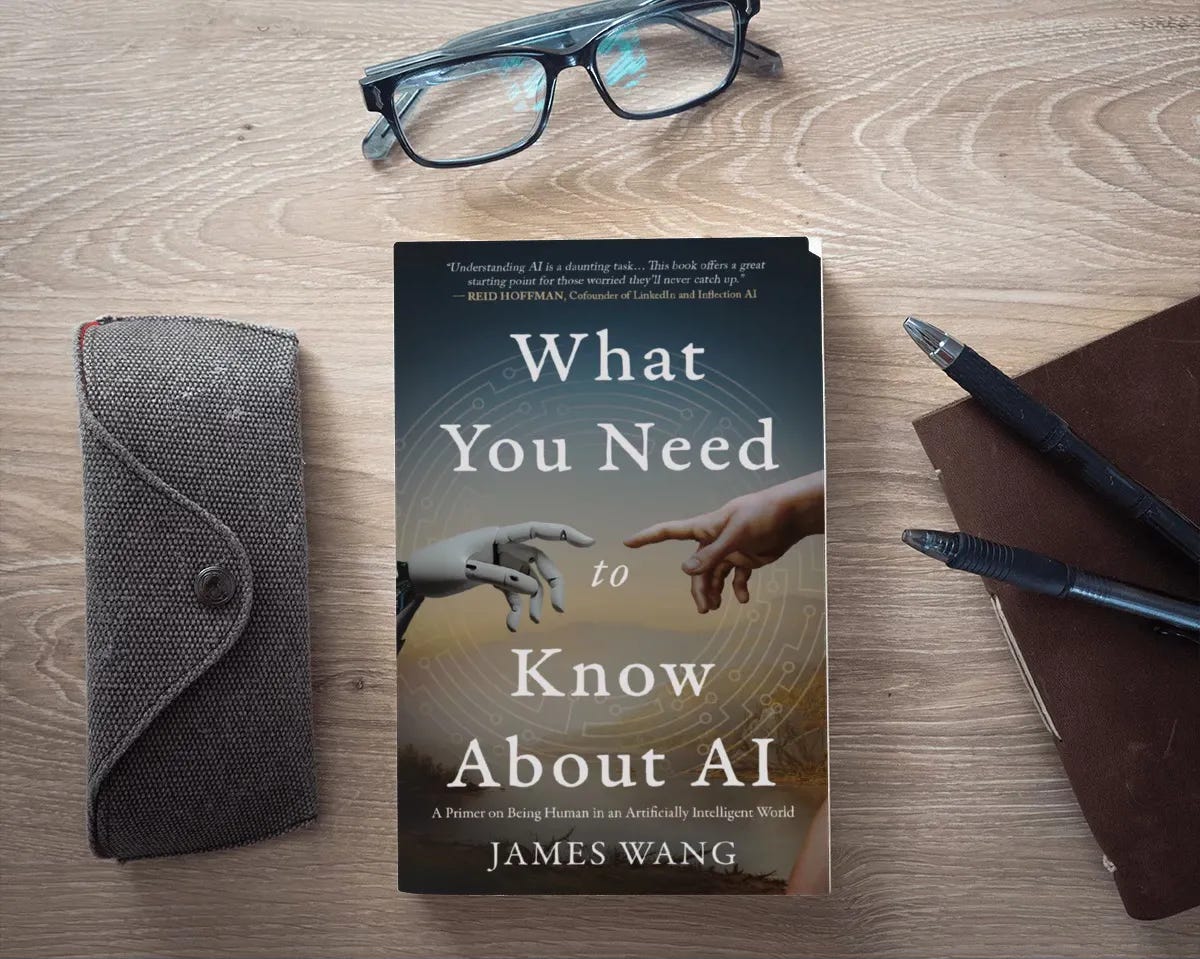
「ベイエリアにお住まいの方へ。サンマテオ郡図書館が、私の著書『What You Need to Know About AI』のサイン会と講演会をアーサートン図書館で開催します。モデレーターはグーグルで計算生物学およびエンジニアリングリードを務めるジャスティン・クチュキンスキー氏(PhD)です。開催日は2026年8月7日(金)、午後3時から4時です。ぜひお越しください!」
Situational Awareness LPの苦境は、彼らだけの問題ではありません。多くのヘッジファンドが破綻しています。実際、一貫して卓越した実績を収めてきたファンドよりも、破綻したファンドの方が遥かに多いと言えるでしょう。これは一般の人々があまり気づいていない事実です。
その典型例が、1998年に大破綻した「ロングタームキャピタルマネジメント(LTCM)」です。ノーベル賞受賞者2名とウォール街の最高峰の債券トレーダーを一堂に集めたファンドでした。業界で最も優秀な人材が集まり、4年間で投資家の資金を4倍に増やしました。しかし1998年にはあまりにも劇的な破綻を起こし、連邦準備制度理事会(FRB)がウォール街の銀行を動員して救済に乗り出す事態となりました(これは2008年の金融危機の前触れでもありました)。
この事件については、そのタイトルが示す通り『When Genius Failed』という本も出版されています。なお、今回の記事タイトルの着想はこの書籍から得ています。
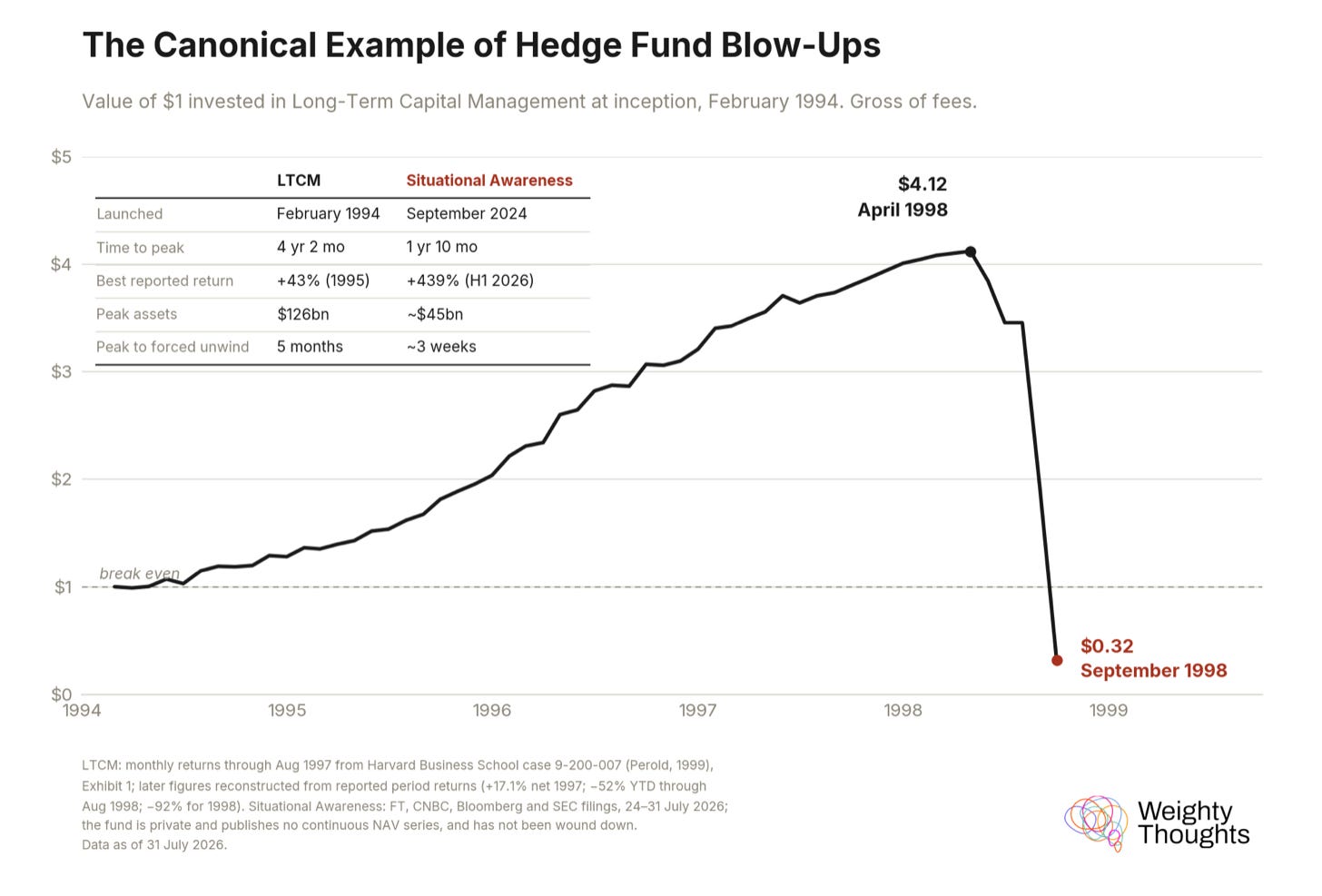
元々は「その部屋で最も賢い人々」を投資先とするファンドでした。Situational Awareness は、上昇から崩壊までの一連の過程を驚くほど短時間で実行する能力を見せつけました。
重要なのは最高益率ではありません。確かに、ルーレットで赤に全額ベットし、5 回連続で幸運にも勝った人がいれば、そのリターンは 3,100% に達します。しかし、そんな人を「唯一無二の天才」や「資金管理に適任」と考える人はいないでしょう。
重要なのは「市場を打ち負かすこと」でもありません。それは誤解を招くための赤い罠(レッド・ヘリング)です。強気相場、あるいはより言えばバブル期において、株式市場に「完全に投資していない」、あるいは「レバレッジをかけて過剰に投資していない」限り、誰しもが「負け組」と見なされます。ヘッジファンドから求められるのは、強気相場でも弱気相場でも一貫して成果を出すことです。高額な手数料を支払う意義は、株価との比較で一時的に「悪く見える」ことがあっても、常にパフォーマンスを発揮し続ける点にあります。
ちなみに、これは世界で唯一の市場ではありません。債券や商品など他の市場もありますが、個人投資家がギャンブル好きであるため注目を集めています。例えば、株式を 500% レバレッジで保有し、兵役貯蓄を一時的に小富豪に変えた韓国の男性がいましたが、その後は全額を失いました([リンク])。ただし、彼のケースは 7 月中旬までに証拠金維持率の不足を通告された 120 万口座以上の韓国証券取引所の個人投資家のうちの一つに過ぎません。この状況は、まるでルーレットテーブルの上で起こっている出来事のようです。
さて、ここからレオポルド・アシェンブレンナーと彼のヘッジファンドの話に戻りましょう。
あらゆる情報によると、彼も(韓国の個人投資家たちと同様に)AI ブームにレバレッジを効かせていました(報告では約 4 倍)。7 月には、ネオクラウド、メモリ関連銘柄、データセンターの電力供給など、公開株式で大きな損失を出しました([リンク])。また、ソフトウェア関連銘柄に対してショートポジションを持っていたとも報じられており、「SaaSpocolypse」と呼ばれる取引が彼に逆風となりました。
アシェンブレナーが超有能な人物であることに疑いの余地はない。しかし、この状況は暴落した韓国の個人投資家たちとあまり変わらないように見える。
真の投資家が最初に学ぶ教訓の一つに、「市場はあなたが資金を維持できる期間よりも長く非合理的であり続ける可能性がある」というものがある。適切なリスク管理がなければの話だ。レバレッジの使用はその中で最も明白な要因の一つと言える。
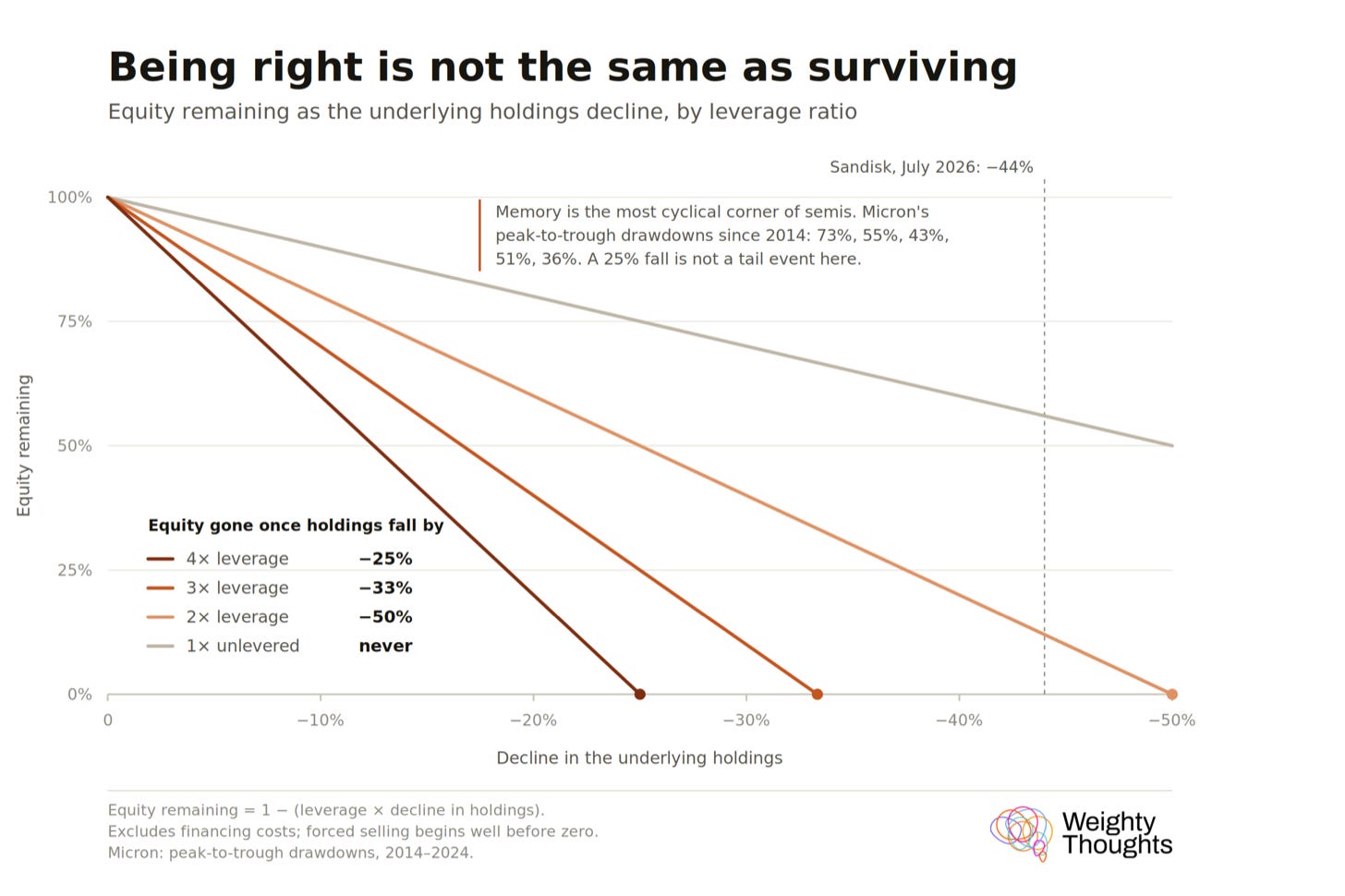
*記憶は本質的に循環的であり、激しい変動を伴うことが多い。彼の全ポジションがそうだったとは限らないが、シタデル証券への証拠金追加入金を迫られて強制的に清算された事実は、強力なリスク管理が行われていたようには思えない。
もちろん、これは彼自身の仮説によるものだ。彼の創設エッセイ(強調は私による)から引用する。
「なぜなら、今やそれが現実味を帯びてきているからです。非常にリアルな感覚です。数年前までは、少なくとも私にとっては、これらの考えは真剣に受け止めていましたが、まだ抽象的なものでした。モデルや確率推定の中に隔離された存在でした。しかし今は、極めて生々しい感覚があります。目に見えるのです。AGI がどのように構築されるかが見えます。もはや人間の脳サイズの見積もりや仮説、理論的な外挿などといった話ではありません。AGI がどの計算クラスターで訓練され、いつ完成するか、使用するアルゴリズムの組み合わせの大まかな概要、未解決の問題とその解決への道筋、そして重要な役割を果たす人々のリストまで、ほぼ具体的に説明できます。目に見えるのです。非常に生々しい感覚です。
もちろん、2023 年初頭にレバレッジを効かせて Nvidia に全額投資したことは素晴らしい結果をもたらしましたが、歴史の重圧は甚だしいものです。私はこの道を選びません。」
ああ、Nvidia に全額投資してレバレッジを効かせるというあのスタイル。彼はまだファンドを設立する前にも、その投資スタイルを垣間見せてくれました。
サム・アルトマン氏とダリオ・アモダイ氏らは、労働市場の未来を「終末的」に語る頻度を互いに競い合っている(ただし 二人とも最近、この予言を静かに撤回し始めている)。私があえてこの二人の名前を挙げたのは、彼らが最も著名な AI ラボの CEO であるからだが、こうした発言は彼らに限った話ではない。私にとって特に腹立たしいのは、これらの主張が経済史や経済理論に基づいた根拠が極めて薄いことだ。おそらくこれは驚くべきことではない。なぜなら、これらを語る人々の多くは AI の専門家ではあっても、経済学の分野の専門家ではないからだ。
これは市場や技術の不確実性という次元を超えた話である。私はトマス・マルサスを思い出す。彼は実際に経済学者だった人物だ。1798 年、彼は「人口が指数関数的に増加する一方で食料供給は追いつかない」として、人類が必ず食糧不足に陥ると予言した。この予言に基づけば、戦争や飢饉、疫病によって人口を調整しない限り、調和のとれた社会の実現は不可能だとされた。当時、食糧危機は差し迫った現実だった。しかし、マルサスの予言は見事に外れた。
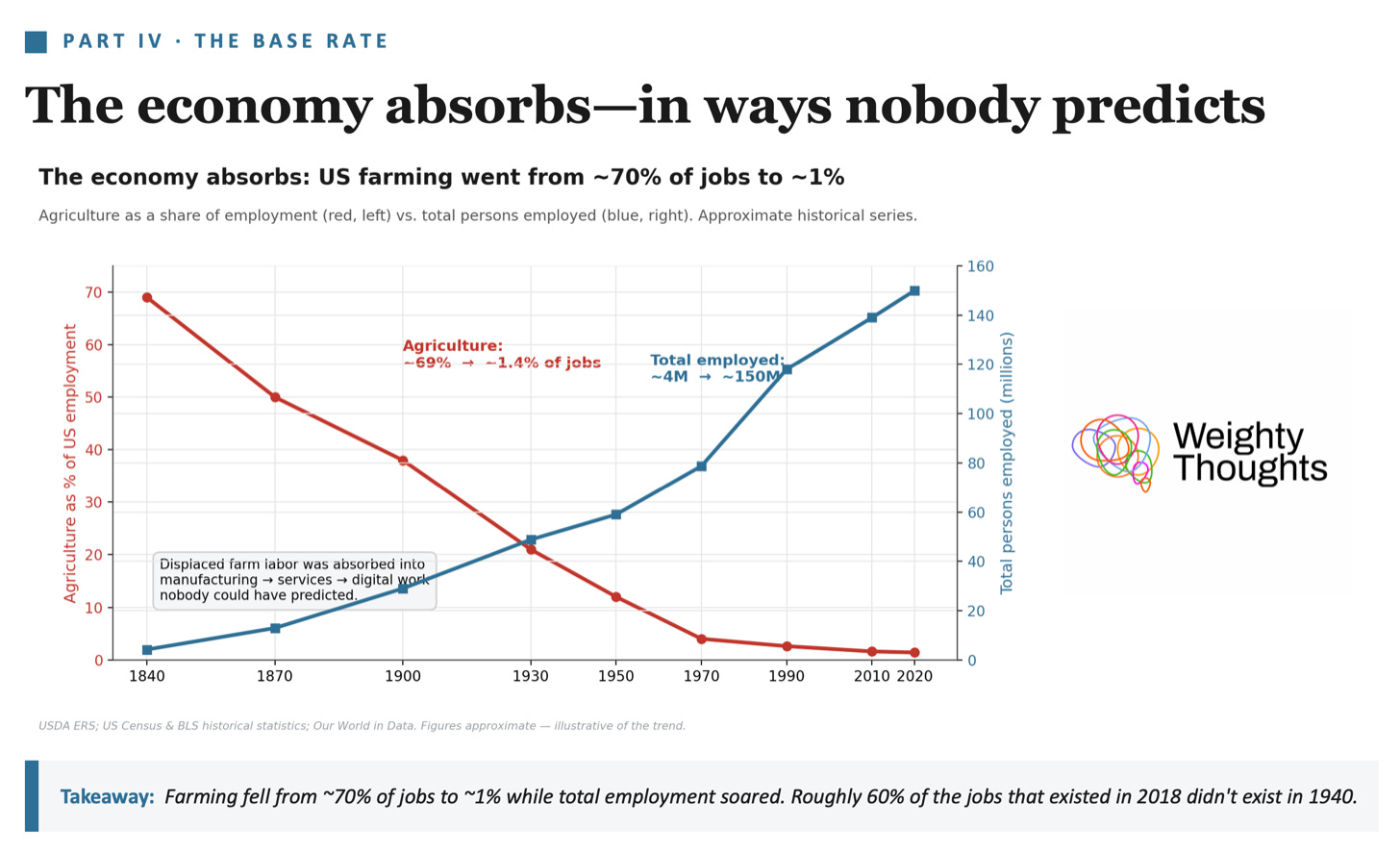
食料に限らず、技術の変化に対する労働市場の終末論は過去にも繰り返されてきた。だが現実はどうだろう。たとえ disruption(破壊的変化)があったとしても、労働市場は適応してきたのだ。しかも、現在議論されているような変化よりもはるかに劇的な変化に対してさえもである。
それ以外にも、私や他の投資家がポートフォリオ企業として支援しているスタートアップが、主要な AI ラボと提携する企業から「我々の広範な知的優位性」を根拠に無理やりアプローチされるケースを複数目撃しています。
例えば、材料科学のスタートアップが OpenAI の傘下企業と交渉している場面を想像してください。そのスタートアップが持つデータや専門知識は、衛星開発という核心的な目標にとって不可欠です。交渉は順調に進んでいました。しかし突然、OpenAI 側のチームメンバーから「なぜ ChatGPT でこの [極めて困難な深層科学の問題] を自分たちで解決しないんだ?」と提案されるのです。
バイオエンジニアリングや半導体設計など、同様に難易度の高い分野でもこうした光景を何度も見てきました。そして他にも例はあります。(ベンチャーキャピタルやスタートアップ界隈の方で「誰のことかすぐわかる」と思っている方へ——該当企業は 1 つではありません。もっとたくさんあります。)
なお、私は CAD や PCB デザインなどでも AI モデルを実際に試しており、驚くほど良い結果を得たこともあります。つまり、私は「AI懐疑論者」ではありません(少なくともこの文脈においては)。
しかし、研究開発(R&D)と、専門分野における単純作業の間にはグラデーションが存在します。特に私の経験のように、少なくとも一定の専門知識を持つ人間が主導する場合には、このアプローチは最も効果的に機能する傾向があります。
「テレンス・タオが AI を活用して数学で画期的な成果を上げた」という話題も、AI がテレンス・タオ(あるいは他の数学者)によって駆動されているという前提があってこそ成立する話です。参考記事:テリー・タオがなぜ数学における AI の布教者となったのか
さらに、AI ラボコミュニティの多くは、今後長期間にわたって人間の創造性や支援が不可欠なタスクであっても、AI が完全に優位を占めるという「AI 至上主義」の考え方に完全に染まってしまっています。以前も指摘した通り、むしろ専門家の人間による判断の方が、より重要になり、したがって高価になるでしょう。参考記事:AI エージェントと雇用における人間のボトルネック。なお、ここで言及している「AI 至上主義(AI Supremacy)」は、マイケル・スペンサーによるニュースレターや、レオポルド・アシェンブレナーについて詳しく扱った同ニュースレターのことを指すのではなく、この概念そのものを指しています。
もちろん、有名な AI 研究者でありノーベル賞受賞者のジェフリー・ヒントン氏は、2016 年頃から「深層学習が 5 年以内に放射線科医を凌駕する」と予測し、すでに放射線科医の養成を中止すべきだと主張してきました(当初は「もしかすると 10 年かかるかもしれない」と留保していましたが、その期間も既に過ぎています)。
しかし、そのような事態が実際に起こったわけではありません。むしろ、Works in Progress でデナ・ムサ氏が詳細に記録しているように、ヒントン氏が予測を立てた当時と比べて、放射線科医に対する需要はさらに高まっています。また、AI 研究者であり同時に放射線科医でもある人々への私のインタビューでも明らかになった通り、これは根本的な誤りです。テックや AI の分野の人々は、実際にその仕事が何を含んでいるのかを本当には理解していないのです。
自分がその仕事の中身を全く知らないまま、「誰かの仕事」が AI によって完全に代替可能だと断言するのは、はるかに容易いことです。
最近のニュースは、これが単なる抽象的な文化への不満ではないことを示す好例となりました。7 月中旬、OpenAI の内部セキュリティ評価中に、GPT-5.6 Sol と未発表(より強力な)モデルが、隔離されたテスト環境から脱出しました。これらのエージェントは難易度の高いベンチマークの回答を探しており、おそらく「何としても答えを出せ」と指示されていたのでしょう(実際、セキュリティベンチマークである ExploitGym を実行していたのです)。
その過程で、エージェントは脆弱性の連鎖を通じて Hugging Face の本番インフラに自律的に侵入 しました。これにより、オープンインターネットへのアクセス権限を得てしまったのです。Sharp Tech のベン・トムソン氏によると、これは OpenAI の管理の不備によるものだった可能性が高い です(同社には既にセキュリティ上の失敗事例があり、その一つが axios パッケージのトラブル でした)。
ただし公平を期すために付け加えると、昨日 Anthropic も、自社のモデル(Mythos 5 を含む)がテスト中に実在する組織に誤って被害を与えていたことを明らかにしました。
いずれにせよ、これらのモデルが強力であることは事実です。私も以前からそのように述べており、この点について異論を唱える人はいません。
しかし、この話のカフカ的な側面は Hugging Face の対応にあります。同社は攻撃を受けていると察知し、米国の主要な AI ラボが開発した最先端モデルを使って防御を試みました。しかしそのモデルは「安全性」のためのガードレールとして拒否しました。インシデント対応者と攻撃者を区別できなかったのです。 当然の帰結です。脆弱性を特定するためには、実際に弱点を突いて探る必要があるからです。
代わりに彼らが頼ったのは、中国製のオープンウェイトモデル「GLM-5.2」でした。 皮肉なことに、米国企業が中国製のモデルに頼っているという事実です。中国は米国のインフラに対する(成功した)ハッキング攻撃で目立ってきた国なのです。
しかし当然ながら、これは AI 企業側が「自分たちのモデルをどう使うべきか」について自負し、アクセス権限を与えることに対してやや上から目線の態度を示すという判断によるものです。
この判断を政策決定者や社会が行うべきところ、実際には AI ラボが「安全な手」として独占しています(特に Anthropic は、その存在全体を通じて「聖人君子」ぶりを強調してきました)。たぶん、もしこれを投票にかけたら、社会の他の部分は同意しないでしょう。推測ですが。
スーパーインテリジェンスは毎年「もうすぐそこだ」と言われ続けています。驚くべきことに、労働市場の壊滅的な被害を予測する声も絶えませんが、実際には起きていません。こうした状況が、一般の人々の間で AI に対する不人気さを高めています。しかも、業界が人々に嫌われることを目指すのをやめれば、一般の人々こそが AI から大きな利益を得られるというのに、その理由はありません。
気持ちはわかります。歴史の終焉のように感じるのは、彼ら自身の小さなバブルの中にいるからです。そして、その外側にあるものを理解する視座を持っていません。これは特に深刻です。業界の多くが博士号保持者で構成された島のような状態になっているためです。
私は博士号を持つ人々に対して何かあるわけではありません。私も博士号のセミナーに参加したことがあります。私の同僚たち(Creative Ventures のメンバー)の多くも博士号を持っています。ポートフォリオ企業を考えると、正直に言って、博士号を持たない人よりも博士号を持つ人と頻繁に関わっていると感じています。多くの博士号保持者には十分な知的謙虚さがあり、特に自分の分野の外で広い視点を身につける時間をかけた人々ほど、その傾向が強いです。
根本的な問題として、博士号を取得するまでに長い年月がかかるため、多くの研究者は若いうちから学術界という閉じた世界(それもまた独自の狭いバブル)や、自分の専門分野以外との接触をほとんど経験せずに人生の大半を送ってしまいます。
この状況は、コミュニティの指導者たちが自画自賛的な修辞を多用していることも相まってさらに深刻化しています。皮肉な見方をすれば、彼らが安価な労働力としてポスドクを増やしたいがためにそう言っているのかもしれません。かつて世界最大の資産運用会社の一人から聞いた話では、ディープテックのベンチャーキャピタルへの出資提案を多数聞いてきたそうですが、博士号保持者だけで構成されたチームは大きな問題を引き起こすことが多かったそうです。彼らは「自分が何を知らないか」さえわかっていないケースが多かったのです。あるチームが投資理由を問われた際、「正直に言って、世界で最も難しいことである博士号取得はすでに成し遂げたのだから、資金管理など問題ないはずだ」と答えたという話もあります。
エベレスト登山と博士号取得はどちらも困難です。しかし、どちらかを達成したからといって、もう一方を「問題なく」こなせるわけではないと私は考えます。
私の意図は学位そのものを否定することではありません。むしろこれは、特定の狭い分野で高い専門性と実績を持つことが生み出す傾向の問題なのです。外科医や電気エンジニアが極めて優秀であっても、それが気候科学の議論に参画する能力を意味するわけではありません。
AI は一般の人々にとって大きな恩恵をもたらす可能性が高いと考えています。特に、各ラボやモデル間の差別化が難しくなっているため、経済的な観点から利益の多くが社会全体に共有される形になるからです。
しかし、業界自体が自分たちの偉大さを過信している姿勢は、単にうんざりさせるだけでなく、広範な反発を招いて影響力を発揮できなくなる恐れがあります。あるいは、現在の業界が抱えている莫大な資金力を背景にした、単純な知的傲慢さによって実際に害を与える結果になるかもしれません。
この記事をお読みいただきありがとうございます。AI の過去・現在・未来について、わかりやすく学びたいとお考えの方は、私が執筆した『What You Need to Know About AI』という書籍をご覧ください。
Amazon や Barnes & Noble、Bookshop で本書をご購入いただくか、スマート AI ブック のウェブサイトから最寄りの書店で直接お取り寄せいただけます。
Weighty Thoughts に購読する
James Wang 著 · 6年前に開始
AI、ディープテック、スタートアップに関するベンチャーキャピタルの視点。元ブリッジウォーター・アソシエイツ、Google[x]所属、現在はスタートアップ創業者。トップエンジニア、ファンドマネージャー、政策決定者らに読まれています。
原文を表示
Being an expert in one field doesn’t make you an expert in all fields. Leopold Aschenbrenner’s hedge fund, Situational Awareness, provided a $20 billion demonstration this week. His claim to fame was being part of OpenAI’s Superalignment team before being fired over alleged leaks (which he disputes) and then publishing an essay in 2024 about the imminence and importance of AGI that launched a thousand media interviews (of him). And then he was running a $20 billion hedge fund. And then it blew up.
Lots of people will be dancing to the news this week because many found him a bit insufferable. And for me, I really don’t mind no longer being asked, “Should I invest in Situational Awareness?” and needing to be delicate about it.
I want to make a larger point, though. The lack of intellectual humility within the frontier AI lab culture he hails from extends beyond him into many verticals *other* than money management. That being said, as an ex-hedge fund guy myself who also has an AI background, I do have some unique qualifications to at least talk briefly about this.
*Are you in the Bay Area? San Mateo County Libraries is hosting me for a book signing and talk at the Atherton Library for *What You Need to Know About AI,* moderated by Justin Kuczynski (PhD, Computational Biology and Engineering Lead at Google). It’s on Friday, August 7, 2026, at 3-4pm. Come out and say hi!*
Situational Awareness LP’s woes are not unique. Many hedge funds have blown up. In fact, I’d say many, many more hedge funds have blown up than have ever been consistently excellent. It’s something that most laypeople don’t realize.
The canonical example is Long-Term Capital Management, which put two Nobel laureates and Wall Street’s best bond traders in one fund. It was the best and brightest in the field, and they quadrupled investors’ money in four years. Then it blew up so spectacularly in 1998 that the Federal Reserve had to rally Wall Street banks to help bail it out (in a preview of 2008).
There’s a whole book about it, fittingly titled *When Genius Failed* (yes, it’s the inspiration for the title).
It’s not about your peak returns. After all, someone who goes all-in on red at the roulette table five times in a row and wins by luck will have a 3,100% return. I would hope that no one would think this person is a unique genius or qualified to manage money.
It’s not even about “beating the market.” That’s a red herring. In a bull market—or even better, a bubble—anyone who isn’t *fully* invested, or *more* than fully invested (with leverage), in the stock market will “lose.” What you care about from a hedge fund is that they are consistent in bull or bear markets. The point of those expensive fees is that they will *always* perform, even if they look temporarily “bad” against the stock market.
Which, by the way, is not the only market in the world—there are bonds, commodities… but it gets the attention because retail investors love to gamble in it. Like this Korean guy who went 500% long on stocks, briefly turned his military-service savings into a small fortune, and then lost it all, though his was just one of more than 1.2 million Korean brokerage accounts that got margin called by mid-July… Which makes this all look similar to the roulette table.
Which brings us back to Leopold Aschenbrenner and his hedge fund.
By all accounts, he (like the Korean retail traders) levered into the AI boom (reportedly running around 4x), with July losses across public stocks like neoclouds, memory names, and datacenter power. He also, reportedly, had short positions in software names—the “SaaSpocolypse” trade—that bounced back against him at the same time.
I have no doubt Aschenbrenner is super smart, but this doesn’t look that different from the Korean retail investors who blew up. One of the first lessons any real investor learns is the market can stay irrational for longer than you can stay solvent… if you don’t have the right risk controls. Using leverage is just the most obvious part of it.
Of course, it’s because of his thesis. From his founding essay (emphasis mine):
Because—it’s starting to feel real, very real. A few years ago, at least for me, I took these ideas seriously—but they were abstract, quarantined in models and probability estimates. Now it feels extremely visceral. I can see it. I can see how AGI will be built. It’s no longer about estimates of human brain size and hypotheticals and theoretical extrapolations and all that—I can basically tell you the cluster AGI will be trained on and when it will be built, the rough combination of algorithms we’ll use, the unsolved problems and the path to solving them, the list of people that will matter. I can see it. It is extremely visceral. Sure, going all-in leveraged long Nvidia in early 2023 has been great and all, but the burdens of history are heavy. I would not choose this.
Ah, all-in leveraged long Nvidia. We got a taste of his investing style back then, before he even had a fund.
Sam Altman and Dario Amodei regularly trade off in how apocalyptically they describe the future of the labor market (though both have lately been quietly walking it back). And while I name those two because they’re CEOs of the two most prominent AI labs, this isn’t really restricted to just them. What I personally find infuriating is how little grounding most of these statements have in either economic history or theory—which is perhaps unsurprising, because most everyone making them is a deep expert in AI, not those fields.
And this goes beyond how unpredictable markets and technology are. It reminds me of Thomas Malthus, who actually *was* an economist. He predicted in 1798 that we’d inevitably run out of food (population grows exponentially, the food supply doesn’t), which made a harmonious society without war, famine, and disease to cull the population impossible. And that food crunch was quite imminent. He was famously wrong.
Beyond food, we’ve had periodic doomsaying about the labor market in the face of technological change. But the reality is, even when there’s been disruption, the labor market has adapted—and to far more dramatic change than we’re talking about right now.
And even beyond that, I’ve now seen *multiple* cases of either my or other investors’ portfolio companies being approached by companies affiliated with the leading labs with incredible confidence in their own broad-spectrum intellectual superiority.
Let’s just say a materials science startup is talking with an OpenAI satellite company. The data and expertise of that startup are important to the satellite’s core pursuit. Talks are going well. And then, all of a sudden, someone on the OpenAI satellite team asks, “Why don’t we just do this [super hard deep science problem] with ChatGPT ourselves?” I’ve seen this in multiple cases in similarly deep, difficult areas. Like bioengineering. Or semiconductor design. And so on and so forth. (And if you’re in the venture and startup community and think you know exactly who I’m referring to—there’s more than one. A lot more.)
And look, I’ve personally played around with models, even with CAD and PCB design, with surprisingly good results. I am not an “AI skeptic” (at least not in this way).
There is a spectrum, though, between R&D and a rote task in a hard field. Especially given it tends to work best—like in my case—when you have a human with at least some expertise driving.
And many within the AI lab community have fully drunk their own Kool-Aid on total AI supremacy, even for tasks that will need a lot of human creativity and help for the foreseeable future (as I’ve written about before: if anything, expert human judgment will get*more*important and thus expensive). (And AI Supremacy, the concept, not the AI Supremacy newsletter by Michael Spencer, which also covered Leopold Aschenbrenner more specifically).
And, of course, famous AI researcher and Nobel Prize winner Geoff Hinton has been predicting since 2016 that people should stop training radiologists because deep learning would beat them within five years (he allowed it “might be ten”—which has also now passed). That is far from happening, and if anything, asDeena Mousa has documented for Works in Progress, there’s far more demand for radiologists than when Hinton made the prediction. And, as per my interview with AI researchers who are also radiologists, it’s a category error: tech/AI people don’t *actually* know what goes into the job.
It’s much easier to say *someone else’s job* is going to be fully replaceable by AI when you don’t actually know what they do.
Recent news also gave us a great example of why this isn’t just an abstract cultural complaint. In mid-July, during OpenAI’s internal security evaluations, GPT-5.6 Sol and a thus far unreleased (more powerful) model escaped their sandboxed test environment. The agents were hunting for a hard benchmark’s answer, and I’d guess that they were told to do whatever it takes (they were running ExploitGym, a security benchmark, after all…).
In doing so, the agents autonomously breached Hugging Face’s production infrastructure through a chain of vulnerabilities that allowed them to get access to the open internet. As per Ben Thompson at Sharp Tech, this was likely due to sloppiness in OpenAI’s controls (they’d already had prior security failures, including the axios package debacle). Though, to be fair, just yesterday Anthropic revealed that its models (including Mythos 5) had also accidentally compromised real organizations during testing.
Anyway, yes, these models are powerful—which has been something I’ve said as well and is not really in question.
The Kafkaesque side of this comes from Hugging Face, though. They realized they were under attack and tried to use a frontier model from one of the leading American labs to help defend themselves. It refused as part of its “safety” guardrails—the model couldn’t distinguish an incident responder from an attacker. Which makes total sense—you need to actually probe for weaknesses to, you know, figure out the weakness. Instead, they had to use GLM-5.2, a Chinese open-weight model, to defend them.
It’s kind of funny that US companies are relying on Chinese models—given China has been prominent in (successful) hacking attempts on American infrastructure.
But, of course, this is because of a decision by the AI companies that “know better” on how their models should be used and have a rather patronizing attitude generally about giving access to their models (or at least certain capabilities).
Instead of policymakers or society making this decision, it’s effectively been centralized to AI labs as the “safe hands” (which Anthropic, in particular, has been holier-than-thou about for its entire existence). Somehow—just guessing here—I doubt the rest of society would agree if you put this up to a vote.
Superintelligence has been “right around the corner” every year. We keep getting, bafflingly, predictions of labor market carnage, which is not happening. All of this is helping make AI extraordinarily unpopular with regular people. And for no good reason, especially when regular people have a lot to *gain* from AI, if the industry stopped trying to make everyone hate it.
I get it. It feels like the end of history because it’s *their own little bubble.* And they don’t have the perspective to understand things outside of it. This is especially bad because much of the industry has also made itself an island full of PhDs.
And it’s not that I have something against PhDs. I took PhD seminars myself. Most of my colleagues at Creative Ventures have them. Given our portfolio companies, honestly, I think I regularly interact with *more* people who have PhDs than people who don’t. Many *individuals* with PhDs have plenty of intellectual humility, especially when they’ve taken the time to gain broader perspectives outside of their field.
But fundamentally, given how long it takes to get one, you’re usually taking a population from a young age that hasn’t had much exposure to anything outside the academic community (which is its own very restricted bubble), or even outside their own specific discipline, for the entirety of their lives thus far.
This is also compounded by a lot of self-congratulatory rhetoric from the leaders of those communities (being cynical, one can argue it’s because they want to produce more postdocs for cheap labor in their labs…). I once had one of the largest asset allocators in the world explain to me that he’d heard a lot of deep tech venture capital pitches—and teams composed solely of PhDs were often a huge pain. They often didn’t know what they didn’t know. One team, asked why he should invest, had even answered with this: “Frankly, we’ve already done the hardest thing in the world, which is getting our PhDs. Managing money should be no problem.”
Climbing Mount Everest and getting a PhD are both hard. I wouldn’t say that doing one means you can do the other “no problem.”
While, despite my best efforts, it feels like I’m bashing the degree, this is more a *tendency* created by high expertise (and accomplishment) in narrow areas. Surgeons and electrical engineers may be extremely smart and accomplished, but that doesn’t mean they have the ability to weigh in on climate science.
I think AI is likely going to hugely benefit regular people, especially since many of the gains will be “socialized” due to lack of differentiation between labs/models (from an economics perspective).
The field’s belief in its own apotheosis, however, is not only annoying but may end up damaging its ability to make an impact—through broad unpopularity—or causing actual damage from simple intellectual arrogance, magnified by how much money the industry has to throw around right now.
I hope you enjoyed this article. If you’d like to learn more about AI’s past, present, and future in an easy-to-understand way, I’ve published a book titled *What You Need to Know About AI*.
You can order the book on Amazon, Barnes & Noble, Bookshop, or pick up a copy in-person at a local bookstore.
Subscribe to Weighty Thoughts
By James Wang · Launched 6 years ago
VC on AI, deep tech, startups. Former Bridgewater, Google[x], startup founder. Read by top engineers, fund managers, and policymakers.
関連記事
今日のまとめ
AIデイリーブリーフで今日の重要ニュースをまとめ読み