AWS、AI エージェント活用でデータエンジニアリングを数時間に短縮
本文の状態
日本語全文を表示中
詳細モードで約20分の本文を読めます。
同じ出来事の情報源
この情報源を基点に整理
AWS Machine Learning Blog
ADOP は開発環境で AI エージェントが推論・生成を行い、エンジニアがレビューした後の成果物(PySpark, SQL など)のみを CI/CD で本番へ展開する「ビルドタイムアクセラレータ」である。
AI深層分析を開く2026年8月22日 02:53
AI深層分析
キーポイント
開発と本番の分離アーキテクチャ
ADOP は開発環境で AI エージェントが推論・生成を行い、エンジニアがレビューした後の成果物(PySpark, SQL など)のみを CI/CD で本番へ展開する「ビルドタイムアクセラレータ」である。
ガバナンスとコンプライアンスのインライン化
従来の事後チェックではなく、データソース登録時(オンボーディング時)に品質チェックや規制対応を自動適用する仕組みにより、コンプライアンスをアーキテクチャの一部として組み込む。
AI コーディングツールの統制
Claude Code, Cursor などの AI コーディングツールがデータシステムと相互作用する方法を、モデルではなく組織のアーキテクチャが規定し、制御可能にする。
一般コード支援ツールとの違い
ADOP は汎用的なコーディングアシスタントとは異なり、データエンジニアリングに特化した狭い領域で動作し、企業の設計哲学やコンプライアンス規制をアーキテクチャに組み込んでいる。
主要ユースケース
大規模なエンタープライズデータのオンボーディング、医療・金融業界向け規制対応パイプライン、および AI 用のゴールドレイヤーの自動構築が主な適用事例である。
重要な引用
ADOP is a build-time accelerator, not a runtime dependency.
Compliance moves from a downstream gate to an inline control applied at onboarding time.
General tools make a developer faster. ADOP makes every developer consistent.
It wraps those same models in: A narrowed lane – data-engineering skills and prompts, not 'anything you can type.'
編集コメントを表示
編集コメント
本番環境での AI モデル依存を排除し、生成されたコードの静的・監査可能性を重視する設計は、実務におけるリスク管理の観点から極めて意義深い。特に大規模なデータガバナンスが求められる企業にとって、AI ツールの導入と制御を両立させるための明確な指針となる。
Source Article
元記事を日本語で読む
本文に関係しない購読案内、埋め込み通知、サイト内プロモーションは除いています。
データエンジニアリングチームは、新しいデータソースを一つ立ち上げるために、通常数週間を費やします。ETL の作成、手動での品質チェックの実装、セマンティックモデルの更新、コンプライアンスの検証などです。AWS 上の「Agentic Data Operations Platform (ADOP)」は、このプロセスを劇的に加速するために設計されています。これは Amazon Bedrock と、お好みの AI コーディングツール(Claude Code、Kiro、Cursor、Codex など)を基盤とした参照アーキテクチャです。
専門的な AI エージェントが、Bronze から Silver、そして Gold までのライフサイクル全体を自動化します。データガバナンスや規制遵守の取り組みをサポートするための設定可能なコントロールも用意されています。
データエンジニアリング部門の責任者にとって、3 つの変化が起こります。エンジニアはパイプラインの基盤整備に時間を費やすのをやめ、データプロダクトの開発に注力できるようになります。コンプライアンス対応は、後工程でのゲートチェックから、オンボーディング時に適用されるインラインコントロールへと進化します。そして、AI コーディングツールがデータシステムとどのように相互作用するかを決定するのはモデルではなく、アーキテクチャそのものとなります。
この記事は、エンジニアリング担当の VP、チーフデータオフィサー、データプラットフォームディレクター向けに書かれています。詳細な実装情報は、記事の後半でプラットフォームエンジニア向けに解説します。
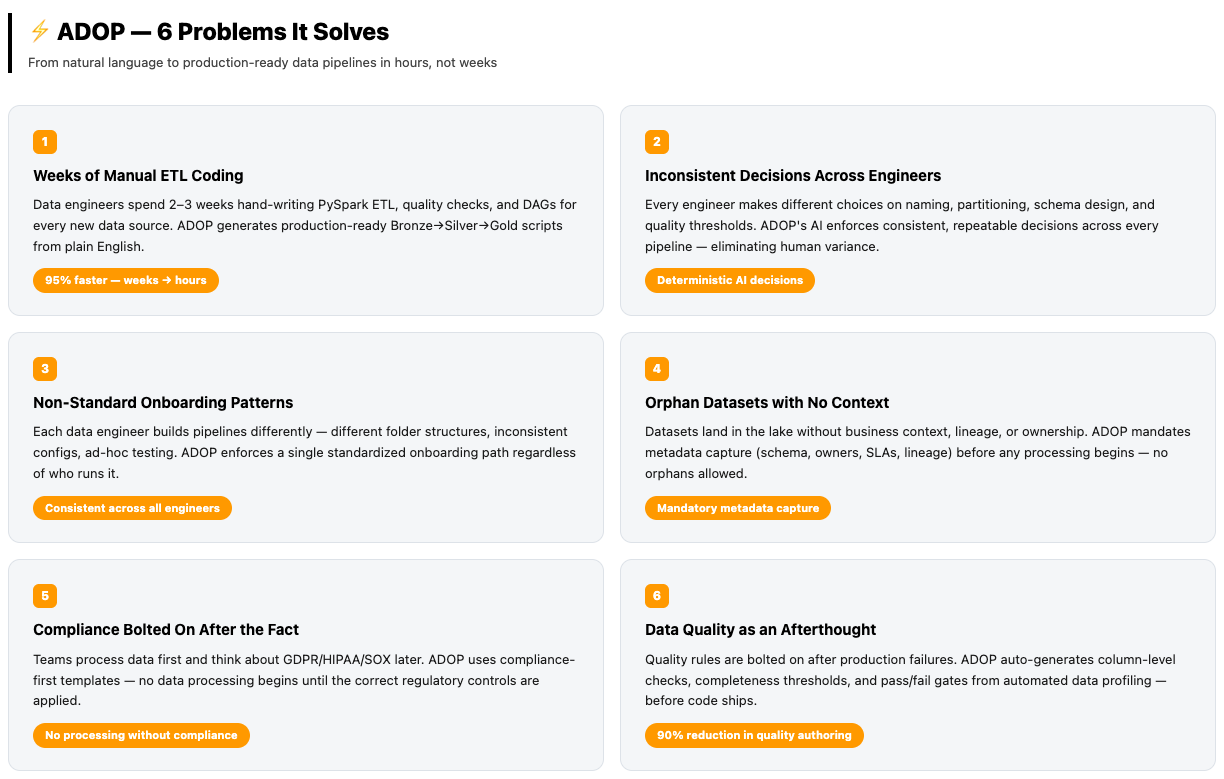
Figure 1: Six data engineering challenges that ADOP addresses
開発環境ではエージェントが、本番環境では成果物が主役
これが ADOP を一般的な「エージェントプラットフォーム」の提案と区別する設計上の決断です。
ADOP はランタイム依存ではなく、「ビルド時の加速ツール」として機能します。開発環境内でエージェントは推論を行い、ETL コードや品質チェック、セマンティックレイヤー定義、規制対応ルールなどを提案・生成します。エンジニアがその出力を検証し、CI/CD(継続的インテグレーションと継続的デリバリー)を通じて、生成された成果物(決定論的な PySpark や SQL、Airflow DAG、IAM および Cedar ポリシーなど)をステージング環境や本番環境へ展開します。
ADOP のデフォルトの運用パターンでは、本番環境はモデル呼び出しを行わずに決定論的な成果物だけで稼働します。ランタイムで推論にモデルを組み込む必要がある組織もあれば、Amazon Bedrock エンドポイントを用いてこのアーキテクチャを拡張することは可能ですが、生成されたパイプラインコード自体は静的であり、監査可能な状態を保ちます。
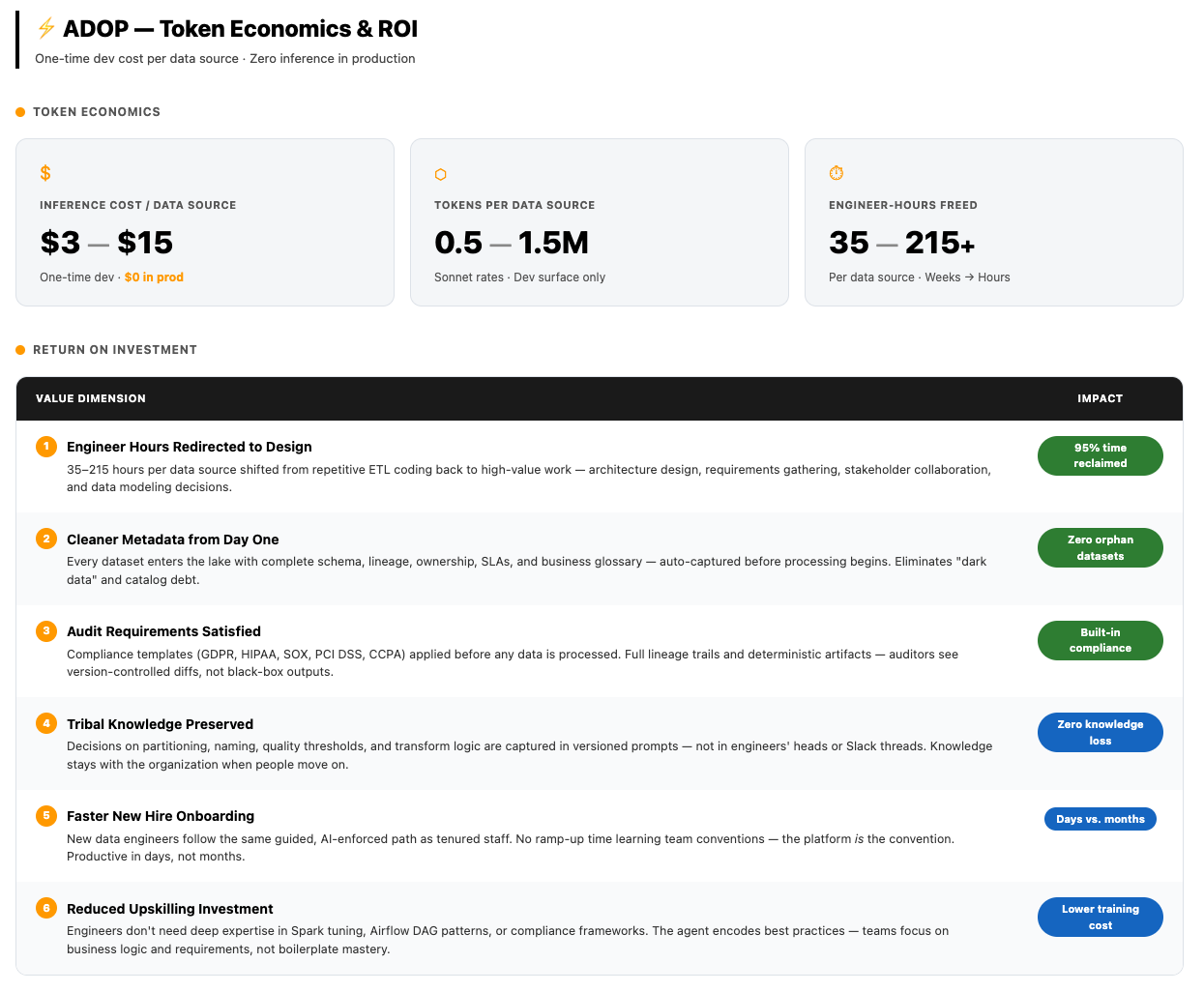
図 2:ADOP のトークン経済とデータソースごとの投資対効果(ROI)
汎用コーディングアシスタントとの違い: 汎用コーディングアシスタントは優秀ですが、用途が広すぎて制御が難しいものです。データプラットフォームに対して指示を出せば、日によってエンジニアごとに異なるアーキテクチャが生成されてしまいます。一方、ADOP は意図的に「意見を持つ(オピニオン)」設計です。同じモデルを以下のような枠組みで包み込んでいます。
- 狭いレーン: 「何でも入力できる」のではなく、データエンジニアリングのスキルとプロンプトに特化した領域に限定しています。
企業理念を設計に組み込むことで、基準は誰かの記憶ではなく、システムそのものに実装されます。
大規模言語モデル(LLM)がアーキテクチャの設計を勝手に決めることはありません。モデルは青写真の内容を埋める役割を果たすだけで、設計図を描くわけではありません。
ポリシーや規制に対応するガードレールを実装し、レビュー時だけでなく、ビルド段階からコンプライアンスを支える制御を適用します。
全社的なオンボーディングフローを一元化することで、どのデータソースも毎回同じ手順で取り込まれます。
汎用的なツールは開発者の速度を上げますが、ADOP はすべての開発者に一貫性をもたらします。
Amazon Bedrock AgentCore と ADOP の関係: Amazon Bedrock AgentCore は、あらゆるフレームワークやモデルを用いて、大規模にエージェントの構築・接続・最適化を行うプラットフォームです。一方、ADOP は開発環境でエージェントを実行し、本番環境には決定論的な成果物をデプロイします。どちらも AWS に準拠した有効なパターンですが、ADOP は規制対象となるデータワークロードにおいて、コストの予測可能性と監査体制の強化に最適化されています。
ユースケース
ADOP は、手動でのオンボーディングやコンプライアンス対応がボトルネックとなり、データエンジニアリングの速度が低下しているあらゆる場面で活用できます。主なユースケースは以下の通りです。
- 大規模な企業データへのオンボーディング – 自然言語で新しいデータソースを記述するだけで、エージェントがスキーマ推論、ETL、品質チェック、セマンティックレイヤーの更新を自動処理します。
- 医療・金融業界向け規制対応パイプライン – 各業界の規制要件に対応するための設定可能な制御機能を提供し、専用ガバナンスプロンプトを通じてデータセットごとに適用されます。コンプライアンス適合性の最終判断は顧客自身が行う必要があります。
ビジネスインテリジェンスや機械学習(ML)機能のために、AI 利用可能なゴールドレイヤーを自動的に構築・維持します。
マルチツール AI 開発ガバナンスでは、Claude Code、Kiro、Cursor、Codex のすべてが、同じアーキテクチャ契約に基づいて動作します。
アーキテクチャ
ADOP は、AWS およびマルチクラウド環境でエンドツーエンドのデータパイプラインを構築する AI 搭載コーディングフレームワークです。Amazon Bedrock を通じて Claude Code に Data Onboarding Agent(データオンボーディングエージェント)を起動させ、Claude Code の Dynamic Workflow 機能を活用して、パイプライン構築の各段階ごとに専門的なサブエージェントを生成します。
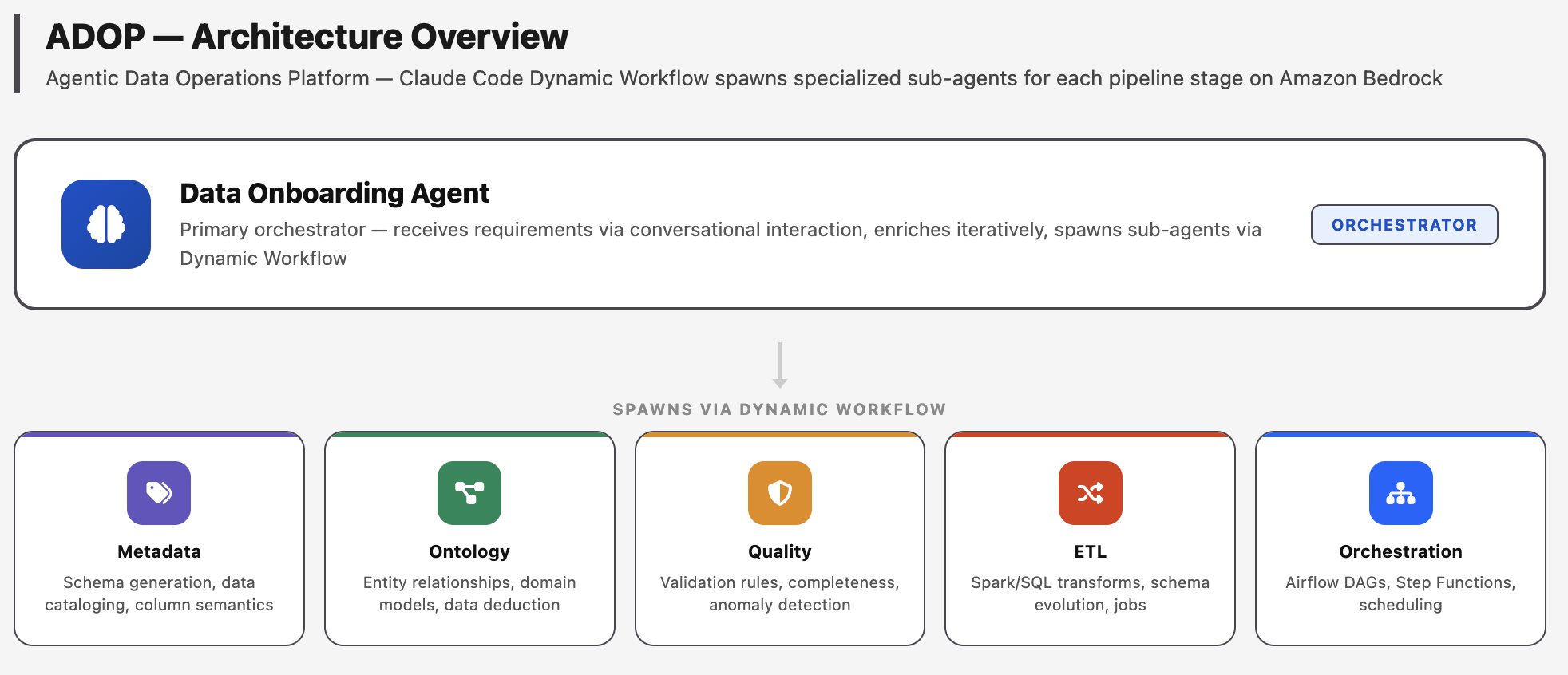
図 3: ADOP アーキテクチャの概要。Data Onboarding Agent が Amazon Bedrock 上で専門的なサブエージェントを生成する様子
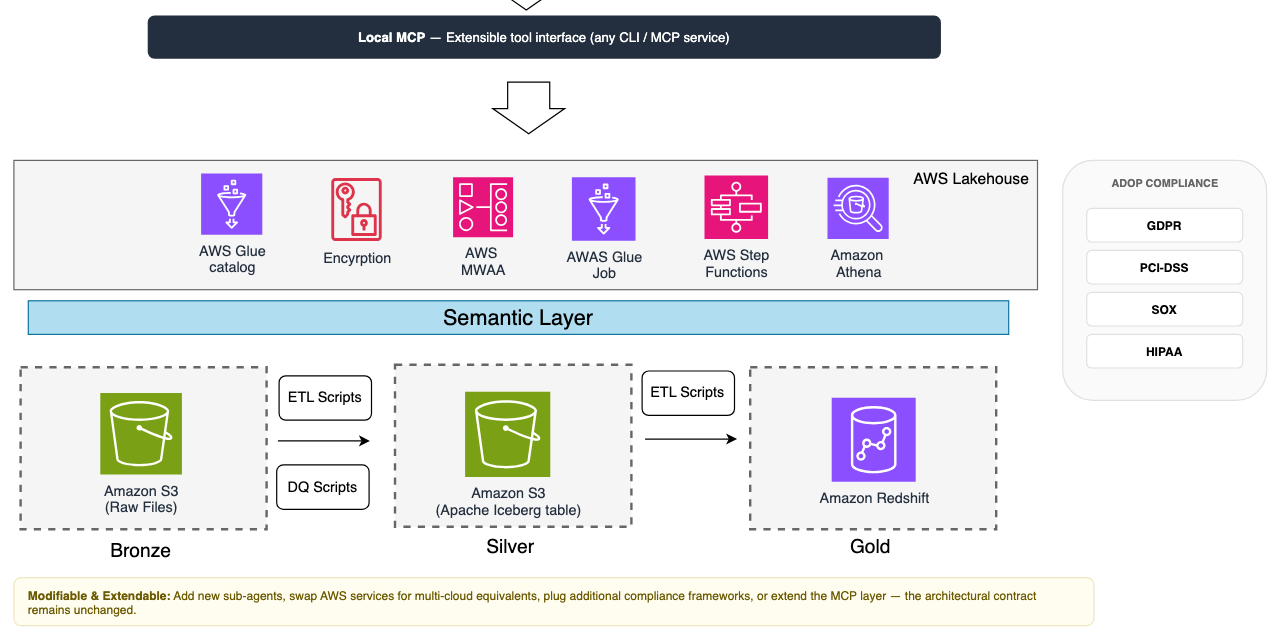
図 4: Bronze から Silver、Gold までの ADOP レイクハウスレイヤー。組み込みのコンプライアンス制御機能付き
サブエージェントは、メタデータの生成、データオントロジーの推論、データ品質チェック、ETL 変換、そしてオーケストレーション(Airflow または AWS Step Functions)を担います。要件はユーザーペルソナとの対話を通じて反復的に強化され、AWS へのデプロイ前にすべての成果物がローカルで検証され、人間の承認を経ることで初めて展開されます。
意思決定エンジン(AI クローン)は、企業アーキテクトの AI による実装として機能し、組織の方針や技術基準、設計思想をビルドプロセスに直接組み込みます。これにより、共通のガードレールを持たない汎用コーディングツールを使用するチーム間で生じる断片化が解消され、開発者間の一貫性が促進されます。
ガードレールは、サブエージェントをアーキテクチャ契約によって制約します。具体的には、ツールのルーティングルール、Cedar による認可ポリシー、不変条件、そしてインラインのコンプライアンスプロンプトです。参照実装では AWS を対象としていますが、このフレームワークは CLI や Model Context Protocol (MCP) インターフェースを持つ他のサービスにも拡張可能であり、ハイブリッドやマルチクラウド環境への対応もサポートしています。
データコンプライアンスを実現する 3 つの機能がアーキテクチャを完成させます。ADOP は、コンプライアンス関連の制御適用をサポートします。ガバナンスフレームワークごとに 1 つのプロンプトを用意し、オンボーディング時に適用することで、法務レビューの対象はアプリケーションコードではなくプロンプトファイルとなります。ただし、これらの制御が規制要件を満たしているかどうかを検証する責任は利用者自身にあります。
エージェントの観測性 – すべてのエージェントの決定は、AgentTrace(意図、選択されたツール、結果、コスト)を通じて追跡され、監査用にAmazon CloudWatchまたはOpenTelemetryシンクへ公開できます。デフォルトではスタック全体がローカル環境で動作しますが、スケールが必要になった際は、アーキテクチャ契約を変更することなく、Amazon Bedrock AgentCoreの機能であるAgentCoreランタイムへ移行可能です。
責任あるAIとデータ処理 – エージェントは開発中に規制対象データや個人を特定できる情報を処理する可能性があります。顧客は自社のデータ処理慣行を見直し、適切なアクセス制御を適用した上で、アーティファクトを生産環境に展開する前に、エージェントの動作が組織の責任あるAIポリシーに合致していることを検証する必要があります。
2ステップで始める方法
- リポジトリをクローンすることから始めます。
git clone https://github.com/aws-samples/sample-Agentic-Ai-Data-Operations.git- データセットをAmazon Simple Storage Service (Amazon S3) またはローカルストレージへアップロードし、修正したプロンプトを実行します。
注記: 以下の例は説明のために架空のデータ、バケット名、フィールド参照を使用しています。実際の個人を特定できる情報(PII)は含まれていません。この例は規制遵守に関するガイダンスや法的助言を構成するものではありません。
/onboard-workflow

Onboard attendance data from s3://amzn-s3-demo-source-bucket/demo_landing/attendance.csv into Silver with dedup on (employee_id, check_in)
and not-null policy on employee_id and check_in,and into a flat denormalized Gold Iceberg table aggregated daily-per-employee with derived
measures(hours_worked_clean, attendance_rate, late_arrival_flag, overtime_hours, absence_category).

Run daily at 03:00 UTC.

Apply data governance controls: hash/pseudonymize PII fields in Silver, suppress or mask sensitive fields in Gold, enforce retention policies,
and log processing metadata. Apply guidelines (This example is illustrative only and does not constitute compliance guidance.)

Please profile the data first, then propose your recommended quality thresholds and transforms before generating any code.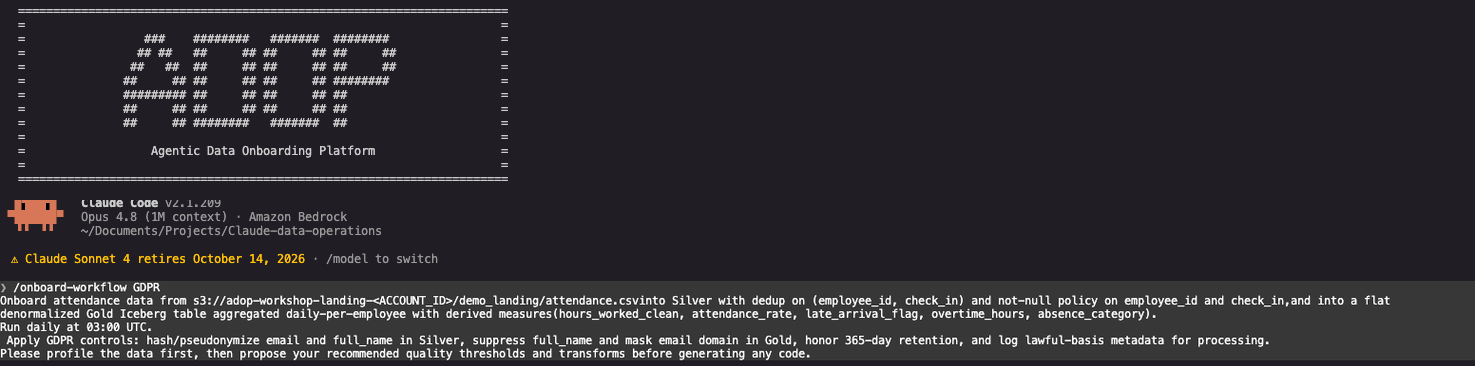
図 5: Amazon Bedrock上のClaude CodeでADOPのオンボードワークフローを実行中
ADOP:概念実証から本番環境へ
初期の数週間はアーキテクチャ設計に注力します。なぜなら、標準をコード化してパイプラインを構築するのではなく、標準の定義を行うことが一度きりの投資となるからです。契約が成立した後、新しいデータソースは新たなプロジェクトではなく、単なるプロンプトとして扱われます。このパターンを採用したチームでは、その後のデータソース導入にかかる期間が劇的に短縮されており、スキルやトレース情報が蓄積されるにつれて、その曲線はさらに平坦化していきます。
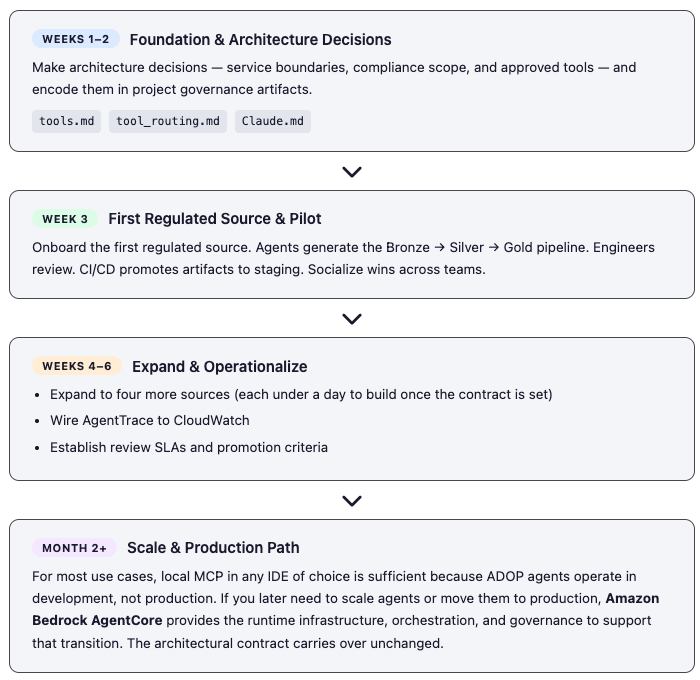
図 6:基盤構築から本番環境までの段階的な ADOP 導入タイムライン
組織変革管理
エージェント駆動型のデータエンジニアリングへの移行には、計画的な組織変革が必要です。以下の計画は、責任の所在と品質基準を維持しつつ、エンジニアチーム全体での円滑な導入を支援します。
ステークホルダーとのコミュニケーション – 3 つのコミュニケーション階層を設定します。経営層(CDO や VP of Engineering)には月次の進捗ダッシュボードを提供し、プラットフォームおよびデータエンジニアリングのリーダーには週次のスプリントサマリーを共有します。現場のメンバーはチームチャネルを通じてリアルタイムで更新情報を得られるようにします。メッセージングでは、ADOP が自動化するものではなく、エンジニアの判断力やアーキテクチャ基準といった重要な要素を維持・強化することを強調してください。最初のトレーニングセッションに先立ち、エージェント生成コードの品質や雇用への影響に関する一般的な懸念に対応した 1 ページの FAQ を公開します。
トレーニングスケジュール – 第1週:AWS主導のADOPワークショップ。アーキテクチャ契約の設定、意思決定エンジンの構成、プラットフォームのベストプラクティスを学びます。第2週:実践的なプロンプト作成ラボ。各チームはAWSの支援を受けながら、低リスクのソースを一つ選んでエンドツーエンドで導入します。第3週:成果物のレビューとガードレール設定セッション。エンジニアがエージェントの出力を自社のコードと比較して検証します。第4〜6週:トラブルシューティングのためのオフィスアワーを週2回実施。第7週以降は週1回に減らします。すべてのセッションは録画し、後から参加できるチームメンバーのために非同期オンボーディング用に活用します。
段階的な展開戦略 – フェーズ1(第1〜3週):パイロットとしてエンジニアのチャンピオン2〜3名と、非クリティカルなデータソース一つで開始。チャンピオンが出力品質を検証し、アーキテクチャ契約を改善するためのフィードバックを提供します。フェーズ2(第4〜6週):プラットフォームチーム全体へ展開。複雑さが増す追加のソース3〜5つを導入します。フェーズ3(第7〜12週):組織全体の展開。新しいソースはADOPを通じてオンボーディングされます。既存のパイプラインは、スケジュールされたメンテナンスウィンドウに合わせて随時移行していきます。
成功指標として、以下の 4 つの主要な数値を追跡します。(1) ソースオンボーディングにかかるサイクルタイム。フェーズ 3 までに大幅な短縮を目指します。(2) 初回提出でのアーティファクト承認率。これは組織の品質基準に基づいて目標を設定します。(3) エンジニアリングの満足度スコア。週 3、6、12 に匿名の簡易アンケートを実施して測定します。(4) ガイドライン準拠率。生成されたパイプラインが、手動介入なしで自動ポリシーチェックをどの程度確実に通過するかを計測します。
エスカレーションパスは以下の通りです。レベル 1:エンジニアリングのチャンピオンが、プロンプト作成に関する質問やアーティファクトの軽微な調整を所属チーム内で解決します。レベル 2:プラットフォームチームが、アーキテクチャ契約の欠落、ガードラインの設定ミス、または繰り返されるアーティファクトの却下に対し、1 スプリント以内に対応します。レベル 3:VP of Engineering または CDO が、プラットフォームレベルでは解決できない他チーム間の導入障壁、リソース競合、ポリシー紛争に介入します。すべてのエスカレーションは共有ログに記録し、システム的な課題を特定してアーキテクチャ契約の改善にフィードバックします。
セキュリティとデータプライバシー
エージェント駆動型開発における一般的な懸念点は、ビルドプロセスがシークレットや認証情報、機密データをどのように扱うかという点です。ADOP は、いくつかの設計上の工夫によってこの課題に対応しています。
シークレット管理 – シークレットはエージェントのコンテキスト内には入力されません。データベース認証情報、API キー、サービストークンは、デプロイ時に AWS Secrets Manager または既存のバault ソリューションを通じて解決されます。エージェントはシークレット ARN やプレースホルダー変数を参照するだけであり、パイプライン生成中に実際の認証情報の値を閲覧したり処理したりすることはありません。
データ分離 – 機密データはその場所に留まります。エージェントは生データではなく、スキーマメタデータ、サンプル行数、カラム統計情報などを扱います。品質ルール生成のためにデータプロファイリングが必要な場合でも、スコープされたサブセットに対して隔離されたサンドボックスで実行され、結果は要約されてからエージェントのコンテキストに返されます。
データプライバシー – モデルとのやり取りは一時的です。Amazon Bedrock を介して Claude と行う対話は、モデル学習のために保持されません(Amazon Bedrock データプライバシーとセキュリティ FAQ 参照)。プロンプトやレスポンスはセッション期間中のみ存在し、推論処理はすべてお客様の AWS アカウント境界内で行われます。
ネットワーク分離 – ネットワーク境界は尊重されます。ローカルファーストな開発モデルにより、エージェントは開発者のマシン上またはお客様の仮想プライベートクラウド(VPC)内で実行されます。明示的に外部統合を設定しない限り、データがネットワーク外へ流出することはありません。AgentCore ランタイムにプロモートされた際も、サービスレベルで同じネットワーク分離ポリシーが適用されます。
責任ある AI の考慮事項
ADOP エージェントは、スキーマメタデータと自然言語の指示に基づいて、パイプラインコード、データ品質ルール、コンプライアンス制御を生成します。これらの出力は AI によって作成されるため、以下の運用方針が適用されます。
- 必須の人によるレビュー: 生成された成果物、特にコンプライアンスや規制に関する制御は、本番環境へ展開する前に資格のあるエンジニアによるレビューが必要です。エージェントの出力はドラフトであり、認証済みの実装ではありません。
- ハルシネーション(幻覚)リスク: LLM は論理的に正しそうに見えるが実際には誤ったロジックを生成する可能性があります。生成されたマスキングルール、保持ポリシー、アクセス制御が不十分であったり、微妙な誤りが含まれている恐れがあります。法務チームやコンプライアンスチームによる検証が行われるまで、すべての生成された制御は未検証として扱ってください。
- 法的・コンプライアンスの検証: AI が生成した規制対応制御は、法的助言や認証済みのコンプライアンス実装を意味するものではありません。展開前に、法務、プライバシー、コンプライアンス担当チームが、生成された成果物が自社の特定の規制要件を満たしていることを確認する必要があります。
- 信頼の範囲: エージェントはスキーマメタデータと設定プロンプトに基づいて動作し、法的解釈を行うわけではありません。規制の適用性、管轄区域特有のニュアンス、組織のリスク許容度を評価することはできません。
Amazon Bedrock Guardrails を用いた本番環境向け AI 制御
ADOP では、Amazon Bedrock Guardrails をオプションの付加機能ではなく、アーキテクチャ上の必須の本番環境制御として位置付けています。API レイヤにおいて、ADOP エージェントに対して以下の 3 つの機能が適用されます:
コンテンツフィルタリング – Amazon Bedrock Guardrails は、すべてのエージェント対話に対してトピックとコンテンツの境界を強制し、データエンジニアリングの範囲外からの出力をブロックします。これらのフィルターは各エージェントロールごとに設定され、結果がアーティファクト生成される前に適用されます。
グラウンディング検証 – 文脈的なグラウンディングチェックにより、エージェントの出力がスキーマメタデータやアーキテクチャ契約に基づいているかが検証されます。グラウンディングの閾値を満たさない応答は拒否され、生成されたパイプラインに誤ったロジック(ハルシネーション)が混入するのを防ぎます。
機密情報フィルター – PII(個人識別情報)の検出や正規表現ベースのフィルターにより、エージェントの応答や生成コードに認証情報や規制対象データが漏洩するのを防ぎます。これはセキュリティセクションで説明されるシークレット管理機能と相まって機能します。
これらの制御は、すべてのエージェント呼び出し時にインラインで実行され、LLM とアーティファクト出力の間に検証レイヤーを形成します。設定はアーキテクチャ契約において一度行われ、サブエージェント全体で一貫して強制されます。
結論
ADOP は、エンタープライズアーキテクチャの標準を一度定義するだけで、すべての新しいデータソースに対してエージェントがその基準を一貫して適用できるようにします。その結果、オンボーディングの高速化、統一されたパイプラインの実装、そして最初から適用されるコンプライアンス制御が可能になります。IDE 内でローカルにエージェントを実行する場合でも、Amazon Bedrock AgentCore でスケールする場合でも、アーキテクチャ契約は同じままです。
リソース
- GitHub で ADOP の利用を開始する
Amazon Bedro に関する詳細はこちら
原文を表示
Data engineering teams routinely spend weeks standing up a single new data source: writing ETL, hand-writing quality checks, updating semantic models, and validating compliance. The Agentic Data Operations Platform (ADOP) on AWS is designed to significantly accelerate that timeline. It’s a reference architecture built on Amazon Bedrock and your AI coding tool of choice. Specialized AI agents automate the full Bronze to Silver to Gold lifecycle, with configurable controls designed to support your data governance and regulatory compliance efforts.
For Heads of Data Engineering, three things change. Engineers stop spending the majority of their time on pipeline plumbing and start shipping data products. Compliance moves from a downstream gate to an inline control applied at onboarding time. And your architecture, not the model, governs how every AI coding tool (Claude Code, Kiro, Cursor, Codex) interacts with your data systems.
This blog post is for VPs of Engineering, Chief Data Officers, and Data Platform Directors, with implementation detail for platform engineers later in the post.
**Figure 1: Six data engineering challenges that ADOP addresses
The agents in dev, artifacts in prod
This is the design choice that separates ADOP from a typical agentic platform pitch.
ADOP is a *build-time accelerator*, not a runtime dependency. Agents run in development environments where they reason, propose, and generate: ETL code, quality checks, semantic layer definitions, regulation controls. Engineers review the output. Continuous integration and continuous delivery (CI/CD) promotes the generated artifacts (deterministic PySpark, SQL, Airflow DAGs, IAM and Cedar policies) into staging and production. In ADOP’s default pattern, production runs deterministic artifacts without calling a model. Organizations that require model-in-the-loop inference at runtime can extend this architecture using Amazon Bedrock endpoints, but the generated pipeline code itself remains static and auditable.
Figure 2: ADOP token economics and return on investment
How ADOP differs from general-purpose coding assistants:** Those are general-purpose coding assistants: brilliant, but open-ended. Point them at a data platform and every engineer gets a different architecture on a different day. ADOP is opinionated on purpose. It wraps those same models in:
- A narrowed lane – data-engineering skills and prompts, not “anything you can type.”
- Company philosophy baked in – your standards live in the design, not in someone’s memory.
- No large language model (LLM) freelancing on architecture – the model fills in the blueprint. It doesn’t draw it.
- Policy and regulation guardrails – apply controls that support your compliance efforts at build time, not only at review.
- One onboarding flow for the whole enterprise – every source lands the same way, every time.
General tools make a developer faster. ADOP makes every developer consistent.
How ADOP relates to Amazon Bedrock AgentCore: Amazon Bedrock AgentCore is a platform to build, connect, and optimize agents at scale, with any framework or model. ADOP runs agents in development and ships deterministic artifacts to production. Both are valid AWS aligned patterns. ADOP optimizes for cost predictability and audit posture on regulated data workloads.
Use cases
ADOP applies wherever data engineering velocity is throttled by manual onboarding and compliance overhead. Common patterns include:
- Enterprise data onboarding at scale – describe a new source in natural language. Agents handle schema inference, ETL, quality checks, and semantic layer updates.
- Regulated pipelines in healthcare and financial services – configurable controls designed to help you address regulatory requirements in your industry, applied per dataset through dedicated governance prompts. Customers are responsible for determining their own compliance.
- AI-ready Gold layers populated and maintained automatically for business intelligence and machine learning (ML) features.
- Multi-tool AI development governance – Claude Code, Kiro, Cursor, and Codex all operate from the same architectural contract.
Architecture
ADOP is an AI-powered coding framework that builds end-to-end data pipelines on AWS and multi-cloud environments. It launches a Data Onboarding Agent on Claude Code through Amazon Bedrock, using Claude Code’s Dynamic Workflow feature to spawn specialized sub-agents for each stage of pipeline construction.
**Figure 3: ADOP architecture overview, with the Data Onboarding Agent spawning specialized sub-agents on Amazon Bedrock
Figure 4: ADOP lakehouse layers from Bronze to Silver to Gold, with built-in compliance controls
Sub-agents **– Sub-agents handle metadata generation, data ontology deduction, data quality checks, ETL transformations, and orchestration (Airflow or AWS Step Functions). Requirements are enriched iteratively through conversational interaction with user persona, and every artifact is validated locally before deployment to AWS with human-in-the-loop approval.
Decision engine (AI clone) – The Decision Engine acts as an AI-encoded version of your enterprise architect, embedding your organization’s guidelines, technology standards, and design philosophy directly into the build process. This helps promote consistency across builders, alleviating the fragmentation that occurs when teams use general-purpose coding tools without shared guardrails.
Guardrails – Sub-agents are constrained by the architectural contract: tool routing rules, Cedar authorization policies, invariants, and inline compliance prompts. While the reference implementation targets AWS, the framework extends to other services with a CLI or Model Context Protocol (MCP) interface, supporting hybrid and multi-cloud environments.
Data compliance – Three capabilities round out the architecture. ADOP helps you apply compliance-related controls: one regulation prompt per governance framework can be applied at onboarding, so legal reviews a prompt file, not application code. You remain responsible for validating that controls meet your regulatory obligations.
Agent observability – Every agent decision is traced through AgentTrace (intent, tool selected, outcome, cost) and publishable to Amazon CloudWatch or an OpenTelemetry sink for audit. And the entire stack runs locally in dev by default. When scale demands it, promote to AgentCore runtime, a capability of Amazon Bedrock AgentCore, with no change to the architectural contract.
Responsible AI and data handling – Agents might process regulated or personally identifiable data during development. Customers should review their data-handling practices, apply appropriate access controls, and validate that agent behaviors align with their organization’s responsible-AI policies before promoting artifacts to production.
How to get started in two steps
- Start by cloning the repository.
git clone https://github.com/aws-samples/sample-Agentic-Ai-Data-Operations.git- Upload a dataset to Amazon Simple Storage Service (Amazon S3) or local storage, then run a modified prompt.
Note: The following example uses fictitious data, bucket names, and field references for illustration purposes only. No real personally identifiable information (PII) is represented. This example doesn’t constitute regulatory compliance guidance or legal advice.
/onboard-workflow

Onboard attendance data from s3://amzn-s3-demo-source-bucket/demo_landing/attendance.csv into Silver with dedup on (employee_id, check_in)
and not-null policy on employee_id and check_in,and into a flat denormalized Gold Iceberg table aggregated daily-per-employee with derived
measures(hours_worked_clean, attendance_rate, late_arrival_flag, overtime_hours, absence_category).

Run daily at 03:00 UTC.

Apply data governance controls: hash/pseudonymize PII fields in Silver, suppress or mask sensitive fields in Gold, enforce retention policies,
and log processing metadata. Apply guidelines (This example is illustrative only and does not constitute compliance guidance.)

Please profile the data first, then propose your recommended quality thresholds and transforms before generating any code.
**Figure 5: Running the ADOP onboarding workflow in Claude Code on Amazon Bedrock
ADOP: proof of concept to production
The early weeks are architecture-heavy because encoding your standards (not building pipelines) is the one-time investment. After the contract exists, each new source is a prompt, not a project. Directionally, teams running this pattern have seen source onboarding timelines compress significantly on subsequent sources, with the curve flattening further as the skill-trace memory accumulates.
Figure 6: A phased ADOP adoption timeline from foundation to production
Change management
Transitioning to agent-driven data engineering requires deliberate organizational change. The following plan facilitates smooth adoption across engineering teams while preserving accountability and quality standards.
Stakeholder communication** – Identify three communication tiers: executive sponsors (CDO, VP Engineering) receive monthly progress dashboards. Platform and data engineering leads get weekly sprint summaries. Individual contributors receive real-time updates through team channels. Frame messaging around what ADOP preserves (engineering judgment, architectural standards) rather than what it automates. Publish a one-page FAQ addressing common concerns about agent-generated code quality and job impact before the first enablement session.
Training schedule – Week 1: AWS-led ADOP workshop covering architecture contract setup, decision engine configuration, and platform best practices. Week 2: Hands-on prompt authoring lab. Each team onboards one low-risk source end-to-end with AWS guidance. Week 3: Artifact review and guardrail configuration session. Engineers validate agent output against their own code. Weeks 4–6: Office hours twice weekly for troubleshooting. Reduce to weekly from Week 7 onward. Record all sessions for asynchronous onboarding of future team members.
Phased rollout strategy – Phase 1 (Weeks 1–3): Pilot with two to three engineering champions and one non-critical data source. Champions validate output quality and provide feedback to refine the architectural contract. Phase 2 (Weeks 4–6): Expand to the full platform team. Onboard 3–5 additional sources of increasing complexity. Phase 3 (Weeks 7–12): Organization-wide rollout. New source onboarding flows through ADOP. Existing pipelines migrate opportunistically during scheduled maintenance windows.
Success metrics — Track four key indicators: (1) Source onboarding cycle time, targeting significant reduction by Phase 3. (2) First-pass artifact acceptance rate, with targets defined based on your organization’s quality standards. (3) Engineering satisfaction score through anonymous pulse surveys at Weeks 3, 6, and 12. (4) Guardrail compliance rate, measuring how consistently generated pipelines pass automated policy checks without manual intervention.
Escalation paths — Level 1: Engineering champions resolve prompt-authoring questions and minor artifact adjustments within their squad. Level 2: Platform team addresses architectural contract gaps, guardrail misconfigurations, or recurring artifact rejections within one sprint. Level 3: VP of Engineering or CDO intervenes for cross-team adoption blockers, resource conflicts, or policy disputes that cannot be resolved at the platform level. Document all escalations in a shared log to identify systemic issues and feed improvements back into the architectural contract.
Security and data privacy
A common concern with agent-driven development is how the build process handles secrets, credentials, and sensitive data. ADOP addresses this through several design choices.
Secrets management – Secrets don’t enter the agent context. Database credentials, API keys, and service tokens are resolved at deploy time through AWS Secrets Manager or your existing vault solution. Agents reference secret ARNs or placeholder variables. They don’t see or process actual credential values during pipeline generation.
Data isolation – Sensitive data stays in place. Agents work with schema metadata, sample row counts, and column statistics rather than raw production data. When data profiling is required for quality rule generation, it runs in an isolated sandbox against a scoped subset, and results are summarized before being returned to the agent context.
Data privacy – Model interactions are ephemeral. Conversations with Claude through Amazon Bedrock aren’t retained for model training (see Amazon Bedrock Data Privacy and Security FAQ. Prompts and responses exist only for the duration of the session, and inference stays within your AWS account boundary.
Network isolation – Network boundaries are respected. The local-first development model means agents run on developer machines or within your virtual private cloud (VPC). No data leaves your network unless you explicitly configure an external integration. When promoted to AgentCore runtime, the same network isolation policies apply at the service level.
Responsible AI considerations
ADOP agents generate pipeline code, data quality rules, and compliance controls based on schema metadata and natural-language prompts. Because these outputs are AI-generated, the following practices apply:
- Mandatory human review – Generated artifacts, especially compliance and regulation controls, must be reviewed by qualified engineers before promotion to production. Agent output is a draft, not a certified implementation.
- Hallucination risk – LLMs can produce plausible but incorrect logic. Generated masking rules, retention policies, or access controls might be incomplete or subtly wrong. Treat every generated control as unverified until validated by your legal or compliance team.
- Legal and compliance validation – AI-generated regulatory controls don’t constitute legal advice or a certified compliance implementation. Your legal, privacy, and compliance teams must validate that generated artifacts meet your specific regulatory obligations before deployment.
- Scope of trust – Agents work from schema metadata and configuration prompts, not from legal interpretation. They can’t assess regulatory applicability, jurisdictional nuance, or organizational risk tolerance.
Production AI controls with Amazon Bedrock Guardrails
ADOP treats Amazon Bedrock Guardrails as mandatory production controls in the architecture, not optional add-ons. Three capabilities apply to ADOP agents at the API layer:
Content filtering – Amazon Bedrock Guardrails enforce topic and content boundaries on every agent interaction, blocking outputs outside data-engineering scope. Filters are configured per agent role and enforced before responses reach artifact generation.
Grounding validation – Contextual grounding checks verify that agent outputs are anchored in schema metadata and the architectural contract. Responses failing grounding thresholds are rejected, helping prevent hallucinated logic from entering generated pipelines.
Sensitive information filters – PII detection and regex-based filters help prevent credentials or regulated data from surfacing in agent responses or generated code, complementing the secrets-management controls in the Security section.
These controls run inline with every agent invocation, forming a validation layer between the LLM and artifact output. They are configured once in the architecture contract and enforced uniformly across sub-agents.
まとめ
ADOP encodes your enterprise architecture standards once, then lets agents apply them consistently across every new data source. The result: faster onboarding, uniform pipelines, and compliance controls applied from the start. Whether you run agents locally in your IDE or scale to Amazon Bedrock AgentCore, the architectural contract stays the same.
Resources
- Get started with ADOP on GitHub
Learn more about Amazon Bedro
関連記事
今日のまとめ
AIデイリーブリーフで今日の重要ニュースをまとめ読み