OpenAI財務チームがAIネイティブ化を推進し業務変革を加速
本文の状態
日本語全文を表示中
詳細モードで約15分の本文を読めます。
同じ出来事の情報源
この情報源を基点に整理
TLDR AI
OpenAI の財務チームは、ゼロデイクローズと継続的予測の実現を目指し、AI を業務の根幹に据えた再設計を行い、実務の自動化と意思決定の迅速化を実現した事例を共有する。
Continue in AI NEW LAB
このニュースを、実務の判断につなげる
AI NEW LABで、試したことや先に確認したい条件を共有できます。まずはログインなしで読めます。
AI NEW LABで論点を見るAI深層分析を開く2026年8月12日 22:35
AI深層分析
キーポイント
財務機能のリアルタイム化と再設計
OpenAI は財務チームをゼロから構築する際、単なる帳簿閉鎖の高速化ではなく、ビジネスの変化を即座に捉えリーダーが早期に行動できる体制へ再設計した。
ゼロデイクローズと継続的予測の実現
同社は財務状況のリアルタイムで整合性のある可視化を目指す「ゼロデイクローズ」と、ビジネスの変化や将来のシナリオを示す「継続的予測」を主要な目標として掲げた。
AI 活用による業務プロセスの変革
静的なスプレッドシートや手動検索からの脱却を図り、ビジネス全体の文脈とデータに依存したライブツールへの移行と、財務専門家が自らのツールを構築する能力の向上を実現した。
CFO 向けの実践的教訓
新技術の導入だけでなく、重要な意思決定を中心に業務を再設計し、実験の余地を与え、明確な責任体制を確立し、AI の貢献度を測定して ROI を明確にすることが重要だと示した。
ボトムアップの実験とトップダウンの戦略の融合
安全で能力のあるAIを現場に提供し、業務に近い人々が改善策を見つける一方で、リーダーはビジネスに最も重要な変化に注力する必要がある。
重要な引用
Finance has become a real-time function.
The idea behind a zero-day close is to give leaders a real-time, reconciled, and traceable view of the company's financial position.
Getting there requires more than adopting new technology. It requires redesigning work around the decisions that matter.
You need bottom-up experimentation and top-down strategy.
編集コメントを表示
編集コメント
財務部門における AI の活用事例として、技術導入だけでなく業務プロセスの再設計に焦点を当てた点は示唆に富む。特に「ゼロデイクローズ」という概念は、従来の月次決算の枠組みを超えたリアルタイム経営への転換を示す重要な指標と言える。
Source Article
元記事を日本語で読む
本文に関係しない購読案内、埋め込み通知、サイト内プロモーションは除いています。
財務機能はもはやリアルタイムで動くものになりました。私にとって、その機会は単に決算を早く終わらせたり、予測を頻繁に更新したりすることよりもはるかに大きな意味を持ちます。それは変化するビジネスをその場で捉え、リーダーがより迅速に対応できる手助けをし、財務チームには次の一手を設計する時間を生み出すことです。
私が2年前にOpenAIに参加した際、驚異的なスピードで成長する会社を支えるのは小さな財務チームだけでした。私たちは機能をゼロから構築する必要があり、AI を仕事のやり方や意思決定、そしてビジネス支援の根幹に据えなければなりませんでした。
しかし、そこには見慣れた課題も存在しました。決算処理や予測更新には依然として手作業による反復業務が伴います。情報の収集、変更点の説明、意思決定のための入力データの集積などです。世界で最も高度なAI ツールを利用できる環境にありながら、私たちはまだそれらを中心に財務機能を再設計する方法を模索していました。
そこで私たちは2 つの野心的な目標を掲げました。「ゼロデイクローズ(当日決算)」と「自動化され、常時更新される予測」です。
ゼロデイクローズの狙いは、リーダーに対して会社の財務状況をリアルタイムで、整合性が取れた形で、かつ追跡可能な形で提供することにあります。一方、継続的な予測はそれを土台として、ビジネスがどのように変化しているか、今後何が起きうるか、そしてどの意思決定が結果を変える可能性があるかを可視化します。
私たちはまだ、両方の目標に向かって構築を進めています。この取り組みはすでにチームの運用方法を変え、静的なスプレッドシートや手動での記録検索、そしてビジネス全体の文脈とデータに基づいて作られたライブツールへの移行を促しました。また、財務専門家が自身の業務に必要なツールを自ら構築し、その専門性をさらに広げられるようになっています。
私にとって、これがAIネイティブな財務機能の真の約束です。それは、発生していることを即座に理解し、リーダーが直面する選択肢を明確にし、結果がまだ変えられるうちにビジネスが行動するための時間をより多く与えるチームのことです。
そこへ至るには、単に新しい技術を導入するだけでは不十分です。重要な意思決定を中心に業務を再設計し、人々が実験できる余地を与え、すべてのワークフローに明確な責任体制を組み込み、AI が確実に完了した作業の成果を測定して明確なROI(投資対効果)を提供する必要があります。
ここでは、あらゆるCFOが実践できる5つの教訓を紹介します。
1. 全員にアクセス権を与え、利用する理由を作る
最初のステップは、広範なアクセス権の付与でした。人々は、自分たちの業務の文脈の中でAIを探求する自由が必要です。真の問題を巡った構造化された実験と組み合わさることで、アクセス権は最大の価値を発揮します。
営業エンジニアを財務ハッカソンに参加させ、チームには「変革したい業務」を持ち寄るよう求めました。その結果生まれたのが IR-GPT です。これは投資家関係担当者がデューデリジェンスの質問に答える際に使用する承認済み資料に基づいて構築されたカスタム GPT で、調達や税務といった分野でも同様にカスタム GPT の開発を進めています。
ハッカソンにより、AI は抽象的な機能から実用的なツールへと変貌しました。たった一日で、参加者は反復作業を特定し、解決策を構築し、同僚とテストを重ねて改善することができました。ユースケースは現場に最も近い人々から生まれ、技術専門家がその実現を加速させました。
CFO にとっての教訓はシンプルです。「ボトムアップでの実験」と「トップダウンでの戦略」の両方が必要です。安全で能力のある AI を現場に委ね、業務に最も詳しい人々により良い仕事のやり方を見つけさせるのです。同時に、リーダーシップはビジネスにとって最も重要な変化に注力し、リソースを集中させるべきです。真の機会が訪れるのは、この二つが出会う時です。つまり、最前線から生まれた実践的なアイデアを、自社の最重要課題に応用した瞬間です。
2. 意思決定を軸にワークフロー全体を再設計する
財務チームは、意思決定に必要な入力を集めるために膨大なエネルギーを費やしています。例えば、予測レビューでは、最新のデータを探し出し、スプレッドシートを照合し、差異の説明を行い、チャートを作成し、文書を整え、それらをスライドに変換する必要があります。分析結果はいずれ意思決定者に届きますが、チームの多くの時間はすでにその入力を集めることに費やされてしまっています。
AI は業務の単位そのものを変えます。財務リーダーは、ソースデータから意思決定に至るまでの全プロセスを再設計する機会を得ています。
月次クローズ(決算処理)を考えてみましょう。すべての CFO がよく知るプロセスです。実績データは一つのシステムに、発注書は別のシステムに、仕訳調整はスプレッドシートで管理され、変動要因の説明はメッセージのスレッドの奥深くに埋もれています。
私たちは異なるオペレーティングモデルの実現を目指しています。ゼロ・デイ・クローズ(当日決算)という野望の背景にあるのは、承認された支出計画、一般元帳の実績データ、発注書、仕訳調整、取引詳細を、継続的に照合されるビューでつなぐことです。これにより、各変動要因は背後にある活動に遡って追跡可能になります。AI が初期の説明を作成し、注意が必要な例外事項をフラグ付けします。財務チームが数値を検証し、専門的な判断を加え、最終承認の責任を負います。
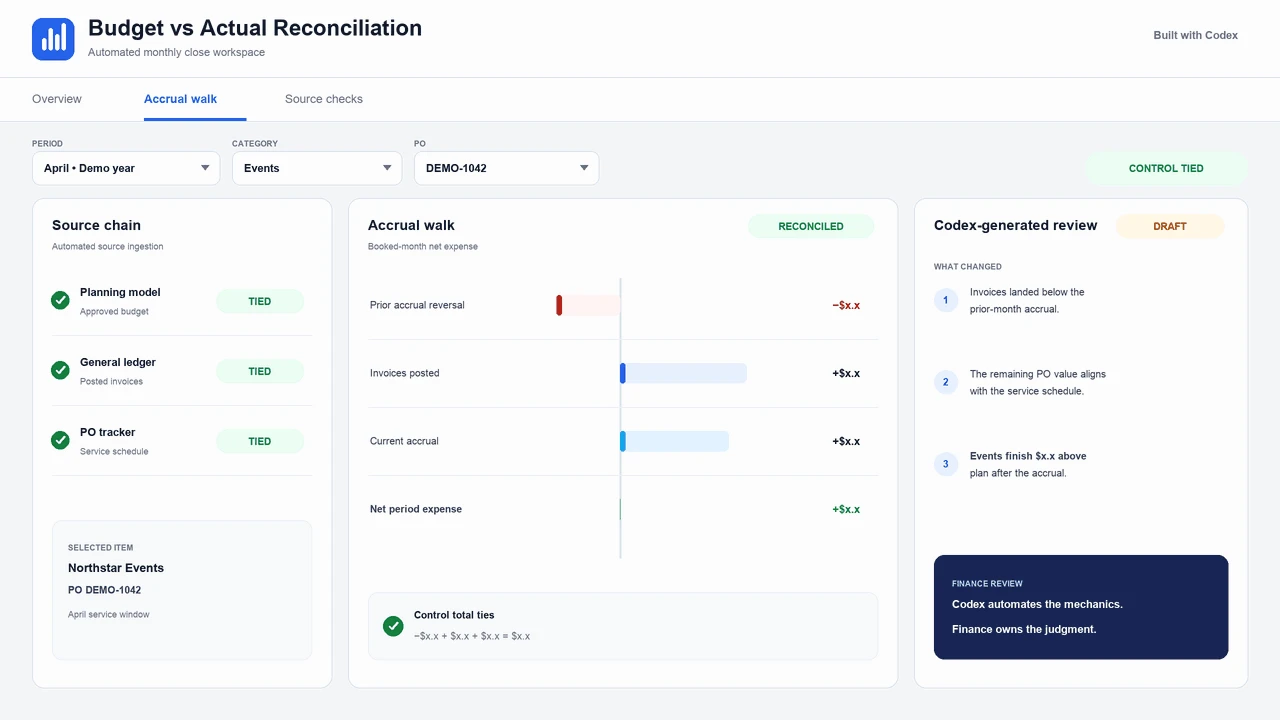
予算対実績の照合:承認された入力、ソースチェック、財務が責任を持つレビュー
クローズ(決算処理)そのものが消えるわけではありません。消え始めるのは、期間終了後にビジネスを再構築しようとする必死の動きです。
この照合済みの基盤は、継続的に更新される予測モデルを支えることができます。私たちのチームでは、統計モデル、営業会話の内容、勘定レベルのエビデンス、運用データ、そして財務の専門判断を一元的に扱うワークフローを構築中です。
私たちは、スプレッドシートの限界を超え、統計的な予測、根拠となる証拠、そして複数のシナリオを一つのライブビューに統合した、よりインタラクティブなツールへと移行しています。経営陣は「何が」「なぜ」変化したのか、またどの意思決定が結果を変える可能性があるかを直感的に把握できます。
例えば、ベースラインから新しい顧客コミットメントが欠落している場合、システムは関連する証拠を提示し、調整が四半期や年度にどのような影響を与えるかを示します。財務チームは前提条件を検証し、シナリオを比較検討した上で、承認済みの予測を更新すべきかどうかを判断できます。

インタラクティブな予測とシナリオプランニング
この同じビューは、経営陣がより良い資本配分の意思決定を行う際にも役立ちます。財務チームは、マーケティング支出がどこでリターンを生んでいるか、結果が頭打ちになっている領域、そして次の 1 ドルを再配分することが何を意味するかを確認できます。
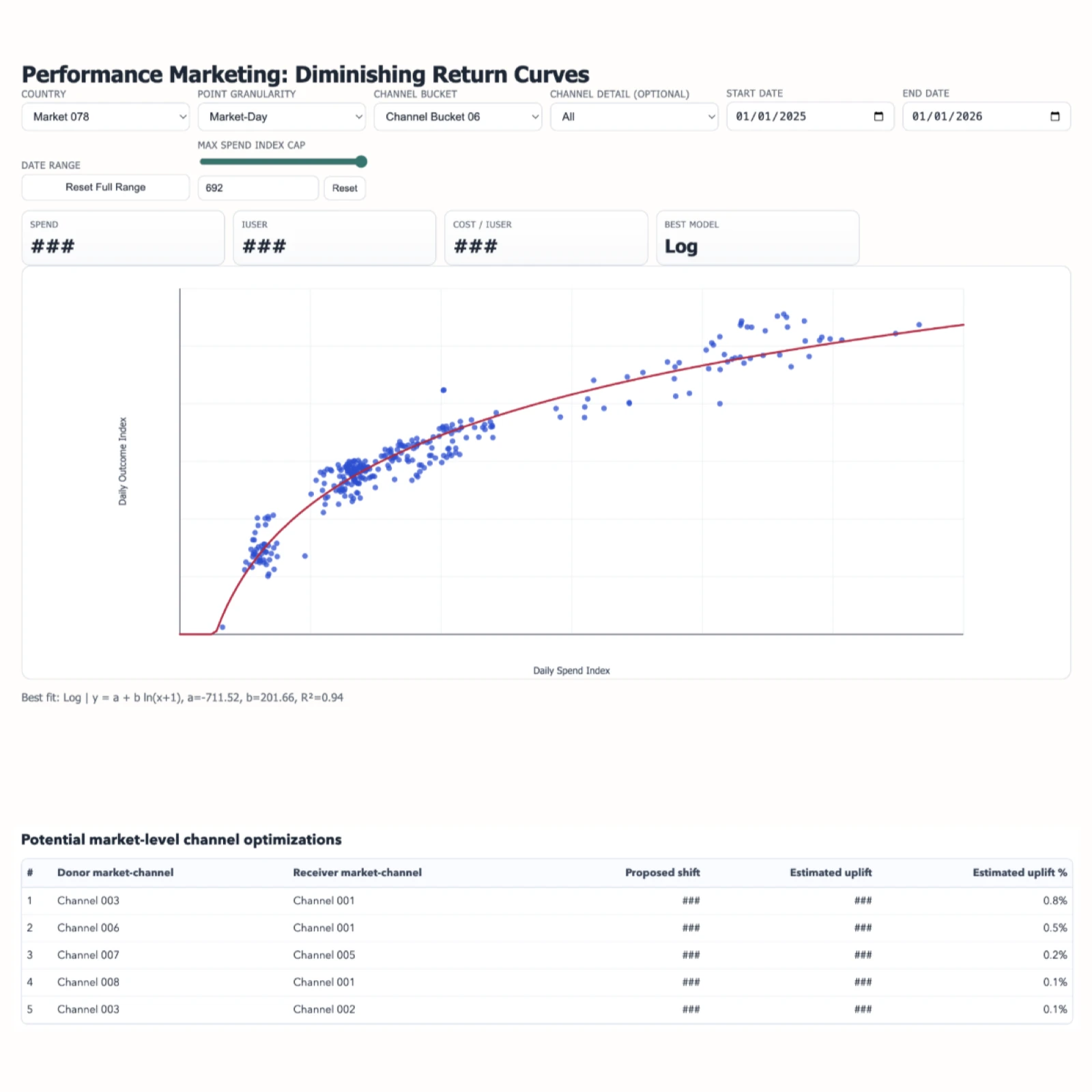
ダイナミックな資本配分:減少するリターンの曲線が、投資の再調整が必要な領域を浮き彫りにします
自動予測は目指すべきゴールです。その実現には、常に最新の状態を反映するビューの提供、迅速なシナリオ分析、そして明確な財務責任体制が不可欠です。
より広い教訓として重要なのは、まず決定的な意思決定から始め、そこから逆算してアプローチすることです。それを支えるために必要なデータ、ツール、承認プロセス、引き継ぎ手順を整理し、その上で AI が分析・調整・完了できる部分を特定します。これにより、意思決定サイクル全体のスピードと品質が向上します。
3. 財務専門家がツール構築者へ
より大きな変革は、財務専門家が自らの業務に必要なツールを自ら構築できるようになる点にあります。
最新の OpenAI の研究では、財務専門家の AI 活用事例の 40% が従来の財務領域を超えた業務に、22% がエンジニアリング関連のタスクに関連していることが示されています。
私のチームの全員が、ChatGPT Work と Codex を活用して独自の AI ダッシュボードやツールを構築しています。作業の中心は、静的な Excel モデルや PowerPoint の資料から、企業の文脈とデータを包括的に反映したライブダッシュボードへと移行しつつあります。これらのツールは分析結果を引き継ぎ、追加質問に対応し、基盤となる情報が更新されるたびに自動的に最新化されます。
広告事業を担当するチームメイトの一人は、これまでコードを書いた経験がありませんでした。しかし、Codex を活用して、月次の広告予測を週次・日次の計画に変換するツールを開発しました。このツールは平日や祝日を考慮し、予測値を比較しながら、すべての数値が承認されたモデルと紐づくように管理しています。マーケティングのリーダーたちは、どこが変わったのか、どこに投資すべきか、追加支出でどのようなリターンが見込めるかを即座に把握できます。
問題を理解している人々が、自ら解決策を形作れるようになりました。こうしたツールを開発する過程は、従来の業務のやり方を見直すきっかけにもなります。財務のプロフェッショナルが、ビジネスに必要な意思決定インフラを構築し、同僚とテストを重ねながら、業務の変化に合わせて改善していくことが可能になります。
財務チームが専門性を失うわけではありません。むしろ、その専門性をより遠くまで届ける力を手に入れたのです。
4. 速度と明確な責任・コントロールの両立
IR-GPT は、コントロールに関する重要な教訓を教えてくれました。投資家へのデューデリジェンス質問には、過去の資料を検索し、回答を起草し、整合性を確認し、レビュー調整を行う必要があり、これらは従来は数時間、場合によっては翌朝まで続く作業でした。しかし、承認されたソースに基づいたカスタム GPT を使えば、これらの作業を数秒で強力なドラフトに仕上げることが可能になりました。
人間の役割は依然として中心です。我々の投資家関係チームがそのドラフトを読み込み、判断と文脈を加え、回答が一貫しているかを確認します。AI が業務を加速させる一方で、結果に対する責任は人間が負います。
これが財務に最適なモデルです。CFO は IT チームやガバナンスチームと連携し、AI システムがアクセスできるデータ、実行可能なアクション、承認が必要なタイミング、および問題のエスカレーション基準を明確に定義すべきです。
すべての出力は信頼できるソースに紐づくべきです。すべての予測には明確な根拠を示す必要があります。承認されたベースラインへの一切の変更には、財務部門の承認が必須となります。
「トークン最大化」のブームは一過性のものとなりました。現在は、利用制限の設定、予算管理、ロールベースアクセス制御、モデルルーティングルール、承認閾値の定義を容易に行うことができます。CFO は、変動費に対する規律と同じ厳格さで AI の利用を管理しつつ、チームには構築と実験の余地を残すことが可能です。
明確な責任所在が、スピード感を持って進むために必要な信頼を生み出します。要約、照合、準備の速度が向上するにつれ、財務専門家は仮説への異議申し立てや事業への助言、そして判断を下すための時間をより多く確保できるようになります。
5. インテリジェンス単位あたりの価値を測定する
CFO は、運用実績に基づいた AI のスコアカードを持つ必要があります。単にライセンス数を増やすことやトークン使用量を増やすことでは、本質的な効果は測れません。重要なのは、業務が適切に完了したか、そしてその真のコストはいくらかです。
各ワークフローに対して、以下の 4 つの質問を行ってください。
- AI は重要な業務を完了できたか?
- 従業員の時間、レビュー、やり直しを含めたコストはいくらか?
- 結果は実用レベルに達していたか?
- 速度向上やより良い意思決定に寄与したか?
財務チームにとって、有用な仕事とは、更新された予測、説明済みの差異、完了した監査リクエスト、あるいは理事会からの質問への回答を指します。決算クローズにおいては、サイクルタイム、自動照合される取引の割合、レビューが必要な例外の数、そして差異の説明に要する時間がスコアカードに含まれます。一方、予測においては、予測精度、更新頻度、新しいシナリオを作成するのに必要な時間、およびその予測が支える意思決定の質などが指標となります。
最も安価なモデルが、常に最も経済的とは限りません。より優れたモデルであれば、試行回数とレビューを減らしつつ信頼できる回答にたどり着けるため、トータルのコストは低くなる可能性があります。
CFO の機会
財務は戦略、資本、データ、リスク、そしてパフォーマンスの中心に位置しています。この立場により、CFO は会社の仕組みを独特な視点で捉えることができ、AI 変革を主導する強力な権限を与えられています。
AI ネイティブな財務機能とは、サイクルの高速化、統制の強化、意思決定の質向上、そして判断に充てる時間の確保によって特徴づけられます。その道筋は、意味のあるワークフローから始まり、証拠を通じて拡大していきます。人々にツールを提供し、業務の再構築を支援し、責任所在を明確にし、成果を測定することです。
ゼロデイクローズと継続的な予測は、より広範な野望を表しています。それは、発生していることを即座に理解し、リーダーに対して次に起こり得るものを示し、会社がより早く優れた意思決定を行えるよう支援する財務チームの姿です。
その結果、財務チームの能力は向上し、CFO は事業全体をより明確に把握できるようになります。また、企業が知能を活用して持続可能な価値を生み出すための実証モデルも構築されます。
私がいつも言っているように、「見えないものは実現できない」のです。財務チームが AI の可能性を受け入れるためには、その姿を実際に示す必要があります。そして CFO として、まずは私たち自身がそれを実現することから始めなければなりません。
原文を表示
Finance has become a real-time function. To me, the opportunity is much bigger than closing the books faster or refreshing a forecast more often. It is about seeing the business as it changes, helping leaders act sooner, and giving finance teams more time to shape what happens next.
When I joined OpenAI two years ago, there was only a small finance team supporting a company growing at extraordinary speed. We needed to build the function from the ground up and make AI fundamental to how we work, make decisions, and support the business.
I also saw a familiar starting point. Closing the books and updating forecasts still involved manual, recurring work: finding information, explaining what changed, and assembling the inputs for a decision. We had access to the most advanced AI tools in the world, and we were still learning how to redesign finance around them.
So we set two bold ambitions: a zero-day close and automated, continuously updated forecasting.
The idea behind a zero-day close is to give leaders a real-time, reconciled, and traceable view of the company’s financial position. Continuous forecasting builds on that foundation, showing how the business is changing, what could happen next, and which decisions could alter the outcome.
We are still building toward both ambitions. The work has already changed how our team operates. It has pushed us beyond the limitations of static spreadsheets, manual searches for supporting records, and presentations toward live tools built on the full context and data of the business. It has also given finance professionals the ability to build the tools their work requires and carry their expertise further.
For me, that is the real promise of an AI-native finance function: a team that understands what is happening as it happens, helps leaders see the choices ahead, and gives the business more time to act while the outcome can still change.
Getting there requires more than adopting new technology. It requires redesigning work around the decisions that matter, giving people room to experiment, building clear accountability into every workflow, and measuring the dependable work AI completes to provide a clear ROI.
Here are five practical lessons from our experience that every CFO can apply.
1. Give everyone access, then create a reason to use it
The first step was broad access. People need the freedom to explore AI in the context of their own work. Access creates the most value when it is paired with structured experimentation around real problems.
We brought sales engineers into a finance hackathon and asked the team to bring work they wanted to transform. One result was IR-GPT, a custom GPT grounded in the approved materials our investor relations team uses to answer diligence questions. We also began building custom GPTs for areas including procurement and tax.
The hackathon turned AI from an abstract capability into a working tool. In a single day, people could identify a recurring task, build a solution, test it with colleagues, and improve it. The use cases came from the people closest to the work, while technical experts helped them move faster.
For CFOs, the lesson is simple: you need bottom-up experimentation and top-down strategy. Put secure, capable AI in people’s hands and let those closest to the work identify better ways of getting things done. At the same time, focus leadership attention and resources on the changes that will matter most to the business. The real opportunity comes when both meet: practical ideas from the front lines applied to your biggest priorities.
2. Redesign the full workflow around the decision
Finance teams spend enormous energy assembling the inputs to a decision. A forecast review might require people to find the latest data, reconcile spreadsheets, explain variances, build charts, prepare documents, and turn those documents into slides. The analysis eventually reaches the decision-maker, but much of the team’s time has already gone into assembling it.
AI changes the unit of work. Finance leaders can redesign the full path from source data to decision.
Consider the close. Every CFO knows the monthly process: actuals in one system, purchase orders in another, accruals in a spreadsheet, and the explanation for a variance buried in a message thread.
We are working toward a different operating model. The ambition behind a zero-day close is to connect approved spending plans, general-ledger actuals, purchase orders, accruals, and transaction details in a continuously reconciled view. Each variance can be traced to the underlying activity. AI can prepare an initial explanation and flag the exceptions that require attention. Finance validates the numbers, applies judgment, and owns the final sign-off.
Budget-versus-actuals reconciliation: approved inputs, source checks, and a finance-owned review
The close does not disappear. What begins to disappear is the scramble to reconstruct the business after the period ends.
That reconciled foundation can power a continuously updated forecast. Our team is building workflows that bring together statistical models, sales conversations, account-level evidence, operating data, and finance judgment.
We are moving beyond the limitations of spreadsheets into more interactive tools that bring the statistical forecast, supporting evidence, and scenarios into one live view. Leaders can see what changed, why it changed, and which decisions could change the outcome. When a new customer commitment is missing from the baseline, the system can surface the supporting evidence and show how an adjustment would affect the quarter or year. Finance can inspect the assumptions, compare scenarios, and decide whether to update the approved forecast.
Interactive forecasting and scenario planning
That same view can help leaders make better capital-allocation decisions. A finance team can see where marketing spend is producing a return, where results are tapering, and what reallocating the next dollar could mean.
Dynamic capital allocation: diminishing-return curves highlight where investment should be rebalanced
Automated forecasting is the destination. A continuously refreshed view, faster scenario analysis, and clear finance ownership are how we get there.
The broader lesson is to begin with a consequential decision and work backward. Map the data, tools, approvals, and handoffs required to support it. Then determine which parts AI can analyze, coordinate, or complete. This improves the speed and quality of the entire decision cycle.
3. Finance professionals become builders
The bigger transformation is that finance professionals can now build the tools their work requires.
Recent OpenAI research shows that 40% of finance professionals’ specialized AI use involves work outside traditional finance, and 22% involves engineering-related tasks.
Everyone on my team is building custom AI dashboards and tools with ChatGPT Work and Codex. The work is moving from static Excel models and PowerPoint decks toward live dashboards that sit on top of the full context and data of the business. These tools can carry an analysis forward, respond to follow-up questions, and update as the underlying information changes.
One teammate supporting our advertising business had never coded. He used Codex to build a tool that turns our monthly advertising forecast into weekly and daily plans. It accounts for weekdays and holidays, compares forecasts, and keeps every number tied to the approved model. Marketing leaders can quickly see what changed, where to invest, and what additional spending could return.
The people who understand the problem can now shape the solution. Building these tools also prompts them to reconsider the usual way of doing the job. A finance professional can create the decision-making infrastructure the business needs, test it with colleagues, and improve it as the work evolves.
Finance teams are not becoming less specialized. They are gaining the ability to carry their expertise further.
4. Pair speed with clear accountability and controls
IR-GPT taught us an important lesson about control. Investor diligence questions can require an analyst to search across prior materials, draft a response, check consistency, and coordinate review. With a custom GPT grounded in approved sources, work that previously took hours, and sometimes continued overnight, can now produce a strong first draft in seconds.
The human role remains central. Our investor relations team reads the draft, adds judgment and context, and checks that our answers remain consistent across investors. AI accelerates the work. People own the result.
That is the right model for finance. CFOs should work with IT and governance teams to define which data an AI system can access, which actions it can take, when approval is required, and when an issue should be escalated. Every output should connect to a reliable source. Every forecast should carry a clear explanation. Every change to an approved baseline should require finance authorization.
The brief craze of “tokenmaxxing” has come and gone. It is now straightforward to set usage limits, budget controls, role-based access, model-routing rules, and approval thresholds. CFOs can manage AI usage with the same discipline they bring to any variable expense while giving teams room to build and experiment.
Clear accountability creates the confidence required to move faster. As synthesis, reconciliation, and preparation accelerate, finance professionals gain more time to challenge assumptions, advise the business, and exercise judgment.
5. Measure value per unit of intelligence
CFOs need a scorecard for AI grounded in operating performance. Buying more seats or using more tokens doesn’t tell you much. What matters is whether the work gets done well and what it really costs.
For each workflow, ask four questions:
- Did AI complete work that mattered?
- What did it cost, including employee time, review, and rework?
- Was the result good enough to use?
- Did it help us move faster or make a better decision?
For a finance team, useful work might mean a forecast updated, a variance explained, an audit request completed, or a board question answered. For the close, the scorecard might include cycle time, the share of transactions reconciled automatically, the number of exceptions requiring review, and the time required to explain a variance. For forecasting, it could include forecast accuracy, refresh frequency, time required to produce a new scenario, and the quality of the decisions the forecast supports.
The cheapest model isn’t always the most economical. If a better model gets to a reliable answer with fewer attempts and less review, it may cost less overall.
The CFO’s opportunity
Finance sits at the center of strategy, capital, data, risk, and performance. That gives CFOs a unique view of how the company works and a powerful mandate to lead its AI transformation.
An AI-native finance function is defined by faster cycles, stronger controls, better decisions, and more time for judgment. The path begins with a meaningful workflow and expands through evidence: give people the tools, help them rebuild the work, keep accountability clear, and measure the outcome.
The zero-day close and continuous forecast express a broader ambition: a finance team that understands what is happening as it happens, shows leaders what could happen next, and helps the company make better decisions sooner.
The result is a finance team with greater capacity and a CFO with a clearer view of the business. It also creates a working model for how the entire company can turn intelligence into durable value. As I always say, you can’t be what you can’t see. If we want our finance teams to embrace what’s possible with AI, we have to show them what it looks like—and as CFOs, that starts with us.
関連記事
今日のまとめ
AIデイリーブリーフで今日の重要ニュースをまとめ読み